

More news on this day
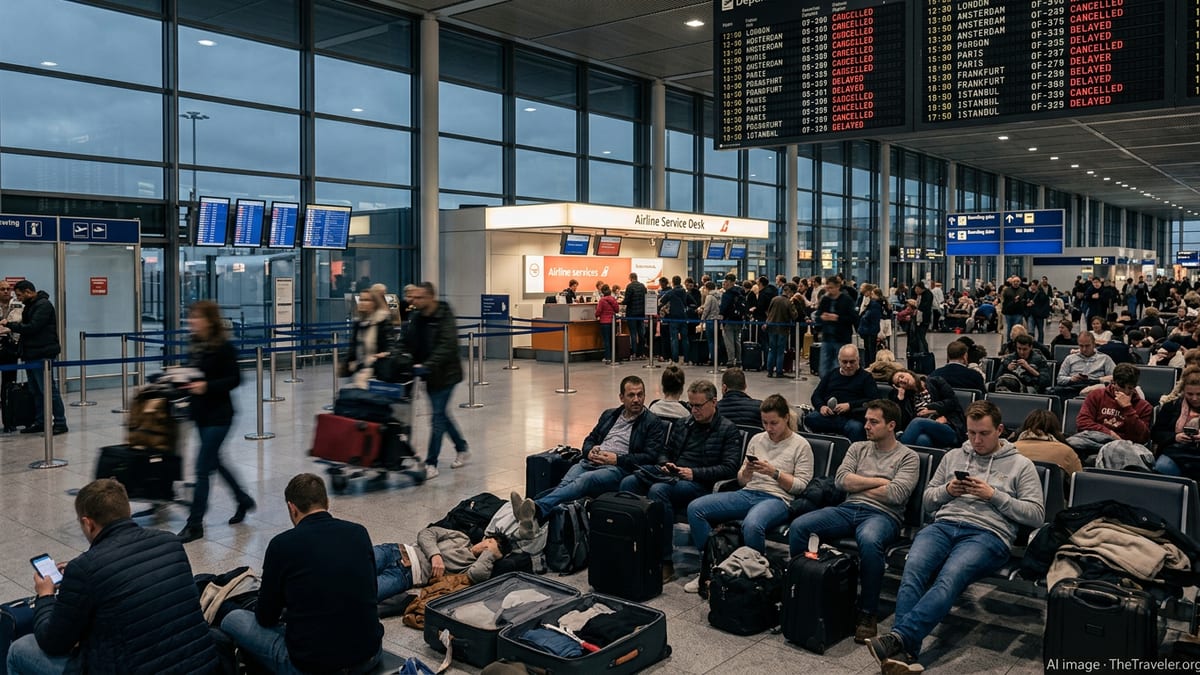
Thousands of air passengers were left stranded or facing long delays across Europe as a wave of disruption led to 1,781 flights delayed and 110 cancelled, snarling operations at major hubs in the United Kingdom, France, Germany, Spain, Denmark, Finland and Switzerland and heavily impacting carriers including British Airways, Lufthansa, SAS and KLM.
Get the latest news straight to your inbox!
Major Hubs From London to Helsinki Buckle Under Strain
European aviation networks experienced acute pressure as disruption rippled through key hubs such as London, Paris, Zurich and Helsinki, with knock-on effects across the continent. Publicly available tracking data showed extensive queues of delayed departures and arrivals, with dozens of services pushed back by several hours. In some cases, clusters of cancellations left passengers with no same-day alternatives.
At London’s main airports, operations for British Airways and other UK and European carriers were particularly affected as schedules became misaligned and aircraft and crews were displaced. Similar patterns were observed in Paris and Zurich, where congestion compounded the delays, adding to the backlog of aircraft waiting for gates, ground handling and takeoff slots.
In northern Europe, hubs such as Copenhagen and Helsinki reported widespread delays on services linking the Nordic region with the rest of the continent. Scandinavian flag carrier SAS faced disruption across its network, while KLM and partner airlines saw knock-on issues spread through Amsterdam and onward connections into Germany, Spain and beyond.
Operational data from recent weeks already indicated rising pressure on Europe’s busiest airlines, and the latest wave of disruption appeared to magnify those strains. Increased flight volumes, tight crew rosters and limited slack in schedules left airlines with little margin to recover once initial delays took hold.
Weather, Airspace Bottlenecks and Network Complexity Combine
Reports from aviation authorities and meteorological services indicate that a mix of adverse weather and constrained airspace capacity contributed to the scale of the disruption. Strong winds, low visibility and localized storms in parts of Western and Northern Europe reduced runway capacity at several airports, forcing air traffic managers to impose flow restrictions and longer spacing between aircraft.
Across Europe, en-route control centres have also been operating under tight capacity limits, with even small disturbances translating into significant airborne holding or departure slot restrictions. When these constraints coincide with peak travel periods, delays can multiply rapidly, particularly for hub-and-spoke carriers such as Lufthansa, British Airways, SAS and KLM that rely on tightly timed connecting banks.
The complexity of modern airline networks added another layer of vulnerability. Aircraft and crew rotations are often scheduled across multiple countries and time zones, meaning an early-morning issue in Helsinki or Zurich can cascade through to afternoon departures from London, Paris or Madrid. Once aircraft are out of position, airlines can require several rotations to restore normal schedules, leaving passengers facing missed connections and overnight stays.
These conditions have been developing against a backdrop of strong traffic recovery in European aviation, with recent analytical briefs showing flight numbers at or above pre-pandemic levels on many intra-European routes. While demand growth has been positive for airlines, it has also exposed infrastructure bottlenecks that leave the system prone to large-scale disruption when adverse weather or operational constraints arise.
Passengers Face Long Queues, Rebookings and Overnight Stays
For travellers, the disruption translated into long lines at check-in desks and transfer counters, along with crowded customer service phone lines and mobile apps showing limited rebooking options. Social media posts and first-hand accounts from airports such as London Heathrow, Paris Charles de Gaulle and Zurich described passengers waiting hours for new itineraries or hotel vouchers after cancellations were confirmed.
Many travellers attempting to connect between European cities and long-haul destinations reported missed onward flights and the loss of non-refundable hotel stays or tours. With 110 flights cancelled outright and nearly two thousand delayed, the supply of alternative seats within the same travel day quickly diminished on popular corridors between the UK, France, Germany, Spain and the Nordic region.
Rail and coach operators on some cross-border routes experienced a surge in demand as stranded passengers sought last-minute alternatives. However, in several cases high-speed trains and overnight services were already heavily booked, particularly on links such as Paris to London and major German and Scandinavian corridors, limiting the ability of the ground network to absorb displaced air travellers.
Airports attempted to ease the strain by opening additional rest areas, reinforcing information desks and deploying extra staff where possible. Despite those measures, images from terminals showed travellers sleeping on terminal floors or in makeshift rest zones as they waited for morning departures or replacement flights in the following days.
Airlines and Regulators Under Scrutiny Over Passenger Rights
The latest disruption has renewed attention on Europe’s passenger-protection frameworks, notably the EU and UK rules that set minimum standards for assistance and potential compensation in cases of long delays and cancellations. Under those regulations, travellers on eligible flights may be entitled to meals, refreshments, hotel accommodation where necessary, and in some situations financial compensation, depending on the cause and length of the disruption.
Consumer advocates pointed to the recurring pattern of large-scale operational breakdowns across European aviation, arguing that the combination of high traffic volumes, tight staffing and weather-related vulnerability leaves passengers exposed to frequent and unpredictable travel chaos. Recent legal judgments have examined where the line falls between unavoidable extraordinary circumstances, such as severe storms, and operational decisions, such as resource planning or equipment shortages.
Published guidance from national enforcement bodies emphasizes that airlines remain responsible for providing care and assistance even when events are outside their direct control. That can include arranging overnight accommodation, ground transport and meals, as well as offering rebooking at the earliest opportunity. Passengers are being advised by consumer groups to retain receipts and document communications with carriers in case they choose to pursue claims later.
Regulators and airport operators in several countries have already been reviewing resilience plans after earlier episodes of winter weather disruption and infrastructure congestion. The latest wave of delays and cancellations across the UK, France, Germany, Spain, Denmark and other states is likely to intensify scrutiny of how effectively those plans are being implemented during peak traffic periods.
Outlook: Fragile Recovery Tested Ahead of Busy Travel Seasons
The scale of the current disruption illustrates how finely balanced the European air transport system remains, even as airlines report growing traffic and improved financial performance. With many carriers, including British Airways, Lufthansa, SAS and KLM, operating dense schedules through constrained hubs, the ability to absorb sudden shocks remains limited.
Industry analysts note that traffic is set to rise again into the spring and summer holiday periods, raising questions about whether airports and airlines can add enough capacity and resilience to prevent repeats of this week’s scenes. Investment in air traffic management modernization, ground handling resources and airport infrastructure has been highlighted as a key factor in reducing the risk of widespread cancellations when weather or technical issues emerge.
Travel advisers suggest that, in the short term, passengers may benefit from building longer connection times into itineraries, monitoring flight status closely and considering flexible or refundable ticket options where budgets allow. Early-morning departures and routes with multiple daily frequencies are often seen as offering more recovery options if delays occur, although no itinerary is immune from systemic disruptions.
As Europe’s skies grow busier, the latest wave of delays and cancellations serves as a reminder that the region’s aviation recovery is still fragile. For thousands of passengers left waiting in terminals from Helsinki and Copenhagen to London, Paris and Zurich, the immediate priority remains simply getting to their destinations, while policymakers and industry leaders face renewed pressure to strengthen the system before the next surge in demand.