

More news on this day
China’s busiest aviation hubs are experiencing another week of severe disruption, with operational data showing 4,559 flight delays and 245 cancellations across major cities including Beijing, Chongqing, Nanchang, Nanjing, Shanghai and Shenzhen, leaving thousands of passengers stranded or forced into last minute changes of plan.
Get the latest news straight to your inbox!
Storms, Airspace Bottlenecks And Congested Hubs Collide
Recent coverage of China’s air transport network points to a combination of powerful spring storms, regional airspace constraints and already crowded schedules as key drivers of the latest disruption wave. Weather systems sweeping across eastern and southern China have periodically reduced visibility and triggered temporary suspensions of takeoffs and landings at some airports, creating knock-on effects that ripple through the day’s schedule.
At the same time, reports highlight ongoing airspace bottlenecks and slot restrictions that limit flexibility for airlines and air traffic managers when conditions deteriorate. When weather, traffic control constraints and busy peak periods line up, even short suspensions of operations can quickly translate into hundreds of delayed flights and a sharp rise in cancellations as carriers try to reset their networks.
Publicly available analytics for China’s major hubs indicate that recent days have seen delay and cancellation rates spike far above seasonal norms, particularly in coastal and river delta regions where air traffic density is highest. These constraints have turned routine spring storms into system wide events felt by passengers far beyond the immediate weather zone.
Major Airports Log Thousands Of Delays
The latest disruption stretches across a broad swath of the country’s aviation network, but several large hubs stand out. Data compiled from operational trackers and industry summaries shows that airports in Beijing and Shanghai again sit at the heart of the problems, with their twin role as domestic and international gateways amplifying every delay.
Shanghai’s Pudong and Hongqiao airports, together serving as a key base for China Eastern and an important station for many other carriers, have recorded especially high volumes of late departures and arrivals. Beijing Capital and Beijing Daxing have also seen clusters of days when delay percentages surged, creating long queues at security and check in, and crowding in waiting areas as departure boards filled with revised timings.
Further inland and along the Yangtze corridor, airports at Chongqing, Nanchang and Nanjing have reported elevated disruption, reflecting their role as important connecting points between interior provinces and coastal hubs. In southern China, Shenzhen Bao’an has experienced repeated bouts of delays and cancellations that mirror wider strain in the Pearl River Delta aviation system.
Across these hubs, aggregated figures for a recent multi day period indicate 4,559 delayed flights and 245 outright cancellations, a scale of disruption that effectively grounded or pushed back departures for tens of thousands of travelers.
Network Wide Impact On Chinese Carriers
The disruption has hit the country’s largest airlines hardest, as their extensive domestic networks funnel passengers through the same stressed hubs. Operational data and media summaries show China Eastern, China Southern and Air China among the most exposed, given their concentration of capacity at Shanghai, Guangzhou, Beijing and Shenzhen.
China Eastern’s operations at Shanghai have been a focal point, with late running flights and aircraft out of position complicating both domestic and international schedules. China Southern has faced similar challenges at Guangzhou and Shenzhen, while Air China’s Beijing centered network has been affected whenever storms or airspace restrictions slow throughput at the capital’s airports.
Other carriers, including XiamenAir and Sichuan Airlines, have seen their own schedules disrupted as they rely on affected hubs for key trunk routes and onward connections. When a major coastal hub experiences extended delays, inbound aircraft can miss onward departure windows, forcing airlines to consolidate services or cancel lower demand frequencies in order to preserve core routes.
The result is a patchwork of schedule changes that can be difficult for travelers to interpret in real time, particularly when online timetables lag behind fast moving operational decisions taken on the ground.
Passengers Face Long Queues, Full Hotels And Limited Alternatives
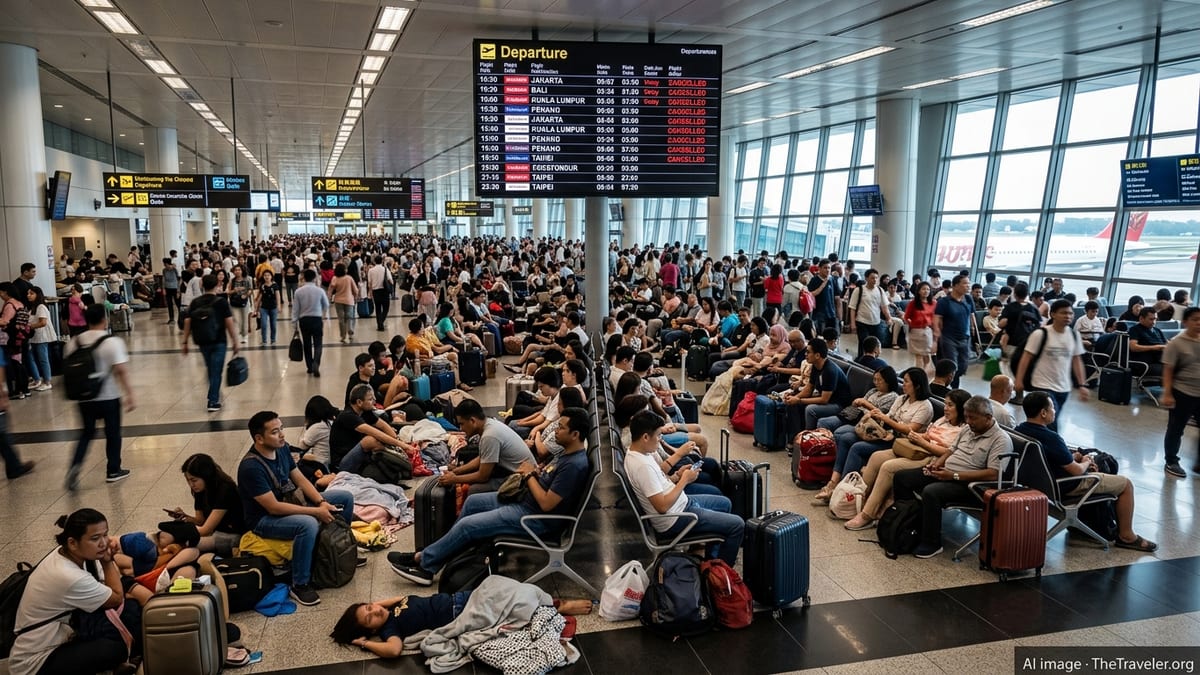
Across Chinese and international travel media, recent coverage has highlighted the impact on passengers, many of whom have found themselves stuck for hours in terminal buildings or searching for scarce hotel rooms near major airports. Video and photo reports from Shanghai, Beijing and Shenzhen show crowded departure halls and long lines at customer service counters as travelers attempt to secure rebookings, compensation where applicable, or simple information about when flights might operate.
For domestic passengers, high speed rail can sometimes provide an alternative, particularly on dense corridors linking Beijing, Shanghai, Nanjing and other large cities. However, seats on key routes often sell out quickly once disruptions escalate, leaving some travelers with the choice between lengthy overland journeys involving multiple transfers or waiting for the aviation system to recover.
International travelers have fewer substitutes. Reports note that missed connections at Chinese hubs can strand passengers far from home with limited rebooking options at short notice, especially during busy travel periods when long haul flights already operate near capacity. In several recent cases highlighted by travel industry outlets, travelers have faced overnight or multi day waits for the next available seat on their route.
Airport perimeter hotels near major hubs have reported spikes in demand during disruption peaks, with some passengers turning to distant city neighborhoods for accommodation when close in options quickly sell out.
Airports And Travelers Adjust To A New Normal Of Volatility
Recent disruptions follow earlier waves of delay and cancellation across China’s aviation system, reinforcing a pattern of volatility that industry watchers describe as increasingly common. As passenger volumes continue to recover and surpass pre pandemic levels in some markets, any constraints in weather, airspace, staffing or infrastructure tend to translate more quickly into visible strain.
Airport operators are responding with a mix of short term crowd management and longer term capacity planning. Publicly available information indicates that efforts include deploying additional staff during known peak disruption windows, reconfiguring queuing areas at security and check in, and gradually expanding terminal and runway capacity in fast growing regions such as the Yangtze River and Pearl River deltas.
For travelers, the latest wave of disruption is a reminder that itineraries involving tight domestic connections at busy Chinese hubs carry elevated risk during stormy seasons. Travel advisories from industry outlets increasingly recommend padded connection times, flexible tickets where possible, and early monitoring of flight status when itineraries rely on airports such as Beijing Capital, Shanghai Pudong, Guangzhou Baiyun or Shenzhen Bao’an.
With spring weather patterns still unsettled across key regions, reports suggest that intermittent waves of disruption may continue in the near term, keeping both airlines and passengers on alert for further schedule shakeups as China’s aviation network navigates another challenging season.