

More news on this day
Thousands of airline passengers across the United States are facing long lines, missed connections and overnight airport stays as a fresh wave of delays and cancellations hits major hubs from Chicago to New York, with publicly available tracking data indicating 2,791 flights delayed and 159 canceled across carriers including Republic, Southwest, Spirit and United.
Get the latest news straight to your inbox!
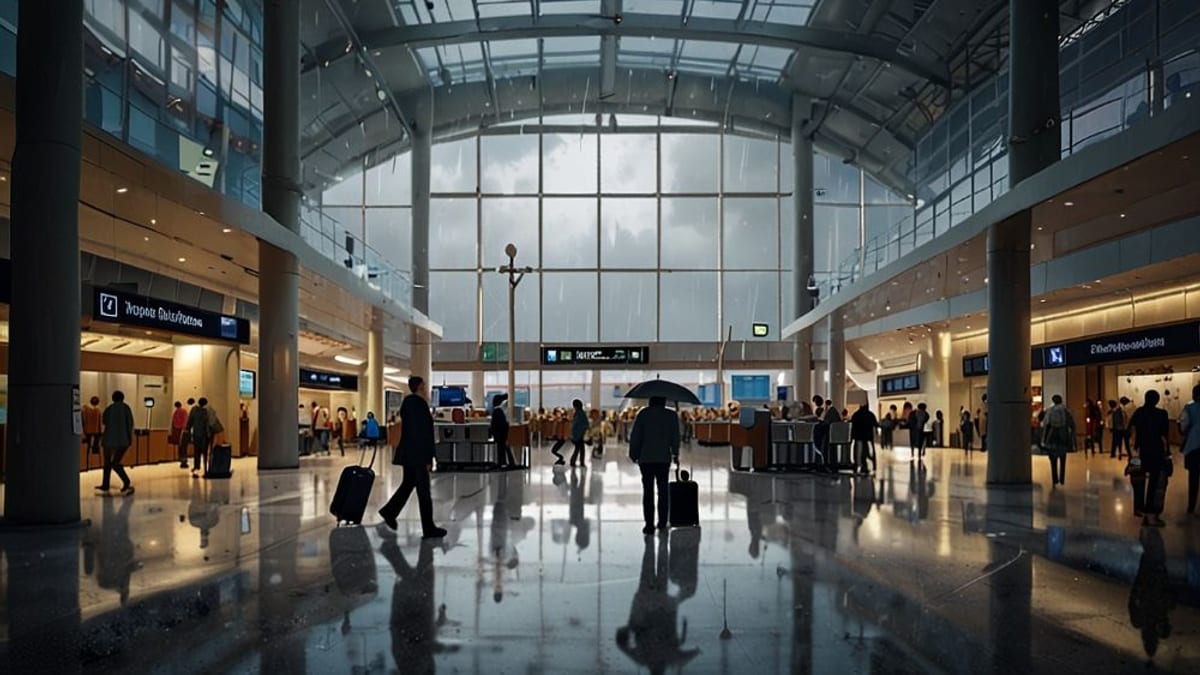
Image by Travel And Tour World
Disruptions Concentrated at Major US Gateways
The latest disruption is rippling through some of the country’s busiest airports, affecting operations in Chicago, Los Angeles, Washington D.C., Austin, New York and Fort Lauderdale. These hubs handle a high volume of domestic and connecting traffic, so schedule changes in one city can quickly cascade across airline networks.
Flight tracking dashboards and airport status boards show elevated numbers of both delays and cancellations across the day, with the 2,791 delayed flights and 159 scrapped departures representing a significant strain on the system. Even modest schedule changes are translating into missed connections for travelers relying on tight layovers through key hubs like Chicago and New York.
The impact is particularly visible in terminal crowds, with images and reports from travelers describing long queues at check in desks and service counters, as well as congested gate areas where multiple delayed flights are competing for space. At some airports, departures have been pushed back repeatedly as crews and aircraft struggle to get back in position.
Because these cities serve as both origin points and connection hubs, many travelers who are not flying to or from the affected airports are still seeing knock on effects, especially on routes operated by the same carriers and regional partners.
Republic, Southwest, Spirit and United Under Pressure
Regional operator Republic Airways, which flies feeder services for several major brands, is among the carriers seeing disruptions. When regional partners encounter schedule problems, the impact can be magnified, since a single delayed aircraft may operate multiple short haul legs in a day, each one feeding into different hubs.
Southwest Airlines, with its point to point network and large presence in cities such as Chicago, Los Angeles and Austin, is also facing scrutiny from travelers who turned to social media to describe rolling delays and same day schedule changes. Public posts highlight frustration with shifting departure times and the difficulty of rebooking on already crowded alternative flights.
Ultra low cost carrier Spirit Airlines, which has a major operation in Fort Lauderdale and serves New York area airports, is likewise seeing cancellations and extended delays on some routes. Travelers often have fewer rebooking options on airlines with less frequent service, which can turn a cancellation into an overnight or multi day disruption.
United Airlines, a dominant carrier in Chicago and a key player at airports in Los Angeles, Washington D.C. and the New York area, is contending with its own backlog. According to data shared on flight tracking and passenger discussion forums, some travelers are being rerouted through secondary airports or rebooked onto flights departing many hours later as the airline works to rebuild its schedule.
Weather, Congestion and Staffing Add to the Strain
While no single cause explains every delay or cancellation, a combination of weather related constraints, airspace congestion and ongoing staffing challenges is contributing to the turbulence. Recent winter weather systems in parts of the country have already pushed airline schedules to the limit this season, and even localised storms or low ceilings can trigger ground stops and flow control programs at major hubs.
Congested airspace around cities such as New York and Chicago makes recovery more difficult. When flights are held for slot availability or slowed by traffic management initiatives, aircraft and crew rotations can fall out of sync, creating a ripple effect throughout the day. Airports like Los Angeles and Fort Lauderdale, which handle a mix of domestic and international traffic, can quickly become bottlenecks when arrivals and departures back up.
Staffing remains another pressure point. Publicly available reporting over the past year has documented how airlines and airports continue to balance crew availability, training pipelines and maintenance staffing after the rapid return of travel demand. When schedules are already tight, an unexpected crew timeout or maintenance issue can tip a flight from a minor delay into a cancellation.
Industry analysts note that while overall reliability has improved compared with the most disruptive periods of recent years, the system remains vulnerable to sharp spikes in delays on busy travel days or when multiple hubs experience operational strain at the same time.
Travelers Face Long Waits and Limited Alternatives
For passengers caught in the middle of the current wave of disruptions, the practical consequences are missed events, added expenses and hours spent in terminals. Social media posts from Chicago, New York and Fort Lauderdale show travelers lining up at customer service counters as they attempt to secure hotel vouchers, meal credits or new itineraries after abrupt schedule changes.
Rebooking can be particularly challenging when aircraft are already nearly full, a frequent scenario during peak periods. Travelers report being offered connections through less direct routings, including through smaller hubs or with lengthy layovers, in order to reach their destinations within the same day or the following one.
Consumer advocacy groups and transportation analysts routinely advise passengers facing widespread disruption to monitor their flight status frequently, use airline mobile apps where possible, and check whether they are eligible for compensation or refunds under the carrier’s published customer service commitments. In the United States, such policies vary by airline, and compensation for delays is more limited than in some other regions, but passengers are generally entitled to refunds when a flight is canceled and they choose not to travel.
For those already at the airport, simple measures such as keeping boarding passes, receipts and documentation of delay notifications can help in later discussions with airlines or travel insurers, particularly in cases where overnight stays or rebooked itineraries add unexpected costs.
Operational Recovery Likely to Extend Beyond a Single Day
Even if weather and airspace conditions improve quickly, operational recovery from such a large number of delays and cancellations often extends beyond a single calendar day. Aircraft and crew may end up out of position, requiring schedule adjustments and occasional aircraft substitutions as airlines work to restore normal rotations.
Analysts observing similar events in recent months point out that morning flights the following day can still be affected as airlines attempt to absorb stranded passengers into the schedule. Early departures out of Chicago, New York and other hubs sometimes depart with heavier than usual loads as carriers accommodate travelers from previously canceled flights.
Some industry observers expect that airlines will continue to adjust schedules and staffing models through the current travel season in an effort to build more resilience into their operations. That could include padding block times, adjusting connection windows and deploying larger aircraft on high demand routes to provide more seats for rebooked passengers when disruption does occur.
For now, travelers with upcoming trips through Chicago, Los Angeles, Washington D.C., Austin, New York or Fort Lauderdale are being urged by publicly available advisories and media coverage to check their flight status frequently on the day of departure and to plan for the possibility of extended waits at the airport if the disruption persists.