

More news on this day
Thousands of travellers across Saudi Arabia and the wider Gulf region are facing extended airport stays, missed connections and mounting costs after widespread disruption affecting at least 333 delayed flights and 99 cancellations involving Saudia, Flynas and Flydubai across major hubs including Riyadh, Jeddah, Dammam, Medina and the Eastern Province corridor around Khobar.
Get the latest news straight to your inbox!
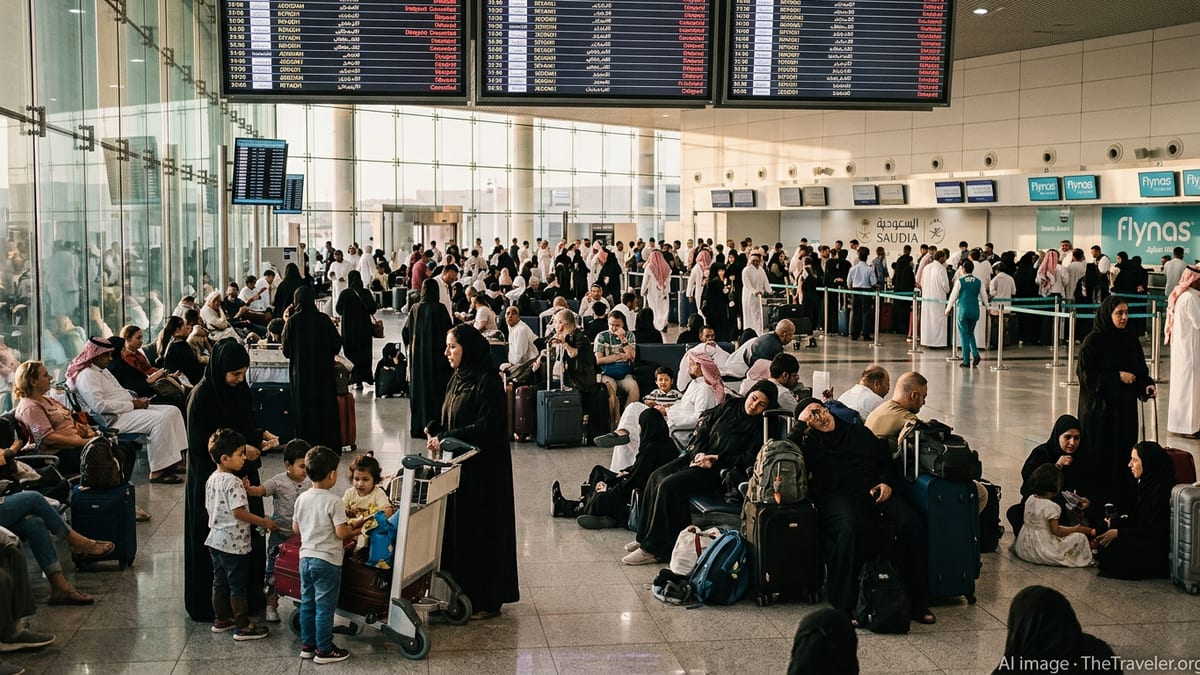
Widespread Disruption Across Saudi and Gulf Hubs
Reports from airline trackers, regional media and passenger accounts indicate that air travel in and out of Saudi Arabia has been severely disrupted, with a wave of delays and cancellations rippling through the network of Saudia, Flynas and Flydubai services. The disruptions are affecting both domestic and international routes, leaving airport departure boards in Riyadh, Jeddah and Dammam dominated by late departures and scrubbed services.
The scale of the impact is illustrated by estimates of at least 333 delayed flights and 99 outright cancellations over a short period, a volume that has overwhelmed customer service desks and rebooking systems. While precise tallies vary from one monitoring platform to another, the overall pattern points to sustained operational strain rather than a short, sharply defined outage.
Publicly available coverage from regional outlets describes long queues at check in and transfer counters as travellers attempt to secure alternative routings through Medina, Dammam and nearby Gulf gateways. Some passengers are opting to reroute via secondary airports or switch to competing carriers where seats are still available, often at substantially higher last minute fares.
Airline operations across the Gulf are closely interconnected, meaning knock on effects from a cluster of cancellations in Saudi Arabia can quickly affect schedules in Dubai and other regional hubs. Flydubai’s network into Jeddah, Riyadh and Dammam has been particularly exposed, with late inbound aircraft leading to rolling delays on onward departures.
Passengers Stranded Amid Capacity Squeeze
For travellers already en route, the most immediate impact has been missed connections and unplanned overnight stays. Accounts shared on travel forums and social platforms describe passengers stuck in airports for repeated rebookings after flights were delayed for several hours, only to be cancelled and rescheduled again.
Limited spare capacity within the region’s high demand winter and early spring travel season has compounded the problem. With many flights already operating close to full, finding seats for stranded passengers on alternative services has proved difficult, especially on key trunk routes linking Jeddah, Riyadh and Dammam with destinations in South Asia, Europe and North America.
Families returning from pilgrimages, overseas workers bound for contract renewals and business travellers with fixed meeting schedules appear among the worst affected. Some have reported having to purchase entirely new tickets on other airlines when rebooking options on Saudia, Flynas or Flydubai could not meet urgent timelines.
Accommodation availability around major hubs has also come under pressure, particularly near Jeddah and Riyadh, where airport area hotels often run at high occupancy. Travellers report turning to city centre properties, adding transport time and cost to already extended journeys.
Major Saudi Gateways Under Operational Pressure
King Khalid International Airport in Riyadh, King Abdulaziz International Airport in Jeddah and King Fahd International Airport in Dammam form the backbone of Saudi Arabia’s aviation network, and flight tracking data shows that all three have been dealing with elevated disruption levels. Delays at these hubs can cascade rapidly, with late arrivals forcing knock on schedule changes through the day.
In the western region, Jeddah’s role as the main gateway for religious travel has heightened the visibility of the current wave of disruption. Publicly available information highlights repeated schedule changes on routes from Jeddah to Gulf, South Asian and European destinations, affecting both point to point passengers and those connecting onward.
In central and eastern Saudi Arabia, Riyadh and Dammam have seen similar patterns, with travellers reporting multiple changes to departure times for domestic flights between the two cities as well as for connections onward to Medina and to regional Gulf airports used by residents of Khobar and the broader Eastern Province. Some domestic flights have been diverted to secondary cities when schedules became too compressed.
Medina’s Prince Mohammad bin Abdulaziz International Airport, while smaller, plays a critical role for religious visitors and has also experienced knock on disruption when aircraft and crews failed to arrive on time from other Saudi hubs. This has added to the sense of uncertainty for travellers attempting to coordinate multi city itineraries that combine visits to both holy cities.
Saudia, Flynas and Flydubai Networks Affected
Saudia, the national carrier, operates the largest fleet and route network in the kingdom, connecting major Saudi cities with regional and long haul destinations. Its central role means that any systemic scheduling or operational issue quickly spreads across domestic and international services, with delays on long haul flights often reverberating through subsequent short haul rotations.
Flynas, one of the leading low cost carriers in Saudi Arabia, is heavily focused on high frequency routes linking Riyadh, Jeddah, Dammam and other population centres, as well as popular religious and labour corridors. When even a portion of its daily flights is disrupted, the tight turnarounds and high seat load factors common in low cost operations can leave little room to absorb irregularities.
Flydubai, based in Dubai but deeply embedded in the Saudi market, relies on a dense network of flights into multiple Saudi cities, serving both business and leisure demand. Disruptions on Saudi routes have knock on effects on its schedule from Dubai, which in turn can influence the connection options available for passengers travelling beyond the Gulf.
With all three airlines facing simultaneous schedule challenges, passengers who might normally rely on switching between carriers inside the region to rescue a disrupted itinerary have found fewer viable alternatives. The overlapping route maps that usually provide redundancy have instead amplified congestion as travellers compete for a limited number of open seats.
Travellers Seek Alternatives as Situation Evolves
As delays and cancellations accumulate, travellers are increasingly turning to alternative modes and routes to complete their journeys. Publicly available information points to rising interest in rail links and intercity buses between Riyadh, Dammam and other eastern cities, as passengers look for overland options when short haul flights become unreliable.
Some passengers have reported combining surface transport within Saudi Arabia with flights departing from less affected airports, including secondary Gulf hubs, in order to avoid repeated cancellations on specific city pairs. This patchwork approach often lengthens total travel time but can provide more certainty than waiting for multiple rebookings on heavily disrupted routes.
Travel industry observers note that the disruptions are also prompting renewed attention to travel insurance coverage, flexible ticket rules and the importance of monitoring real time flight status before heading to the airport. With operational conditions still fluid and schedules subject to change at short notice, travellers are being advised by publicly available guidance to maintain contingency plans and allow extra time for connections.
While the precise drivers of the current wave of disruptions vary by airline and route, the immediate reality for thousands of travellers in and around Saudi Arabia is a period of prolonged uncertainty. Until flight schedules stabilise and backlogs are cleared, airports across Riyadh, Jeddah, Dammam, Medina and the Eastern Province are likely to remain crowded with passengers waiting for long delayed departures and scarce rebooked seats.