

More news on this day
Thousands of travelers across the United States faced ruined plans on April 7, 2026, as more than 4,300 flight delays and over 200 cancellations rippled through major hubs including Los Angeles, Atlanta, Boston, Chicago, Houston, Orlando and the New York area.
Get the latest news straight to your inbox!
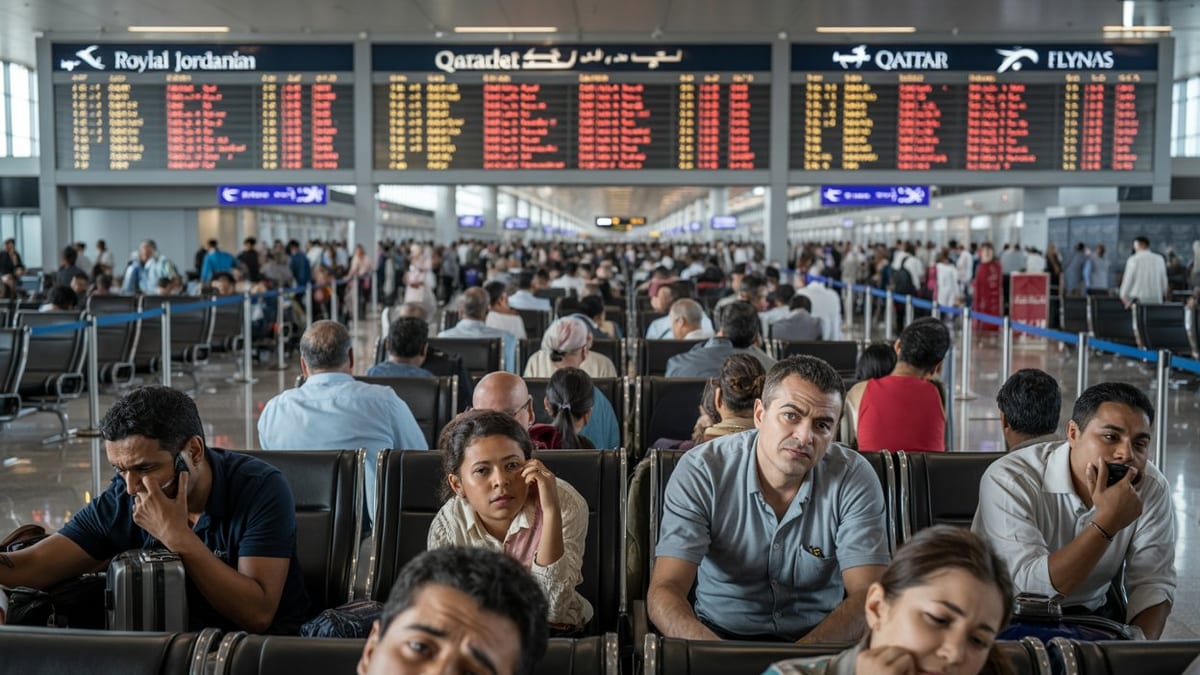
Nationwide Gridlock Hits Major U.S. Airports
Publicly available tracking data for April 7 indicate that U.S. airports logged around 4,395 delayed flights and 207 cancellations, affecting travelers from early morning departures through late-night connections. The disruption spanned both coastal and inland hubs, hitting some of the country’s busiest transfer points on one of the spring travel season’s heaviest days.
Reports compiled from flight monitoring platforms show Atlanta, New York City’s airports, Los Angeles, Chicago, Boston, Houston and Orlando among the hardest hit, with additional pressure at Seattle, Miami and Newark. The pattern mirrors a series of difficult days for U.S. aviation surrounding the Easter holiday period, when weather, congestion and staffing issues combined to stretch operations close to their limits.
Airlines across the spectrum were affected, including the largest full-service carriers and low-cost operators. Schedules for American, Delta, Southwest, United, Spirit, Alaska and Frontier all showed significant delays, alongside a host of regional partners that feed traffic into the big hubs.
Weather, Staffing and System Strain Converge
The immediate disruptions on April 7 followed several days of unstable conditions across North America. Coverage of the Easter travel period described a sequence of storms and unsettled weather that had already produced thousands of delays and cancellations in the first week of April, particularly across the Northeast, Midwest and parts of Canada. That earlier wave of disruption reduced airport capacity and set backlogs in motion that remained visible into the new week.
Industry analysis published in recent days also highlights ongoing pressure on U.S. air traffic management. Reports focusing on major terminal radar control facilities point to continued shortages of fully certified controllers at key centers serving New York, Atlanta, Chicago and Southern California. These staffing gaps can trigger flow-control restrictions when traffic or weather volume rises, leading to long ground delays at already busy airports.
Spring travel demand is adding another layer of complexity. Data from previous years show that April operations routinely run close to capacity at primary hubs such as Atlanta, Chicago O’Hare, Los Angeles and Orlando. When storms, crew scheduling challenges or airspace constraints appear on peak days, relatively small operational shocks can cascade into system-wide disruption.
Passengers Face Long Lines, Missed Connections and Limited Options
The operational data translated into crowded terminals and long waits for many travelers on April 7. With more than four thousand flights delayed nationwide, passengers encountered rolling departure time changes, missed connections and overnight stays as evening banks of flights fell behind schedule.
Travelers at hub airports such as Atlanta, Chicago, New York and Los Angeles were particularly vulnerable, as delays on inbound feeder flights erased connection windows and forced same-day rebookings to vanish. At leisure-focused airports like Orlando and Miami, the knock-on effects were visible across domestic and international routes, complicating return trips at the end of school holidays and long weekends.
Public guidance from carriers and travel advisories emphasized the importance of monitoring flight status frequently, using airline apps and airport display systems, and checking in as early as possible. Published advice also noted that when delays turn into cancellations or significant schedule changes, passengers may be eligible for refunds or alternative travel options under each airline’s customer service commitments.
Airlines and Airports Work to Clear the Backlog
Operational updates suggest that carriers responded by upgauging aircraft where possible, consolidating lightly booked departures and repositioning crews to protect early-morning schedules for April 8. Some airports reported incremental improvement as weather systems moved on and departure queues thinned, though residual delays were expected to persist into the following day in several regions.
Industry observers note that major U.S. airlines have devoted significant resources since the pandemic to improving schedule resilience, including adding spare aircraft, hiring more pilots and flight attendants, and investing in modern crew-planning tools. Nonetheless, the scale of the disruptions seen during the first week of April shows how quickly those buffers can be overwhelmed when weather and airspace constraints collide with peak travel demand.
Airport operators have also been expanding gate capacity, upgrading deicing and ramp infrastructure, and refining passenger information systems to handle high-stress days. Even so, scenes of crowded gate areas, long security lines and full customer service desks on April 7 illustrate the limits of physical space and staffing when multiple banks of flights are disrupted at once.
Growing Debate Over Reliability and Passenger Rights
The latest wave of delays and cancellations is feeding into a broader debate about the reliability of U.S. air travel and the level of protection passengers should expect when plans collapse. Government statistics in recent years have documented that a relatively small number of large hubs account for a disproportionate share of nationwide passenger delay hours, with Atlanta, Chicago O’Hare, Los Angeles, the New York airports, Orlando and Boston consistently appearing among the most affected.
Advocacy groups and policy researchers have argued that repeated large-scale disruptions, such as those seen during major storms and high-demand holidays, expose systemic vulnerabilities in airline scheduling, airport capacity and air traffic control staffing. The Easter-period irregular operations, capped by the April 7 figures of 207 cancellations and 4,395 delays, are likely to renew scrutiny of contingency planning and communication practices.
For travelers, the events of early April reinforce a familiar set of recommendations: allow extra time for connections, travel with essential items in carry-on bags, and consider earlier departures on days when bad weather or congestion is forecast. While such steps cannot prevent delays, they can reduce the chances that an unexpected schedule breakdown turns into an extended stranding at an already stressed airport.