

More news on this day
Thousands of travelers were left stranded at Detroit Metropolitan Wayne County Airport on Sunday as 287 flights were delayed and 64 cancelled, triggering a fresh wave of disruption for Delta Air Lines, Spirit, Southwest and other major carriers and snarling connections through New York, Chicago, Atlanta and Los Angeles.
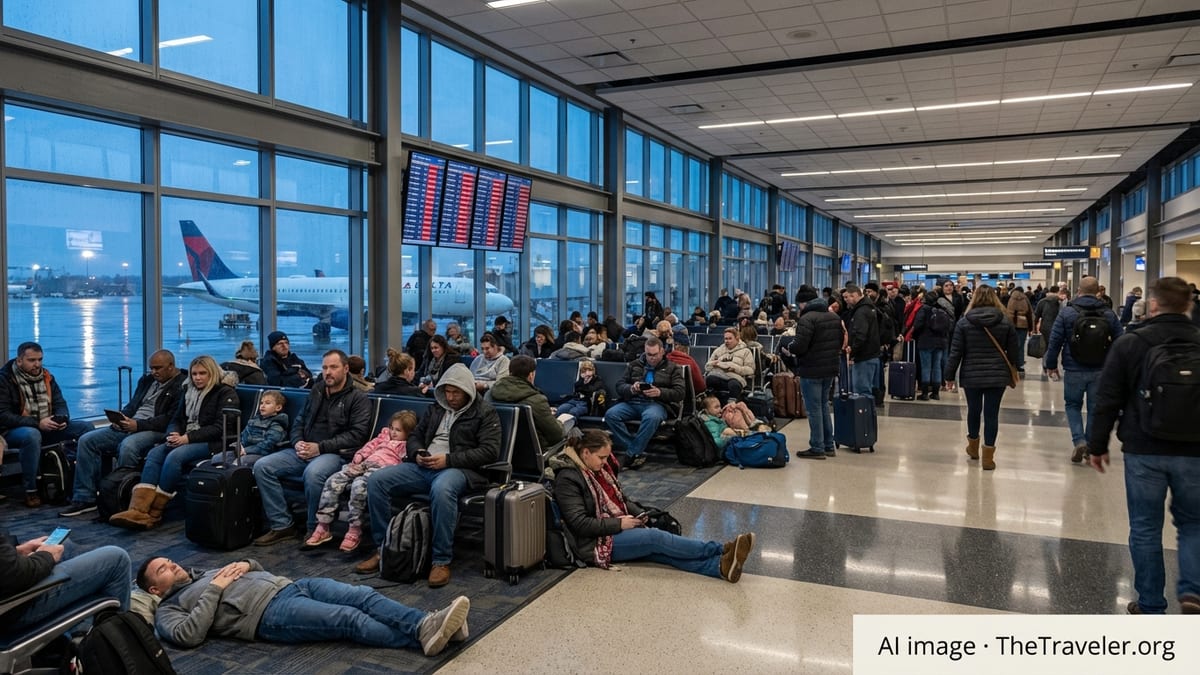
Detroit Hub Gridlocked by Systemwide Disruptions
The latest bout of travel turmoil at Detroit Metro comes at a peak winter travel period, when aircraft and airport operations are already stretched by heavy passenger demand and challenging weather. With hundreds of departures and arrivals pushed back or scrubbed over the course of the day, concourses at both the McNamara and North terminals quickly filled with passengers searching for answers, rebooked flights and scarce hotel rooms.
Detroit functions as a critical hub for Delta Air Lines and a key station for several low cost and regional carriers, which magnified the impact of Sunday’s disruptions. As aircraft and crews fell out of position in Michigan, knock-on delays began to appear on departure boards across the United States, especially at connecting hubs on the East and West Coasts and in the Midwest.
Airport officials urged travelers to arrive early, remain in close contact with their airlines and be prepared for extended waits at check in counters and rebooking desks. Many passengers, some traveling with young children or elderly relatives, reported waiting hours for information as airlines worked through long backlogs of itinerary changes and customer service calls.
By late afternoon, operations at Detroit Metro were slowly improving, but the day’s schedule remained heavily disrupted and airlines warned that residual delays and scattered cancellations could persist into Monday as aircraft and crews were brought back into alignment.
Ripple Effects Across Major U.S. Hubs
Because Detroit Metro serves as a connecting point between the U.S. Midwest, East Coast and West Coast, even a localized spike in delays can trigger a chain reaction through other major airports. On Sunday, that pattern played out once again as delayed departures from Detroit translated into missed connections and late arrivals at some of the country’s busiest hubs, including New York, Chicago, Atlanta and Los Angeles.
Passengers at New York area airports described crowded gate areas where flights inbound from or outbound to Detroit were held at the gate, reboarded or reassigned aircraft. In Chicago, where winter weather periodically affects operations, airlines worked to absorb late arriving jets from Michigan while keeping their own local schedules on track, a delicate balancing act that often results in short notice gate changes and rolling delays.
In Atlanta, Delta’s largest hub, the disruption from Detroit compounded an already compressed schedule. Many Detroit originating flights feed into Atlanta’s sprawling network of domestic and international departures. When those feeder flights arrived late or not at all, downline routes began to see schedule shuffles, aircraft substitutions and, in some cases, outright cancellations where crew time limits or maintenance windows could not be safely stretched.
On the West Coast, Los Angeles saw fewer cancellations directly tied to Detroit, but late arriving aircraft still forced crews and airport ground teams to adjust. The result was a familiar pattern for frequent travelers: flights that appeared on time in airline apps until shortly before departure, then slid into 30 or 60 minute delays as the day’s disruptions accumulated.
Delta, Spirit, Southwest and Others Scramble to Recover
Among the hardest hit carriers at Detroit Metro were Delta Air Lines, Spirit Airlines and Southwest Airlines, alongside a mix of regional operators that fly feeder routes under the branding of major network carriers. Delta, which operates the McNamara Terminal and controls a dominant share of the airport’s departures, saw much of its morning and midday schedule impacted as aircraft and crews could not be turned around on time.
Travelers on Delta reported long lines at customer service counters that snaked through concourses as the airline tried to rebook passengers onto later flights and, where possible, re route them through less affected hubs. Some were offered same day departures via alternative cities, while others facing longer delays were provided hotel and meal vouchers when overnight stays became necessary.
Spirit Airlines, which operates a substantial schedule of point to point leisure routes from Detroit, also contended with crowded gates and rebooking queues as its typically tight aircraft utilization model left little slack to absorb prolonged delays. Even a short series of ground holds can cascade quickly for carriers reliant on rapid turnarounds and full flight loads.
Southwest Airlines, famed for its high frequency network and fast turns, encountered its own operational challenges when Detroit originating flights fell behind schedule. In a system where many aircraft complete multiple segments per day, an early delay on a Detroit leg can echo into evening departures in far flung cities, including Chicago Midway and the Los Angeles Basin.
Passengers Face Long Lines, Missed Connections and Limited Options
For many travelers, the numbers behind the day’s disruptions translated into difficult personal stories of missed family gatherings, business meetings and long awaited vacations. At Detroit Metro, lines for rebooking stretched well beyond standard queueing areas at peak times, and agents worked through customers one by one, often juggling complex itineraries involving multiple carriers and international connections.
Some travelers reported waiting more than two hours to speak with an airline representative at in person counters, while others turned to phone hotlines or airline apps in hopes of securing earlier alternatives. However, during mass disruption events, inventory on later flights tightens rapidly, leaving many passengers with limited choices and, in some cases, multi day delays before the next available seat.
Families traveling with young children were particularly affected, as the combination of long waits, limited seating in public areas and uncertainty about departure times proved challenging. Volunteers and concessionaires at Detroit Metro handed out water and snacks in some areas, while airline staff circulated with updates and tried to prioritize vulnerable passengers when rebooking.
Travelers stranded in New York, Chicago, Atlanta and Los Angeles after misconnecting from delayed Detroit flights faced similar hurdles. Even when airlines offered hotel vouchers, nearby accommodations filled quickly, forcing some passengers to arrange their own lodging further from the airport or spend the night in terminal seating areas while waiting for morning departures.
Operational Strain Exposes Vulnerabilities in U.S. Air Travel
The turmoil at Detroit Metro highlights the continued vulnerability of the U.S. air travel system to concentrated disruptions at key hubs. Modern airline networks are built for efficiency, with aircraft scheduled on tightly choreographed rotations and crews assigned to complex duty cycles. While this approach keeps costs down and fares competitive, it leaves operations sensitive to breakdowns when weather, technical problems or airspace constraints interrupt the plan.
Once hundreds of flights at a major hub like Detroit begin to run late, the impact can quickly expand beyond the airport’s boundaries. Aircraft that would normally cycle through multiple cities each day arrive at their next destinations late or out of sequence, while crew time limits and maintenance requirements restrict how far airlines can stretch their schedules to catch up.
Industry analysts say that the pattern of cascading disruptions has become more visible in recent years as passenger numbers have rebounded and staffing at airlines, airports and air traffic control has struggled to keep pace. Even when a specific local issue is resolved within hours, the resulting schedule disarray often lingers into the next operating day.
Airports and airlines have invested heavily in technology to provide real time information, dynamic rebooking options and more precise tracking of aircraft and crews. Yet as Sunday’s events in Detroit showed, there remain limits to how quickly complex systems can recover once a tipping point of delays and cancellations has been reached.
Airline Responses, Waivers and Passenger Rights
In the wake of significant disruptions, major U.S. carriers typically issue flexible travel policies, or waivers, allowing customers booked on affected routes to change travel plans without incurring standard change fees. On Sunday, passengers reported that several airlines serving Detroit Metro offered same day and next day rebooking options at no additional cost, subject to seat availability, for those willing to shift their itineraries.
Travelers were encouraged to use official mobile apps and websites to request new flights rather than wait in line at airport counters whenever possible. These digital tools often allow passengers to compare available alternatives across multiple days and routes, including options that reroute through less congested hubs or adjust connections to avoid chronically delayed flights.
Consumer advocates note that passengers affected by extensive delays or same day cancellations should familiarize themselves with each airline’s customer service commitments, which outline when vouchers, meals or overnight accommodations may be provided. Policies differ significantly between carriers, and obligations are not always the same for weather related disruptions versus technical or staffing issues.
Experts also recommend that travelers document their experiences, including delay times, communications from airlines and out of pocket expenses, in case they seek reimbursement or choose to file complaints with federal regulators. While the U.S. does not guarantee compensation at the same level as some overseas jurisdictions, heightened regulatory scrutiny in recent years has pushed many airlines to improve their handling of major disruption events.
What Travelers Can Do Ahead of the Next Disruption
For travelers passing through Detroit and other major hubs in the coming days, there are practical steps that can help mitigate the impact of future disruptions. Booking early morning departures, when aircraft and crew are more likely to be in position from the previous night, can reduce exposure to late day cascading delays, although it does not eliminate risk entirely.
Industry experts frequently advise leaving longer connection windows, especially during winter months or peak holiday periods, to create a buffer for minor delays that might otherwise cause misconnects. When possible, choosing nonstop flights instead of itineraries with multiple legs can also reduce the number of potential failure points in a journey.
Travelers are also urged to keep airline apps updated and enable notifications so that gate changes, delay announcements and rebooking options reach them as soon as they are posted. In disruption scenarios like Sunday’s at Detroit Metro, those who acted quickly through digital channels often secured remaining seats on alternative flights before lines at counters grew too long.
As airlines work to restore normal operations after the latest wave of delays and cancellations, passengers across the country are being reminded that the U.S. aviation network, while remarkably capable under normal conditions, remains vulnerable when pressure builds at a critical hub. For thousands of travelers whose plans ran through Detroit, Sunday became another test of patience, flexibility and resilience in an era of increasingly unpredictable air travel.