

More news on this day
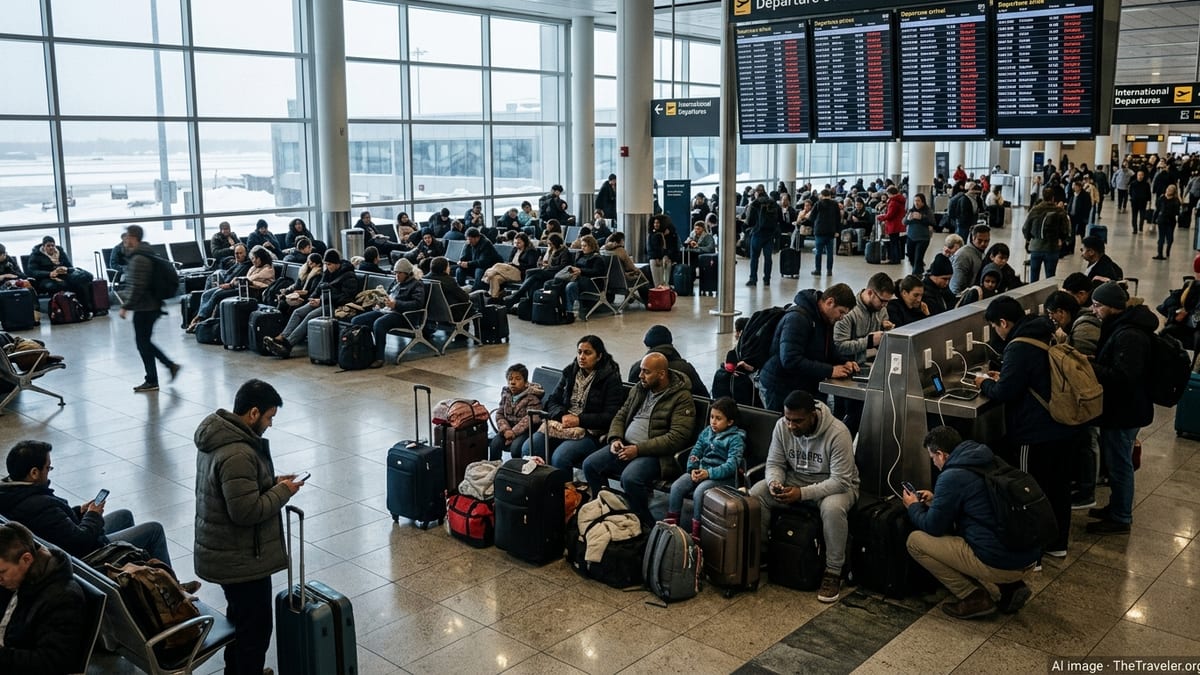
Hundreds of travelers across Canada were left isolated on Sunday as a fresh wave of disruptions rippled through the country’s busiest airports, with publicly available tracking data showing at least 32 cancellations and 485 delays affecting flights operated by WestJet, Jazz, Air Canada, Porter, PAL and other carriers in Montreal, Vancouver, Toronto, Calgary and Halifax.
Get the latest news straight to your inbox!
Major Canadian Hubs Grapple With Another Day of Turmoil
Operational data compiled from real-time flight tracking platforms on March 22 indicates that disruptions were concentrated at Canada’s largest hubs, including Toronto Pearson, Montreal–Trudeau and Vancouver International, as well as Calgary and Halifax airports. The figures point to a patchwork of cancellations and extensive delays across both mainline and regional services, echoing a broader pattern of strain that has characterized recent peak travel periods.
While some cancellations appeared clustered around specific departure banks in the early morning and late afternoon, delays extended throughout the day, affecting domestic connections, transborder services to the United States and selected international routes. Travelers reported long waits at check-in counters and gate areas as they attempted to rebook itineraries or secure overnight accommodation when onward connections became impossible.
Air Canada and its regional affiliate Jazz, along with WestJet, Porter and PAL, accounted for most of the affected flights at the five airports, according to publicly accessible dashboards. Smaller regional operators also appeared in the disruption tallies, suggesting that both major networks and feeder routes into remote communities were caught up in the day’s operational challenges.
The latest wave of irregular operations comes against a backdrop of heightened scrutiny of Canada’s aviation sector, with regulators and consumer advocates closely monitoring reliability, passenger care standards and complaint volumes during busy travel windows.
Travelers Stranded and Re-Routed as Options Narrow
Passengers in Toronto, Montreal and Vancouver reported being stranded for hours as rolling delays pushed departures well beyond scheduled times, in some cases leading to missed connections and forced overnight stays. Social media posts and online forum accounts described families sleeping in terminal seating areas, while others scrambled to secure last-minute hotel rooms near airports already operating at high occupancy.
In Halifax and Calgary, where flight options can be more limited than in the country’s largest hubs, cancellations appeared to have an outsized effect. When a single departure was removed from the schedule, publicly available records showed that alternative same-day options were sometimes scarce or fully booked, leaving some travelers facing waits of 24 hours or more for the next available seat.
Reports indicate that rebooking channels were heavily congested. Travelers attempting to use mobile apps, websites and customer service phone lines described extended hold times and intermittent system slowdowns, a recurring theme in Canada’s air travel landscape during previous disruption events linked to winter storms, staffing constraints and technology outages.
Some passengers turned to rival carriers or multi-stop routings in a bid to reach their destinations, often at significantly higher last-minute fares. Those unable to secure alternatives resorted to cancelling trips or postponing departures entirely, adding to frustration at a time when demand for domestic and leisure travel remains robust.
Weather, Congestion and Operational Strain Behind the Numbers
Although a single cause was not immediately clear, publicly available weather and aviation reports for Sunday pointed to a combination of challenging conditions and broader systemic pressures. Periods of low visibility, precipitation and gusty winds were reported around several affected airports, conditions that can reduce runway capacity and require additional spacing between aircraft.
Industry analyses published in recent months have highlighted how winter weather and tight crew scheduling can trigger a cascading effect across Canadian networks. When one or two early flights are delayed or cancelled, aircraft and crews may fall out of position for the rest of the day, leading to rolling knock-on delays in hubs such as Toronto, Vancouver and Calgary.
Historic data on Canadian airlines also shows that carriers have been operating with leaner buffers after the pandemic era, leaving less slack in fleets and staffing to absorb sudden schedule shocks. Earlier regulatory filings and publicly reported enforcement actions have underscored the consequences when airlines are unable to provide timely rebooking, hotel accommodation or meal vouchers during extended disruptions.
Analysts note that today’s figures, although smaller in scale than the mass shutdowns seen during severe winter storms, still represent a significant operational challenge, particularly when they occur across multiple hubs simultaneously and affect several airlines at once.
Passenger Rights and Compensation Questions Resurface
The latest disruptions are likely to reignite debate over the effectiveness of Canada’s Air Passenger Protection Regulations, which set out minimum standards for communication, compensation and care when flights are delayed or cancelled. Recent enforcement notices have documented cases in which carriers were penalized for failing to provide food, lodging or timely information to stranded passengers during earlier incidents.
Consumer advocates have argued that travelers often struggle to determine whether a delay or cancellation falls within an airline’s control, a key factor in deciding whether compensation is owed. Weather, air traffic control constraints and airport operational issues can exempt carriers from some financial obligations, while mechanical problems, crew scheduling shortfalls and certain internal system failures generally fall on the airline’s side of the ledger.
Publicly available guidance encourages passengers affected by cancellations or long delays to keep detailed records of expenses, screenshots of flight status updates and copies of any messages received from airlines. These documents can be critical in filing claims with carriers or escalating cases to regulatory bodies if disputes arise later.
Reports from previous disruption events also indicate that persistence can play a role. Some passengers have secured reimbursement or vouchers only after multiple attempts, written complaints or the involvement of third-party dispute channels, suggesting that today’s stranded travelers may face a similarly lengthy process to resolve their cases.
What Today’s Chaos Signals for Upcoming Travel Periods
The breadth of cancellations and delays across Montreal, Vancouver, Toronto, Calgary and Halifax is likely to be closely watched by both industry observers and the traveling public as Canada moves toward busier spring and summer travel seasons. Operational data from recent years shows that pressure on airlines and airports often increases around school breaks, long weekends and peak holiday periods.
Experts in aviation reliability have warned that without additional resilience in scheduling, staffing and technology, even moderately disruptive days can quickly escalate into multi-day snarls. When aircraft and crews end up out of place because of one day’s irregular operations, the ripple effects can surface on subsequent days in the form of early-morning cancellations, tight connection windows and reduced options on already popular routes.
For travelers, the events of Sunday serve as a reminder of the importance of contingency planning when flying within or through Canada’s busy hubs. Publicly available advice from consumer organizations typically highlights strategies such as allowing extra time for connections, traveling with essentials in carry-on bags and monitoring flight status closely in the 24 hours before departure.
As airlines work to stabilize their schedules and clear the backlog from the latest round of disruptions, attention is expected to focus on how quickly normal operations can resume and whether similar patterns of strain emerge during the next spell of adverse weather or high demand.