

More news on this day
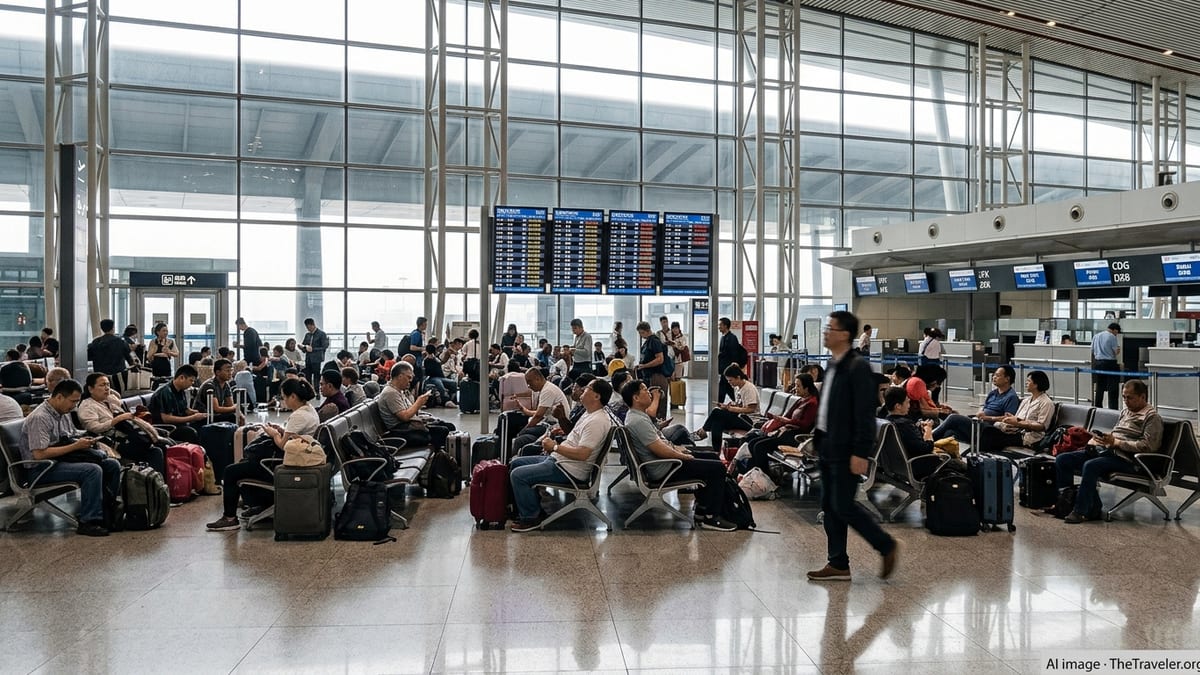
Hundreds of international travelers were left stranded across major Chinese airports on March 21, 2026, as operational disruptions led to 1,605 flight delays and 76 cancellations, snarling routes operated by Air China, China Eastern, China Southern, Emirates and other carriers on long haul services to New York, Paris, Dubai and additional global destinations.
Get the latest news straight to your inbox!
China’s Busiest Gateways Hit by Widespread Disruptions
Publicly available flight status data for March 21 indicate that China’s primary international hubs, including Beijing Capital International Airport, Shanghai Pudong International Airport, Guangzhou Baiyun International Airport and Shenzhen Bao’an International Airport, all reported elevated levels of disruption compared with typical weekend operations. The aggregate total of 1,605 delayed flights and 76 cancellations across multiple facilities translated into hours of unplanned waiting for passengers in departure halls and transit areas.
Reports from local and international media, as well as live tracking platforms, show that the impact was most visible at Beijing Capital and Shanghai Pudong, which handle a significant share of China’s intercontinental traffic. These hubs connect North America, Europe and the Middle East to the country’s political and commercial centers, meaning that even modest disruptions can quickly cascade across airline networks.
While precise causes varied by airport and flight, a combination of congestion in peak travel periods, tight turnaround schedules and knock-on effects from earlier delays appear to have played a role. In large hub operations where aircraft and crew are shared across multiple routes, a delay of several hours on one leg can ripple outward, pushing subsequent departures behind schedule or forcing outright cancellations when duty and curfew limits are reached.
The timing of the disruption comes as long haul demand between China and other global centers has been steadily rebuilding. Published schedules and recent traffic statistics show more frequent services on trunk routes to New York, Paris and Dubai compared with previous seasons, leaving airlines with less slack in their systems when irregular operations occur.
Air China, China Eastern and China Southern Networks Affected
The biggest domestic network carriers in mainland China were among the most affected by the wave of delays. Air China, with a core long haul base at Beijing Capital, operates key transpacific and transcontinental services, including flights to New York. China Eastern’s hub at Shanghai Pudong underpins its Europe and North America operations, while China Southern centers a large part of its international schedule at Guangzhou Baiyun.
According to airline schedule data and tracking services, these three carriers all saw disruptions across both domestic and international departures on March 21. Even when long haul flights operated, late-arriving inbound aircraft from other Chinese cities often led to revised departure times, longer boarding queues and missed connections for transit passengers.
Travelers connecting in Shanghai and Beijing onto Europe bound flights reported through social platforms and aviation forums that relatively short scheduled layovers left little margin for error. When feeder services from secondary Chinese cities landed behind schedule, passengers headed to New York, Paris and other long haul destinations sometimes arrived at the gate to find boarding completed or doors already closed, prompting a scramble for rebooking and overnight accommodation.
Operational adjustments by the major Chinese airlines in recent seasons, including condensed wave banks of arrivals and departures designed to maximize aircraft utilization, have improved scheduling efficiency in normal conditions. However, on days with widespread delays, this same tight pattern can increase the likelihood that one missed slot or late arrival will trigger broader timetable upheaval.
Emirates and Other Foreign Carriers See Knock-on Delays
The disruption also affected foreign airlines that rely on Chinese hubs as key points in their global networks. Emirates, which operates high profile services linking Dubai with Beijing, Shanghai and Guangzhou, faced schedule pressure both on China bound flights and on onward connections from its Dubai hub to cities such as New York and Paris.
Recent operational updates from the carrier and publicly shared customer experiences show that Emirates has already been navigating a challenging environment this month as broader regional airspace and schedule adjustments reshape its long haul patterns. Delays or rotations involving aircraft serving Beijing, Shanghai Pudong and Guangzhou Baiyun can therefore spill over into other parts of its network, including transatlantic services from Dubai to major North American and European gateways.
Other international airlines serving China’s primary airports, including European and Asian network carriers, also reported altered timings as they adjusted pushback, boarding and baggage handling to align with congested runways and air traffic flows. Even when these flights departed, they often did so outside their scheduled windows, complicating crew planning and increasing the likelihood of missed connections for transfer passengers at their home hubs.
For travelers, the immediate effect was visible in crowded gate areas, extended check in lines and frequent public address announcements about revised departure times. Social media posts from stranded passengers described hours of uncertainty as departure boards cycled through a series of incremental delays before some flights were ultimately shown as cancelled.
Routes to New York, Paris, Dubai and Other Long Haul Destinations Disrupted
The timing and location of the delays meant that some of the world’s most heavily trafficked intercontinental corridors were among the hardest hit. Published timetables show that Beijing Capital and Shanghai Pudong host a growing number of flights to New York area airports, while Guangzhou Baiyun and Shenzhen Bao’an support connections that feed into one stop journeys to North America via other Asian and Middle Eastern hubs.
Similarly, airlines have positioned Paris as a key European gateway for both direct China Europe traffic and onward connections within the Schengen area. Even modest delays on flights from Beijing, Shanghai or Guangzhou to Paris can lead to missed onward services to secondary European cities, forcing passengers into overnight stays or complex rebookings on alternative routings.
Dubai’s status as a global super hub means that late running flights from Chinese cities can impact connectivity well beyond the immediate China Middle East route. Travelers booked on single ticket itineraries from China to North America, Europe or Africa via Dubai rely on short transfer windows that can be easily disrupted when one leg departs late or arrives outside its planned slot.
Industry analysts note that long haul operations are particularly sensitive to such irregularities because aircraft often complete only one or two rotations per day. If a widebody jet leaves Beijing or Shanghai several hours behind schedule on a transpacific or Europe bound flight, the arrival delay at the other end frequently eliminates the possibility of operating its planned return sector on time.
Passengers Confront Rebookings, Compensation Questions and Travel Uncertainty
The disruption at Chinese hubs on March 21 left many passengers facing rebookings, overnight stays and questions about their rights to refunds or compensation. Travel forums and social channels carried accounts of travelers attempting to secure new itineraries on alternative airlines, particularly on scarce long haul seats to New York, Paris and Dubai as peak departure times slipped away.
For travelers holding tickets on Air China, China Eastern, China Southern, Emirates and other affected airlines, reissue policies varied depending on fare class, route and whether the flight was delayed or outright cancelled. Publicly available information from carriers typically outlines options such as free date changes within a specified window, rerouting via alternative hubs or refunds in cases of significant schedule disruption or cancellation.
Consumer advocates frequently advise passengers in such situations to monitor flight status independently through airline apps or tracking services, arrive early at the airport in case departures are brought forward, and maintain documentation of delays, boarding passes and any out of pocket expenses. These records can be important later when seeking reimbursement or applying for compensation where applicable under local regulations or airline policies.
The events underscore how quickly conditions can change across interconnected global aviation networks, especially at large hub airports concentrated in a single region. As airlines continue to rebuild and expand long haul schedules from China to North America, Europe and the Middle East, travelers are likely to remain sensitive to the potential for similar episodes of mass disruption and may increasingly prioritize longer connection buffers and flexible tickets when planning itineraries.