

More news on this day
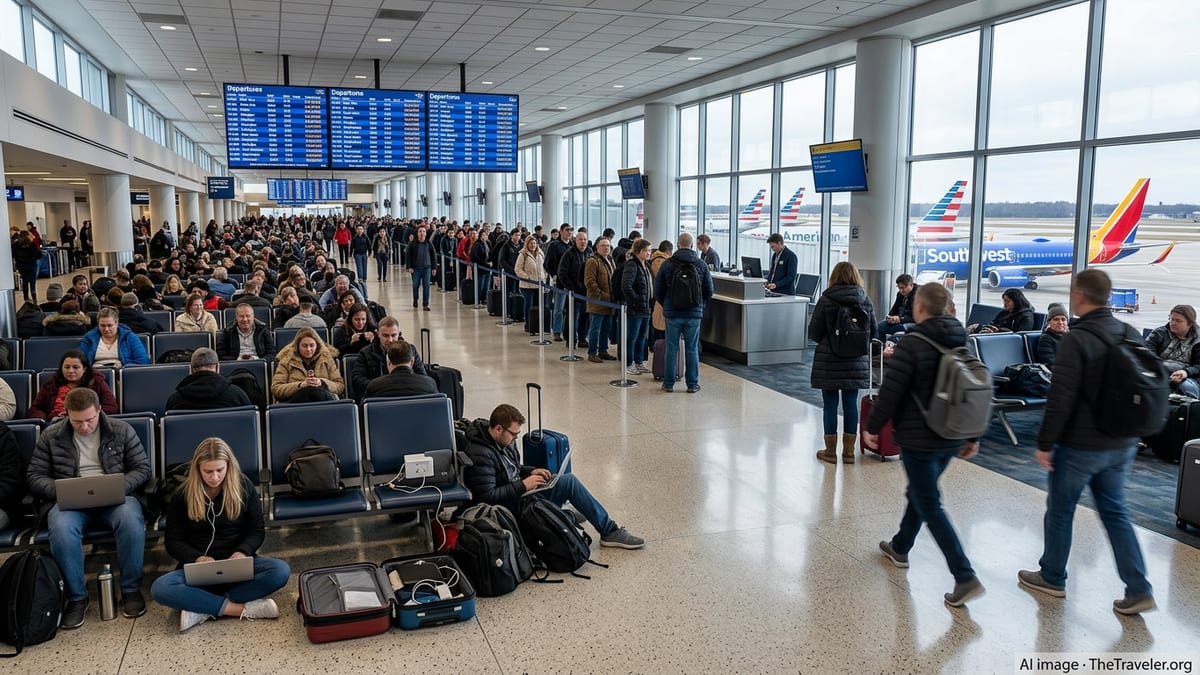
Hundreds of passengers were left stranded at St. Louis Lambert International Airport on Thursday as a wave of delays and cancellations disrupted operations for major carriers including American Airlines and Southwest, snarling travel to key hubs such as New York, Dallas, Chicago, and Los Angeles.
Get the latest news straight to your inbox!
Widespread Disruptions Hit Major Carriers
Airport operations at St. Louis Lambert International descended into frustration on Thursday after 113 flights were reported delayed and at least nine were canceled, affecting a mix of morning and afternoon departures and arrivals. The disruption rippled across the network of major U.S. airlines, with American Airlines and Southwest among the hardest hit, alongside several other domestic carriers that rely on Lambert as a key connecter in the Midwest.
Passengers bound for high-volume destinations including New York, Dallas, Chicago, and Los Angeles faced long waits at packed gate areas as departure times were repeatedly pushed back. Some travelers reported being rebooked multiple times, while others were told that no same-day alternatives were available due to already full flights on remaining schedules.
The cascading delays also created knock-on effects for connecting itineraries, stranding passengers in St. Louis who had been scheduled to change planes en route to the East and West Coasts. Airline staff were seen working gate by gate to reissue boarding passes and arrange overnight accommodations for those who could not be re-routed the same day.
While airlines did not immediately release full breakdowns by carrier, airport information screens showed clumps of delayed flights for both American and Southwest, particularly on key routes to Dallas and Chicago, which serve as major connecting hubs for onward domestic and international travel.
Travelers Face Long Lines and Uncertain Timetables
Inside the terminals, mounting delays quickly translated into crowding at ticket counters, security checkpoints, and gate areas. Families traveling with children huddled on floors near charging outlets, while business travelers refreshed airline apps and flight trackers hoping for clearer timelines. Some passengers described the atmosphere as tense but largely orderly, with many resigned to a long day at the airport.
Staff at customer service desks fielded lines that stretched deep into the concourses, as stranded travelers sought new itineraries, meal vouchers, or clarity on when they might finally depart. With limited open seats remaining on later flights to major hubs, many were offered itineraries that would route them through secondary cities or overnight stops in order to reach their final destinations.
Food and beverage outlets reported a steady stream of customers throughout the day as travelers settled in for extended waits. Seating near windows and gate podiums was at a premium, with some passengers improvising makeshift workspaces and others attempting to sleep in quieter corners of the terminal.
For those arriving in St. Louis, the disruption created its own challenges. Several inbound flights landed late, leading to backups at baggage claim and confusion among friends and family waiting in pickup lanes outside the terminals, where traffic periodically slowed as more delayed flights finally touched down.
Operational Pressures at a Key Midwest Gateway
Lambert serves as the busiest airport in Missouri and an important connecting point for travelers moving between the coasts and the central United States. Even a few dozen irregular operations can strain its tightly timed schedule, and Thursday’s tally of more than one hundred delayed flights placed unusual pressure on ramp crews, gate assignments, and air traffic flow.
Airport operations teams worked to reposition aircraft and crews as airlines shuffled planes among gates to accommodate changed departure times. Delayed arrivals limited the availability of aircraft for outbound departures, while crew duty-time limits threatened to ground additional flights if pilots or flight attendants timed out before they could legally complete their shifts.
The disruption highlighted how quickly a cluster of delays can ripple across a mid-sized hub. With many flights from St. Louis feeding into larger airports like Dallas and Chicago, schedule changes in one city can cascade into missed connections and further delays down the line, complicating recovery efforts for airlines already operating close to capacity on popular routes.
Airport officials urged passengers to remain in close contact with their airlines, monitor flight status tools, and arrive early for departures to allow extra time for congestion at check-in and security, particularly during peak morning and late afternoon waves.
Impact on Routes to New York, Dallas, Chicago, and Los Angeles
Among the most heavily affected routes were those connecting St. Louis with major national gateways. Travelers heading to New York reported multiple rolling delays, with morning departures pushed into the afternoon and some flights ultimately canceled, forcing passengers to accept limited evening options or fly through alternate connections in the Midwest and Southeast.
Flights to Dallas and Chicago, both essential hubs for American and other carriers, saw a series of staggered delays that quickly consumed remaining seats on later departures. As aircraft filled, some passengers were advised that the earliest available travel to their final destinations might not be until the following day, particularly for those holding basic economy tickets or traveling in larger groups.
Service to Los Angeles also experienced schedule disruptions, creating problems for travelers with onward international connections to Asia and the Pacific. Some passengers reported being rebooked onto red-eye flights from other hubs after their original nonstop or one-stop itineraries from St. Louis became unworkable.
For many travelers, the uncertainty was compounded by the need to rearrange hotel bookings, ground transportation, and work or family commitments at their destinations. Airport seating areas became impromptu planning centers, as passengers worked phones and laptops to reconfigure their plans around constantly shifting departure boards.
Airlines Move to Recover Schedules and Assist Passengers
By late in the day, airlines had begun deploying standard irregular-operations measures to ease the disruption and stabilize schedules. Gate agents encouraged passengers with flexible travel plans to voluntarily move to later departures, freeing up space on earlier flights for those with time-sensitive commitments.
Some carriers authorized waivers allowing affected passengers to change flights without additional fees, subject to availability, and issued meal or hotel vouchers in cases where delays or cancellations resulted in overnight stays. Travelers were urged to use mobile apps and automated systems where possible to avoid lengthy waits in physical lines at customer service counters.
Operational teams continued working to bring aircraft and crews back into alignment, focusing on restoring regular service on high-demand routes first in order to prevent a new wave of disruptions the following day. As flights slowly departed and the backlog eased, airport staff cleaned and reset gate areas that had been crowded for much of the day.
Despite the frustration, many passengers expressed appreciation for front-line airport and airline employees managing the situation on the ground. For hundreds of travelers, however, the disruption at St. Louis Lambert International Airport turned what should have been a routine trip into an unexpected lesson in the fragility of tightly choreographed air travel schedules.