

More news on this day
Hundreds of air travellers across Australia are facing extended delays, missed connections and unexpected overnight stays as more than 460 flights are delayed and at least 36 services cancelled at major hubs including Sydney, Melbourne, Brisbane and Perth, affecting operations for Qantas, Jetstar, Virgin Australia, Network Aviation and several other carriers, according to live tracking data and airport information published today.
Get the latest news straight to your inbox!
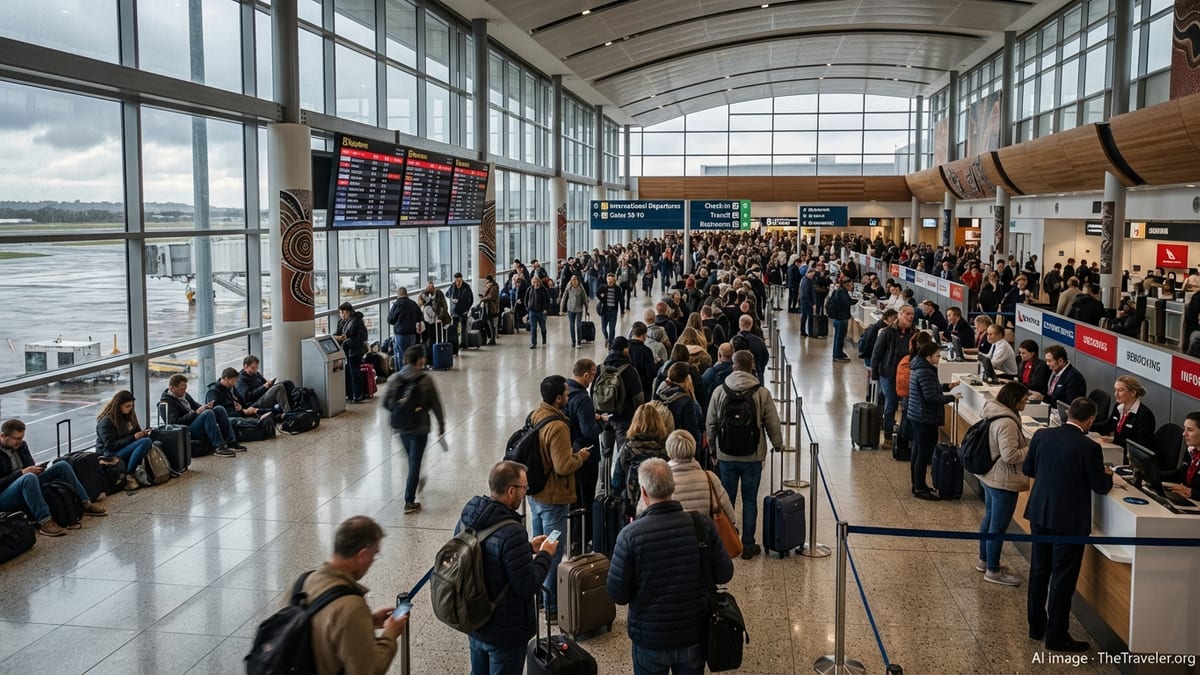
Major Hubs Buckle Under Wave of Delays
Publicly available flight boards for Sydney, Melbourne, Brisbane and Perth show an intense morning and afternoon of disruption, with departure and arrival screens dominated by late-running services. Flight status aggregators tracking Australian operations list more than 460 delays across the domestic and short haul international networks, alongside 36 outright cancellations, leaving aircraft and crew out of position and passengers stranded in terminals.
Reports indicate that Sydney and Melbourne have recorded the highest concentration of problem flights, reflecting their role as primary connecting hubs in the country’s aviation system. Brisbane and Perth are also reporting clusters of delayed departures and arrivals, with knock-on impacts at secondary airports including Adelaide, Canberra and key regional gateways.
Operational data suggests that a significant share of delays are in the 30 to 90 minute range, although a growing number of services are slipping beyond two hours as the day progresses. As aircraft rotate through multiple sectors, an early delay on a Sydney to Melbourne or Brisbane route is rippling through later flights to Western Australia and interstate destinations, compounding network congestion.
For travellers, the pattern translates into crowded departure halls, long queues at service desks and heavy pressure on later flights as disrupted passengers seek alternative options. Social media posts and local coverage describe families sleeping on terminal benches, business travellers rebooking same-day returns, and holidaymakers forced to rearrange hotel and tour plans at short notice.
Qantas, Jetstar, Virgin and Network Aviation Under Strain
The disruption is spread across multiple carriers, with Qantas, its low-cost subsidiary Jetstar, Virgin Australia and Network Aviation among the airlines most visibly affected. Published schedules show cancellations and long delays on high-frequency trunk routes such as Sydney to Melbourne, Sydney to Brisbane and Melbourne to Brisbane, where all three major brands compete for passengers.
Qantas and Jetstar, which operate dense banks of services through Sydney and Melbourne, appear to be carrying a substantial portion of the delayed flights, particularly on east coast corridors and links to Perth. Virgin Australia and Network Aviation are also experiencing interruptions, including on services connecting resource-focused destinations in Western Australia with Perth and other capitals.
Industry monitoring reports released in recent months have highlighted elevated cancellation and delay rates across Australian domestic aviation, noting that major carriers have struggled to align aircraft availability, crew rosters and surging demand. Today’s figures, with combined delays and cancellations running into the hundreds of flights, fit into that broader pattern of an operating environment where relatively small shocks can quickly cascade into large-scale disruption.
Smaller and regional operators are not immune. Flight status information indicates scattered delays on services feeding into the main hubs, particularly where single daily flights are used to connect regional centres with Sydney, Melbourne and Brisbane. In these cases, even a modest delay can mean missed same-day connections for onward domestic and international journeys.
Weather, Staffing and Technical Issues Combine
While no single cause fully explains the scale of the disruption, a combination of adverse weather, staffing constraints and aircraft technical issues appears to be driving today’s problems. Recent coverage of Australian flight operations has consistently pointed to weather systems along the east coast and periodic air traffic control staffing shortages as key triggers for rolling delays and congestion.
Low cloud, strong winds and showers around Sydney and Melbourne can require increased separation between aircraft for safety, which reduces runway capacity and forces airlines to slow arrivals and departures. When this occurs during peak travel periods, queues build quickly, leading to airborne holding patterns, ground delays and missed departure slots for onward legs.
At the same time, the sector is still working through crew rostering challenges, maintenance backlogs and high utilisation of narrow-body fleets, particularly Airbus A320 and Boeing 737 aircraft that are scheduled to complete four to six sectors per day. Technical inspections or last-minute faults that remove a single aircraft from service can leave airlines with limited spare capacity to recover when something goes wrong.
Aviation analysts have also noted that Australian carriers are operating against a backdrop of longer term structural pressures, including post-pandemic recruitment, training bottlenecks and higher demand for peak-time travel. In such conditions, when weather or traffic control constraints arise at one or two major hubs, the resulting delays can quickly propagate along key domestic corridors.
Stranded Travellers Face Missed Connections and Extra Costs
The operational challenges are translating into significant disruption for passengers throughout the day. Reports from terminals indicate that hundreds of travellers have missed domestic and international connections, particularly those routing through Sydney and Melbourne on their way to Asia, the Pacific and Europe.
Families returning from holidays, fly-in fly-out workers heading to or from mine sites, and business travellers on tight timetables are among those hardest hit. Many face the prospect of rebooking at short notice, securing last minute accommodation in already busy city centres, or rearranging onward train, bus and rental car bookings. For some international passengers, new tickets or change fees on separate onward bookings may add hundreds of dollars to the cost of their journeys.
Australian consumer guidance notes that the level of support and compensation available to stranded travellers depends on the cause of disruption and the conditions of carriage of each airline. In general, when cancellations or long delays are linked to factors within an airline’s direct control, such as engineering or crewing decisions, passengers may be entitled to refunds or alternative transport. Weather, air traffic control constraints and other external events can fall into different categories, often limiting carrier liability.
Nonetheless, recent commentary from consumer organisations has encouraged affected travellers to keep detailed records of boarding passes, delay notifications and additional expenses, and to check airline policies carefully. Where travel insurance is in place, policies sometimes cover accommodation, meals and rebooking costs when delays exceed specified thresholds, although conditions vary widely between providers.
Ongoing Knock-On Effects Expected Across the Network
With aircraft and crews displaced from their planned rotations, industry observers expect the disruption to continue into the evening peak and potentially into following days. Even after weather improves or immediate air traffic restrictions ease, airlines often require several schedule cycles to fully realign equipment and staff, particularly across such a geographically large domestic network.
Later departures from Sydney, Melbourne and Brisbane are already showing fresh delays as carriers attempt to recover lost time and reposition aircraft to where they are needed next. Flights from Perth and other western and northern airports are experiencing secondary delays as they await inbound aircraft that left the east coast late, compressing turnaround times and straining ground operations.
According to published route performance data, Australia’s busiest domestic sectors regularly carry thousands of passengers per day in each direction. When disruption affects these trunk routes, the number of travellers impacted multiplies quickly, especially for those relying on same-day return journeys or tight connection windows. As a result, the operational challenges seen today are likely to ripple through corporate schedules, leisure itineraries and freight logistics for at least another cycle of flights.
Travel planners suggest that passengers booked on services over the next 24 hours monitor flight status tools closely, consider allowing additional time for connections, and be prepared for further changes as airlines work to stabilise their networks. For many, today’s events are a reminder that even in a largely recovered aviation market, resilience remains a critical issue for carriers and travellers alike.