

More news on this day
Hundreds of passengers have been left stranded across Saudi Arabia after widespread flight cancellations and delays at Jeddah, Riyadh, Medina and Dammam disrupted operations for Saudia, Qatar Airways, Flynas, Emirates and other carriers.
Get the latest news straight to your inbox!
Widespread Disruptions Hit Key Saudi Gateways
Published flight data and regional aviation coverage indicate that Saudi Arabia has seen at least 81 flights cancelled and more than 900 delayed in a sharp escalation of disruption at its main international gateways. The operational turbulence has been concentrated at Jeddah’s King Abdulaziz International Airport, Riyadh’s King Khalid International Airport, Medina’s Prince Mohammad bin Abdulaziz International Airport and Dammam’s King Fahd International Airport.
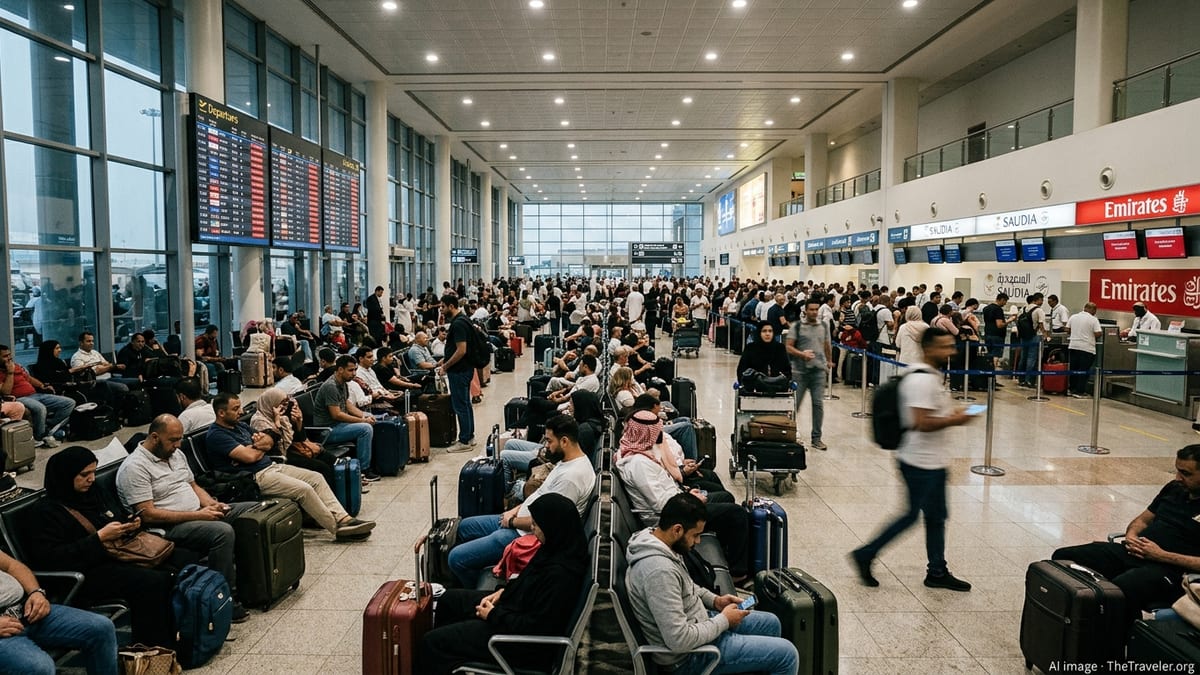
Passengers reported long queues, rolling departure boards and sudden gate changes as airlines attempted to reshuffle schedules and crews. The impact has been felt most acutely by travellers on Saudia, Qatar Airways, Flynas and Emirates, which together account for a significant share of regional and long haul traffic linking Saudi Arabia to Europe, Asia and Africa.
Publicly available information from airport status boards and flight tracking platforms shows that delays have rippled across both domestic and international routes. Services between Saudi hubs, as well as flights to major connecting airports such as Dubai and Doha, have faced extended ground times or last minute cancellations as carriers navigate rapidly changing operational constraints.
Travel advisories issued in recent days describe a dynamic situation in which schedules are being adjusted hour by hour. While some flights have managed to depart within a few hours of their scheduled times, others have been held on the ground much longer or withdrawn entirely, leaving travellers with limited options for same day rebooking.
Regional Airspace Volatility Compounds Airline Challenges
The current wave of disruption is unfolding against a backdrop of heightened regional tension and shifting airspace availability. Aviation and security analyses released this month describe a fragmented network of open, partially open and restricted corridors across the Middle East, forcing airlines to modify routings and, in some cases, suspend services altogether.
Saudi Arabia’s position as a critical east west transit point has placed additional pressure on its airports and air traffic control services. When adjacent airspaces are restricted, remaining corridors often absorb diverted flights, increasing congestion and stretching ground handling and crew resources at airports such as Jeddah, Riyadh and Dammam.
Operational briefings from travel risk and logistics consultancies note that carriers are balancing safety, insurance requirements and slot availability as they decide whether to operate, reroute or cancel individual flights. These decisions can change at short notice, contributing to the high volume of delayed departures reported across Saudi airports.
For airlines such as Saudia, Qatar Airways, Flynas and Emirates, the knock on effects extend far beyond a single sector. A grounded aircraft in Jeddah can cascade through a day’s schedule, affecting rotations to Europe or Asia, while crew duty time limits constrain how long staff can wait with passengers before flights must be rescheduled.
Pilgrims and Transit Passengers Face Lengthy Stranding
The disruption has been particularly disruptive for religious travellers and transit passengers who rely on tight connections through Saudi hubs. Reports from traveller forums and social media posts describe Umrah pilgrims who arrived in Jeddah or Medina only to find onward flights delayed indefinitely or removed from departure boards.
In some cases, groups travelling on package itineraries have been forced to spend unexpected nights in airport terminals or nearby hotels while tour operators scramble to secure alternative arrangements. Individuals with separate tickets for onward legs have faced additional uncertainty, as missed connections can invalidate later segments or incur extra costs for rebooking.
Transit passengers using Riyadh and Dammam as connecting points between Asia, Africa and Europe have also reported challenges. When a first flight into Saudi Arabia is delayed by several hours, onward departures may no longer be feasible, leaving travellers to negotiate with airline desks for new itineraries amid high demand and limited remaining seat capacity.
Travel insurance coverage has emerged as another concern. Some policies treat large scale airspace disruptions or conflict related closures differently from routine operational delays, leaving travellers unsure about eligibility for reimbursement of hotels, meals or replacement tickets. Advisories from travel industry specialists are urging passengers to read policy documents closely and keep detailed records of disruption related expenses.
Airlines Introduce Waivers and Limited Rebooking Options
In response to the mounting disruption, several airlines serving Saudi airports have introduced limited flexibility measures for affected customers. Publicly available notices on carrier websites and booking platforms reference date change waivers, fare difference reductions and the option to reroute via alternate hubs where space permits.
Such measures, while helpful, have not fully absorbed the surge in demand from stranded travellers. With aircraft and crews out of position, airlines have finite capacity to add extra sections or upgauge aircraft at short notice. As a result, some passengers have reported being offered new travel dates several days beyond their original plans, especially on popular routes during peak travel periods.
Low cost carriers such as Flynas face particular constraints because their point to point models and tighter fleet utilisation leave less room for operational slack. When one or two aircraft are grounded or heavily delayed, knock on effects can spread rapidly across multiple cities, including Jeddah, Riyadh and Dammam.
For full service airlines such as Saudia, Qatar Airways and Emirates, alliance partnerships and interline agreements provide additional options for reaccommodating passengers. However, the broader regional capacity squeeze limits the number of available seats across all carriers, and not all tickets qualify for cross airline rebooking, especially the most deeply discounted fares.
Guidance for Travellers Navigating the Ongoing Disruptions
Travel and aviation analysts are advising passengers with upcoming itineraries involving Jeddah, Riyadh, Medina or Dammam to monitor flight status closely and build additional buffer time into their plans. Same day connections that would normally be considered reasonable may carry elevated risk while the current pattern of cancellations and delays continues.
Passengers are being encouraged to rely on official airline apps and airport information channels for the latest operational updates, as third party booking sites and printed itineraries may not reflect rapid schedule changes. In many cases, carriers are processing rebooking requests in order of departure time, prioritising those whose flights are imminent or already disrupted.
Where possible, travellers may benefit from consolidating separate tickets into a single through booking on one carrier or alliance, which can simplify protection in the event of missed connections. Those with flexible travel dates might also consider postponing non essential trips or avoiding routings that require multiple transits within the most affected airspace corridors.
With Saudi Arabia expected to remain a central conduit for modified flight paths across the region, industry observers anticipate that disruption levels could fluctuate in the coming days rather than resolve immediately. Travellers planning journeys through Jeddah, Riyadh, Medina or Dammam are therefore being urged to remain prepared for evolving conditions, even if their specific flights are still shown as operating at the time of booking.