

More news on this day
Arriving travelers at Salt Lake City International Airport are facing mounting delays, with disrupted flight schedules, crowded terminals and traffic backups complicating the final leg of trips into northern Utah.
Get the latest news straight to your inbox!
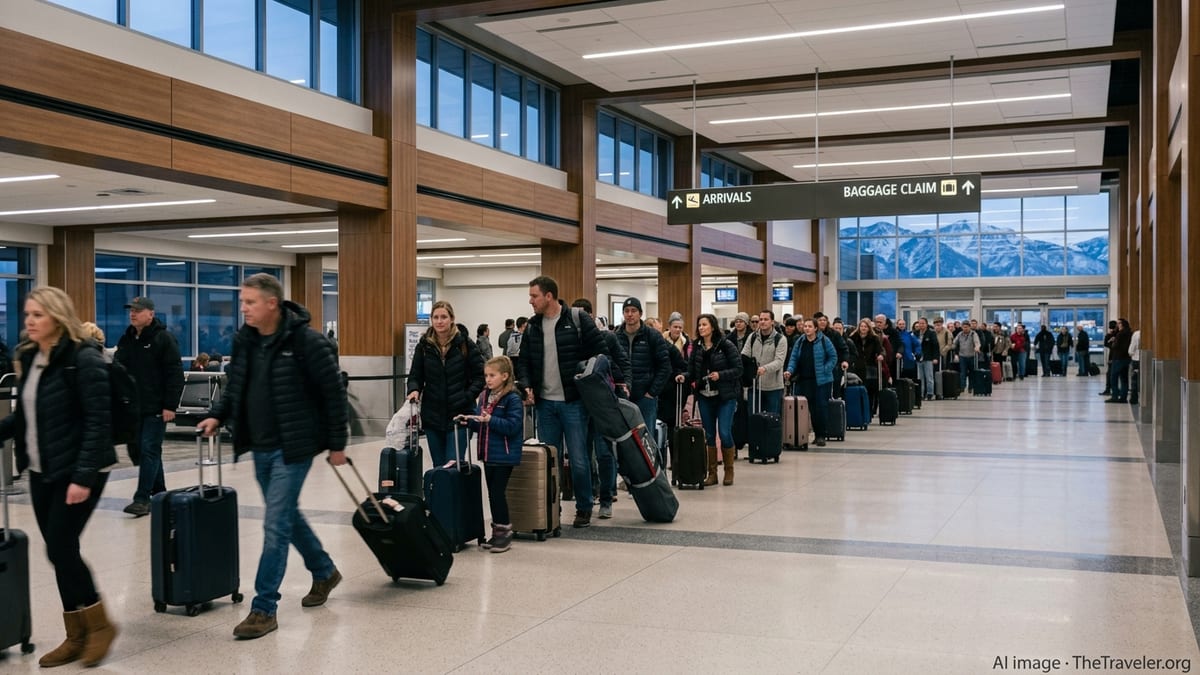
Arrivals Backed Up After Weeks of Disruptions
Recent days have brought a new wave of frustration for passengers flying into Salt Lake City International Airport, as arrival delays stack up on top of an already difficult winter travel season across the United States. Publicly available flight tracking data for March shows elevated levels of delayed and late-arriving flights into Salt Lake City, following a series of winter storms that swept through the West and disrupted operations at multiple hubs.
Coverage from local broadcasters in February and early March highlighted periods when hundreds of flights at Salt Lake City were delayed or canceled during heavy snow, forcing airlines to compress disrupted schedules into already busy days as conditions improved. Although most weather ground stops at the airport have lasted only a few hours, the knock-on effects have extended into subsequent days, with late inbound aircraft leading to rolling arrival delays.
Recent national reports on air travel have also underscored how staffing constraints in the broader aviation system, particularly at air traffic control centers in major hub cities, can cause delays that radiate to airports like Salt Lake City. Travelers arriving from Chicago, Denver and other large connecting hubs have reported sitting on tarmacs or circling in holding patterns before receiving clearance to land in Utah, further complicating arrival times.
All of this has unfolded as Salt Lake City International continues to grow as a connecting hub, placing more pressure on gate availability and ramp operations during peak times. When clusters of delayed flights arrive in tight windows, passengers can encounter long taxi times, crowded jet bridges and congested corridors on their way to baggage claim and ground transportation.
Weather, Winter Storms and a Busy Spring Travel Period
The immediate backdrop to the current wave of arrival delays is an unusually active winter and early spring weather pattern across the Mountain West. Local news outlets documented Utah’s biggest snowstorms of the season in February, which temporarily shut down runway operations in Salt Lake City while plows cleared accumulated snow and gusty winds reduced visibility. Those short operational pauses translated into dozens of delayed arrivals and departures, with airlines needing additional time to de-ice aircraft and re-sequence flights.
Regionwide, major winter storms in January and February disrupted air travel on a national scale, leading to tens of thousands of delays and cancellations across multiple days. As airlines worked to reposition aircraft and crews, Salt Lake City’s role as a connecting hub meant that even flights arriving under clear skies could run significantly behind schedule because the inbound plane had previously been held up at another airport.
The calendar has added another layer of pressure. The late March period brings a mix of spring break travel, ski tourism and business trips into northern Utah, pushing passenger volumes higher just as airlines and airports are managing the tail end of winter operations. Publicly available information from national travel trackers indicates that domestic demand remains strong, which can leave little slack in the system when storms, congestion or staffing gaps disrupt the schedule.
For arriving travelers, the result has been an unpredictable experience: some flights land roughly on time, while others face extended airborne holding or ground delays before reaching the gate. Once inside the terminal, heavier passenger flows during peak windows can slow everything from restroom access to baggage collection.
Terminal Congestion and Ground Transport Bottlenecks
The impact of arrival delays at Salt Lake City International extends beyond the runway and into the terminal and roadway network. When several late flights land in quick succession, arriving passengers can encounter crowded escalators, long lines at elevators and packed walkways leading from gates to the main terminal. Social media posts and local discussion forums in recent days describe passengers spending extended periods navigating concourses before even reaching baggage claim.
Baggage handling systems can also feel the strain as delayed flights concentrate demand. Although the airport’s modernized facilities were designed to handle growing passenger totals, compressed arrival banks can lead to longer waits at carousels, particularly when airlines are managing a mix of tight connections and completed trips. For travelers who have already spent extra time in the air, standing shoulder to shoulder around baggage belts adds to the sense of delay.
Outside the terminal, the roadway approaches and pickup areas are emerging as persistent choke points. Drivers headed to meet arriving passengers have reported long backups approaching the terminal during peak periods, with traffic slowing to a crawl near lane merges and intersections. Local discussions over the past year have frequently flagged congestion at the passenger pickup level, where limited curb space, high vehicle turnover and ongoing construction on nearby roads can combine to produce lengthy waits.
Once passengers collect their luggage, many face additional delays finding their rides. Ride-hailing zones and hotel shuttles can become congested when arrival waves outpace the ability of vehicles to enter and exit the terminal area efficiently, stretching the time it takes for visitors and returning residents to finally leave the airport grounds.
Construction, Growth and Long-Term Capacity Challenges
Salt Lake City International is in the midst of one of the largest airport redevelopment programs in the country, with new concourses and terminal facilities replacing aging infrastructure in phases. Public project documents and industry coverage describe a multiyear effort to expand capacity, improve seismic resilience and streamline passenger flows. While much of the new terminal complex is open, some related work on roadways and support infrastructure is still underway or planned through 2026.
Federal aviation construction reports point to upcoming projects near the airport’s roadway network, including realignments intended to support long-term traffic flow. Although these efforts are designed to ease congestion over time, interim lane restrictions, changing traffic patterns and construction equipment can contribute to short-term slowdowns for drivers reaching the arrivals curb.
The airport’s rapid growth has also played a role in today’s crowded conditions. In recent years, surveys and travel magazines have ranked Salt Lake City highly among U.S. airports, citing efficient operations and improved passenger amenities. That reputation, coupled with the region’s expanding economy and outdoor recreation appeal, has helped attract additional routes and frequencies. As airlines upgauge aircraft and add seats, the number of travelers funneled through the same arrival corridors and pickup zones continues to rise.
Capacity planning at modern hubs often involves balancing future demand with present-day disruptions. Even when construction is staged to minimize impacts, incremental closures of lanes, curbs or interior spaces can magnify the effect of irregular operations. When winter weather, national air traffic issues and peak travel periods intersect, the margin for error narrows and delays quickly cascade for arriving passengers.
What Travelers Can Expect in the Coming Days
With winter not entirely finished in the Mountain West and national air travel conditions still volatile, passengers arriving in Salt Lake City in the near term are likely to see a continuation of intermittent delays. Meteorological outlooks indicate the possibility of additional late-season storms across western states, raising the risk of further disruptions that can ripple through airline networks and affect arrival times in Utah.
Air travel analysts note that even modest improvements in weather or staffing can take time to translate into consistently smooth operations, particularly when airlines are still working through backlogs created by earlier storms. As a result, travelers may find that scheduled arrival times remain optimistic on some routes, with actual gate arrival occurring later than planned.
To navigate the current conditions, passengers are using a mix of tools, including airline apps, flight-tracking services and local traffic updates, to coordinate pickups and ground transportation. Public guidance from industry groups typically encourages building extra time into post-arrival plans, especially for those connecting to trains, intercity buses or long-distance drives that could be affected by late flights.
For now, the experience of arriving in Salt Lake City International Airport remains highly variable, depending on time of day, weather patterns across the country and the health of the broader aviation system. As construction progresses and seasonal weather patterns shift, travelers and local residents alike will be watching closely to see whether the recent stretch of massive arrival delays gives way to the smoother experience that the airport’s redevelopment is ultimately intended to provide.