

More news on this day
Thousands of travelers across Asia faced cascading cancellations, missed connections and overnight airport stays this weekend as a new wave of flight disruptions rippled through some of the region’s busiest hubs.
Get the latest news straight to your inbox!
Fresh Chaos at Key Asian Gateways
Publicly available aviation data for the past 24 to 48 hours shows significant disruption across major airports in Indonesia, Japan, China, South Korea and India, with more than 2,200 flights delayed and at least 70 cancelled in a single operating day. Jakarta, Tokyo, Beijing, Seoul and Delhi feature prominently among the worst affected, compounding disruption that has been building since late March.
Separate tallies compiled from flight-tracking platforms over recent days indicate that this is part of a broader pattern rather than an isolated spike. On several days this week, travel industry coverage has pointed to between 5,000 and 7,000 delays and several hundred cancellations across wider Asia and the Gulf, affecting carriers from low cost operators to full-service airlines.
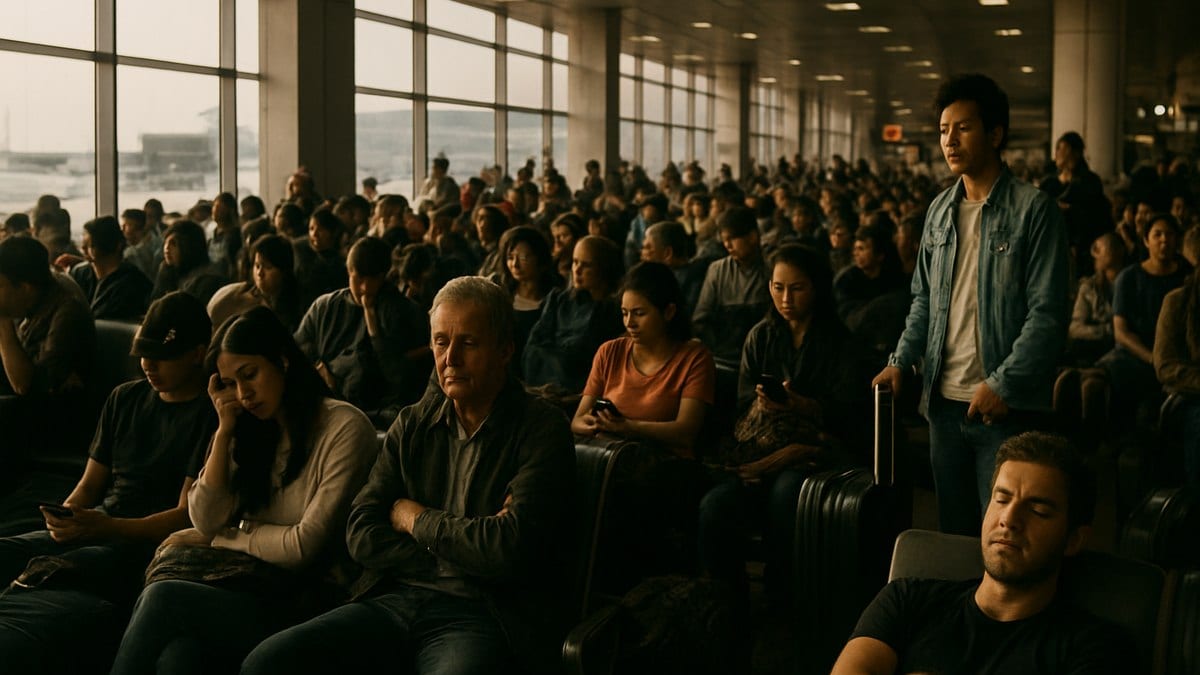
For travelers, the numbers translate into hours-long queues at transfer counters, scarce hotel rooms near airports and mounting uncertainty over when replacement flights will depart. Reports from regional media and specialist aviation outlets describe passengers sleeping in terminal seating and on terminal floors as late-night departures are pushed into the following day.
The timing is particularly challenging for airlines and airports, coming just as spring and early summer demand begins to build. Publicly available schedule data suggests that many carriers had anticipated higher load factors into April, leaving limited spare capacity to absorb large waves of last-minute rebooking.
Weather, Airspace Closures and Operational Strain Collide
Published coverage and recent analytical reports attribute the current turmoil to a mix of local and regional pressures. Severe storms in parts of China in March led to more than 100 cancellations and hundreds of delays at major hubs including Shanghai Pudong and Beijing Capital, disrupting the domestic connections that feed long haul departures across Asia and beyond.
At the same time, extended airspace closures and conflict-related restrictions in West Asia and the Gulf have removed key transit points from the global network. Industry analyses over the past two weeks describe tens of thousands of cancellations on Asia–Europe and Asia–Africa routes as airlines avoid closed or constrained corridors and reduce operations at Gulf hubs.
These long-haul changes have knock-on effects for intra-Asian flights. When connecting banks through the Gulf and West Asia are cut or reduced, carriers must re-time or trim services within Asia, altering aircraft rotations and straining crew schedules. Publicly available data from capacity trackers indicates that several airlines have shifted aircraft onto alternative routings through Southeast Asia, which in turn increases congestion at those airports.
Operational challenges within individual airlines add another layer of complexity. Recent experience in India, where staffing and scheduling shortfalls triggered thousands of cancellations in late 2025, has highlighted how quickly network reliability can deteriorate when crew rosters, maintenance planning and air traffic management are all under pressure at the same time.
Major Hubs Under Prolonged Pressure
Flight-tracking snapshots from the last week show repeated waves of disruption across a familiar list of mega-hubs. Beijing and Shanghai in China, Tokyo’s Haneda and Narita in Japan, Jakarta’s Soekarno Hatta in Indonesia, and Delhi and Mumbai in India have all recorded large clusters of delayed departures and arrivals on multiple days.
Secondary but strategically important gateways such as Seoul Incheon, Bangkok Suvarnabhumi, Kuala Lumpur, Singapore Changi and Dubai have also experienced elevated levels of delay and cancellation. Aviation analysts note that these airports function as critical transfer points linking Southeast Asia, North Asia, South Asia and Europe, so localized problems can rapidly ripple outward to smaller regional airports.
Reports indicate that on some days, individual hubs logged several hundred delayed movements alongside dozens of outright cancellations. Once late-running aircraft miss their scheduled departure waves, extensive re-sequencing is required, and aircraft can end up out of position for the next day’s schedule, creating further knock-on disruption.
Airlines have been adjusting timetables, trimming frequencies on some routes and deploying larger aircraft on others in an effort to protect core markets and minimize network fragmentation. Publicly available airline statements and timetable updates suggest that these measures are being revised frequently as conditions evolve.
Traveler Impact: Long Queues, Tight Inventories and Rising Costs
For passengers caught in the middle of the disruption, the most immediate impacts are missed connections and unplanned overnight stays. Media reports from across the region describe long queues at rebooking desks and customer service counters, with some travelers waiting several hours to secure new itineraries.
Hotel capacity near major airports is under strain on peak disruption days, particularly at hubs where local demand is already high. Industry observers note that in some cities, late-night surges of stranded passengers have quickly exhausted discounted airport hotel blocks, pushing prices higher for remaining rooms and forcing some travelers to remain in terminals until morning services resume.
Airfare dynamics are also shifting. Analyses from fare-tracking services in recent weeks show higher prices on certain Asia–Europe and Asia–Middle East routes as capacity is constrained and operating costs rise. Jet fuel prices have climbed sharply since early March, increasing the cost of long detours around closed airspace and reducing airlines’ ability to absorb irregular operations without passing some costs on to travelers.
Consumer advocates point out that the complexity of current disruption, which blends weather, airspace closures and operational factors, can make compensation rules and entitlements difficult to navigate. Travelers are being encouraged in public advisories and media coverage to retain boarding passes, monitor airline notifications closely and review the conditions of carriage and local regulations that may apply to their journey.
What Travelers Should Expect in the Coming Days
Aviation forecasting services and specialist travel publications caution that the disruption is unlikely to ease immediately. Network models referenced in recent analyses suggest that once large numbers of aircraft and crew are out of position, it can take several days of relatively smooth operations to restore normal patterns, even if no new shocks occur.
Publicly available schedule data for early April indicates that airlines across Asia and the Middle East are still adjusting planned capacity, particularly on routes that previously relied heavily on Gulf and West Asia overflights. Some carriers are trimming frequencies or consolidating services, which may leave fewer backup options when flights are cancelled at short notice.
Travel industry reports note that airports and ground service providers are seeking to smooth passenger flows by extending operating hours at check-in and security where possible and by encouraging greater use of digital self-service tools. However, the combination of strong seasonal demand and persistent network disruption means that delays and congestion are likely to remain a feature of travel across parts of Asia in the near term.
For those planning trips in the coming weeks, widely shared guidance from consumer groups and travel advisers emphasizes booking longer connection windows, monitoring itineraries closely in the 48 hours before departure and considering flexible tickets where budgets allow. With significant parts of the Asian and Gulf aviation system still under strain, resilience and contingency planning are becoming essential parts of any long-distance itinerary.