

More news on this day
A sprawling late-winter storm system sweeping across much of the United States has caused severe disruption to air travel, with publicly available data showing more than 1,000 flight cancellations and over 4,200 delays nationwide, heavily impacting major hubs in Atlanta and the New York City area.
Get the latest news straight to your inbox!
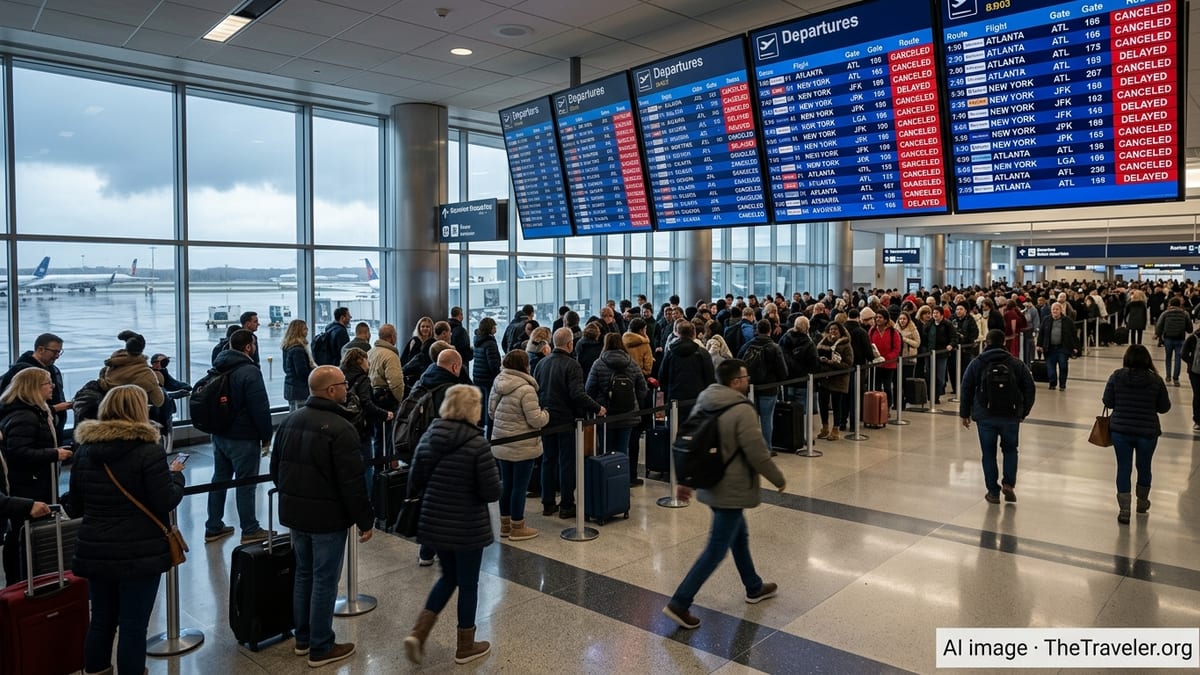
Major Hubs Bear the Brunt of Widespread Disruptions
Flight-tracking data indicates that the latest round of storms has hit some of the busiest airports in the country particularly hard, with Atlanta’s Hartsfield-Jackson International Airport and New York’s three major airports – John F. Kennedy, LaGuardia and Newark Liberty – experiencing significant operational strain. At various points during the system’s passage, combined cancellations and delays at these hubs accounted for a substantial share of the nationwide totals.
Reports based on FlightAware statistics show that carriers scrubbed more than 1,000 U.S. flights in a single day while thousands more departed late, as thunderstorms, high winds and residual snow impacted routes along critical East Coast and Southeast corridors. Atlanta, a key connecting point for domestic and international itineraries, recorded hundreds of cancellations and delays, with ripple effects spreading quickly to secondary airports across the South and Midwest.
In the New York region, ground stops and flow-control measures ordered in response to strong winds and deteriorating conditions slowed departures and arrivals throughout the day. Travelers at JFK, LaGuardia and Newark faced lengthy waits, gate changes and rebookings as airlines attempted to manage tightly packed schedules during one of the busier late-winter travel periods.
Storm System Spans Midwest, South and East Coast
The flight disruption is part of a broader weather pattern that has affected a large swath of the country, from snowbound parts of the Midwest to storm-battered communities in the Southeast and Mid-Atlantic. Recent coverage from national outlets describes a powerful extratropical system that brought heavy snow and blizzard conditions to the Upper Midwest, while simultaneously driving severe thunderstorms, damaging winds and possible tornadoes across portions of the Lower Mississippi Valley and Carolinas.
As the storm moved east, strong crosswinds and low cloud ceilings triggered extensive air-traffic management measures along the Eastern Seaboard. According to publicly reported aviation data, more than 10,000 U.S. flights were either delayed or canceled over a multi-day stretch, as the system evolved from snow and ice in the interior to rain, gusty winds and low visibility closer to the Atlantic coast.
With March travel volumes elevated by early spring break getaways and sports-related trips, the timing of the storm compounded its impact. Airports already operating near capacity during peak periods saw even minor schedule changes cascade into hours-long disruptions, making it difficult for airlines to keep crews, aircraft and passengers in sync with rapidly changing conditions.
Travelers Face Long Lines, Rebookings and Overnight Stays
Scenes from major airports shared in news coverage and on social media show long lines at check-in counters and customer service desks as travelers scrambled to adjust plans. Many passengers were forced to accept rebookings for later in the week, while others sought last-minute hotel rooms near airports when evening departures were canceled.
Publicly available information from airlines indicates that most major U.S. carriers activated flexible travel policies for affected routes, allowing customers to change flights without standard penalties. However, with seat availability constrained on alternate services, some travelers reported only limited options, particularly on popular domestic corridors funneling through Atlanta and New York.
For those already en route when the worst of the weather hit, missed connections became a major issue. Tight layovers evaporated as inbound flights landed late, and full subsequent departures left stranded passengers facing extended airport stays. In some cases, delays stretched into the early morning hours as airlines sought to reposition aircraft and crews once the most severe weather had passed.
Knock-On Effects Likely to Linger for Days
Aviation analysts note that major disruptive events of this scale often take several days to fully unwind, even after skies clear. With aircraft and flight crews out of position following widespread cancellations, schedules remain vulnerable to additional delays as airlines work to normalize operations.
Reports indicate that some carriers are prioritizing high-demand trunk routes and heavy bank periods at key hubs to restore network integrity, while selectively canceling lower-frequency services to free up aircraft. This strategy can help stabilize overall performance but may leave travelers in smaller markets with fewer options until the system resets.
Residual weather effects may also continue to influence flight timing. Even as the core of the storm exits the East Coast, trailing disturbances and gusty winds could still prompt intermittent ground delays at coastal airports, particularly around New York and Boston, where air traffic density is among the highest in the country.
What Air Travelers Should Expect Next
Industry data and past disruption patterns suggest that travelers over the next several days should prepare for continued schedule adjustments, even if the raw number of cancellations falls. Same-day changes, rolling delays and aircraft swaps are likely as airlines fine-tune operations in response to updated crew and maintenance constraints.
Travel planners recommend that passengers closely monitor flight status through airline apps and airport displays, arrive early at busy hubs and remain flexible about routing, especially when connecting through Atlanta, New York or other recently affected cities. Public advisories stress that travelers with nonessential journeys may wish to consider rebooking for later dates, if their tickets and circumstances allow.
For now, publicly available information shows that the massive storm has once again underscored the vulnerability of the tightly interconnected U.S. air network to large-scale weather systems. With climate variability contributing to more frequent episodes of extreme conditions, travel experts note that such widespread disruption events are becoming a recurring feature of the American flying experience.