

More news on this day
Canada has widened its travel advisory for Hawaii as severe weather, widespread flooding and ongoing flash flood risks now affect Maui alongside Oahu, the Big Island, Kauai and other islands in the archipelago.
Get the latest news straight to your inbox!
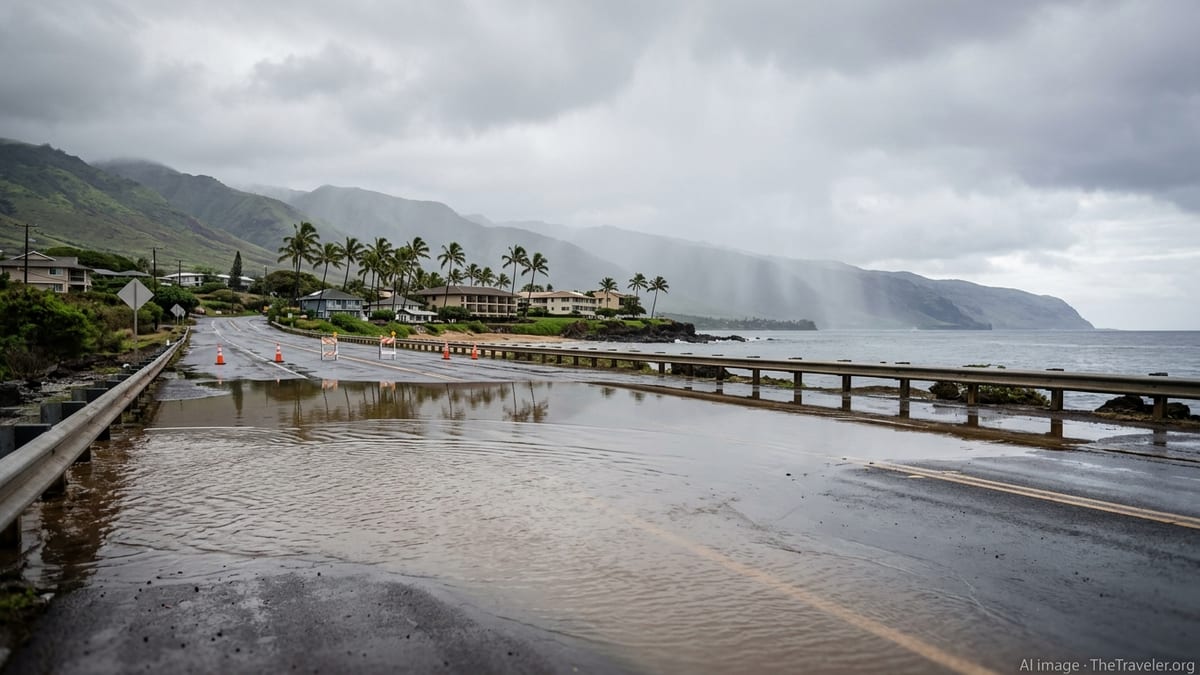
Canada Expands Advisory Amid Ongoing Hawaii Flood Emergency
Publicly available information from the Government of Canada indicates that its travel advice for Hawaii now highlights severe weather and flooding conditions across multiple islands, noting particular concern for areas under flash flood watches and warnings. Advisory language urges travelers to monitor local alerts, expect disruptions and be prepared for rapidly changing conditions across the state.
The updated guidance follows days of intense rain and historic flooding that began on Oahu and the Big Island and have since impacted Maui, Kauai and other islands. Reports indicate that Canadian travelers are being encouraged to review their plans, stay in close contact with airlines and accommodation providers, and follow any safety information issued at their destination.
Travel analysts note that Canada’s move aligns with similar cautionary messaging from other countries during recent severe weather events in popular tourist regions. In this case, the focus is on short-term risk management rather than a call to avoid Hawaii entirely, but the advisory underscores that conditions remain volatile.
Insurance industry commentary suggests that travelers from Canada and elsewhere should verify coverage for weather-related disruptions, as policy terms can vary widely on issues such as trip cancellation, delays and emergency accommodation during natural hazards.
Historic Flooding and Severe Weather Across the Islands
Published coverage from Associated Press and other outlets describes the current flooding as Hawaii’s worst in more than two decades, with heavy rains saturating soils already soaked by earlier winter storms. On Oahu’s North Shore, muddy floodwaters have swept through residential areas, lifting vehicles, damaging homes and cutting power to thousands of customers.
On the Big Island, flash flood watches remain in effect in several districts as storm bands continue to pass over the island. Local reports describe road closures, damaged infrastructure and ongoing landslide risks in steep terrain, especially where previous storms have destabilized slopes.
Weather briefings from the National Weather Service in Honolulu highlight a persistent kona low pressure system responsible for the prolonged rainfall and thunderstorms. While the system is slowly moving away from the state, forecasters warn that saturated ground and overflowing streams mean that even moderate additional rain can trigger new rounds of flooding and debris flows.
Across the archipelago, state and county agencies have been working to restore power, clear blocked roads and assess damage, but the scale of the flooding means that recovery work is likely to extend well beyond the current weather system.
Maui Joins List of Islands Under Heightened Flood Risk
In recent days, Maui has moved into the center of the severe weather discussion as the same storm system responsible for Oahu’s flooding brings intense rainfall to Maui County. Public messaging from local emergency management and National Weather Service bulletins has noted a heightened threat of flash flooding for low-lying areas, roadways and gulches prone to rapid runoff.
Communities in West Maui, including areas still recovering from the 2023 Lahaina wildfire, have faced evacuation warnings and advisories as retention basins and drainage systems approach capacity. Reports indicate that authorities are paying particular attention to burn scar zones, where the loss of vegetation increases the speed and volume of runoff into coastal neighborhoods.
Travel-related forums and local visitor updates from Maui describe brown water conditions along some shorelines, flooded streets in sections of Kihei and Central Maui, and periodic road closures, including along portions of the Hana Highway during periods of intense rain. Travelers are being advised that conditions can vary significantly over short distances, with sunny weather in some resort areas while hazardous conditions persist elsewhere on the island.
The addition of Maui to the list of islands flagged in Canada’s advisory reflects both the immediate impacts of the current storm and broader concern over repeated heavy rain events during the 2025–2026 wet season. Regional wet-season outlooks released by federal meteorological agencies had already highlighted an elevated risk of significant rainstorms and flash flooding across the state.
Impact on Travelers: Disruptions, Safety Guidance and Itinerary Changes
For visitors from Canada and other countries, the severe weather and evolving travel advisory translate into practical challenges that range from delayed flights to reworked itineraries. Major airlines serving Hawaii have issued weather waivers over recent days that allow passengers to change travel dates without standard fees when flights involve affected airports such as Honolulu on Oahu, Kahului on Maui, Lihue on Kauai and Hilo or Kona on the Big Island.
Hotel and vacation rental operators in the islands most affected by flooding have publicly shared information about flexible rebooking options and safety measures, particularly for guests in low-lying coastal areas. Some properties have shifted guests to higher floors, adjusted check-in times around road closures or recommended that visitors remain on-site during periods of intense rain to avoid hazardous driving conditions.
Travel community discussions show that some visitors are choosing to postpone nonessential trips or re-route island-hopping plans to avoid heavily impacted zones. Others are adapting their activities, trading waterfall hikes and road trips for indoor cultural experiences, museum visits or resort-based stays during windows of poor weather.
Health and safety agencies in Hawaii continue to stress that travelers should respect brown water advisories at beaches after heavy rain, as runoff can carry debris and contaminants into nearshore waters. This guidance is particularly pertinent for visitors planning snorkeling, surfing or swimming on Maui, Oahu and Kauai in the days following intense downpours.
What Prospective Visitors Should Monitor Before Traveling
Prospective visitors considering trips to Hawaii in the coming days and weeks are being encouraged by travel experts to monitor several key information sources. These include official weather forecasts and flood advisories for each island, airport status updates, and any changes to travel advisories issued by their home governments, including Canada’s.
Given the current pattern of repeated storm systems, observers suggest that travelers build flexibility into their plans, allowing extra time between inter-island flights, avoiding tight connections, and considering refundable or changeable bookings where possible. This approach can help reduce stress and financial loss if further storms lead to sudden closures or schedule changes.
For those determined to travel, careful selection of base locations can also make a difference. Some parts of Hawaii’s islands are more prone to flooding than others, especially north- and east-facing slopes that receive heavier orographic rainfall. By contrast, some leeward resort areas may see less severe impacts, though they are not immune to power outages or access issues when roads elsewhere are affected.
As Hawaii navigates what reports describe as its most damaging flooding in decades, the message for international travelers is to stay informed, remain adaptable and treat government travel advisories and local hazard warnings as vital planning tools rather than afterthoughts.