

More news on this day
Cruise itineraries are shifting away from the Middle East as security risks persist, and ports across Africa and the Indian Ocean, including Mauritius, are emerging as unexpected winners from the rerouting of ships such as Vasco da Gama.
Get the latest news straight to your inbox!
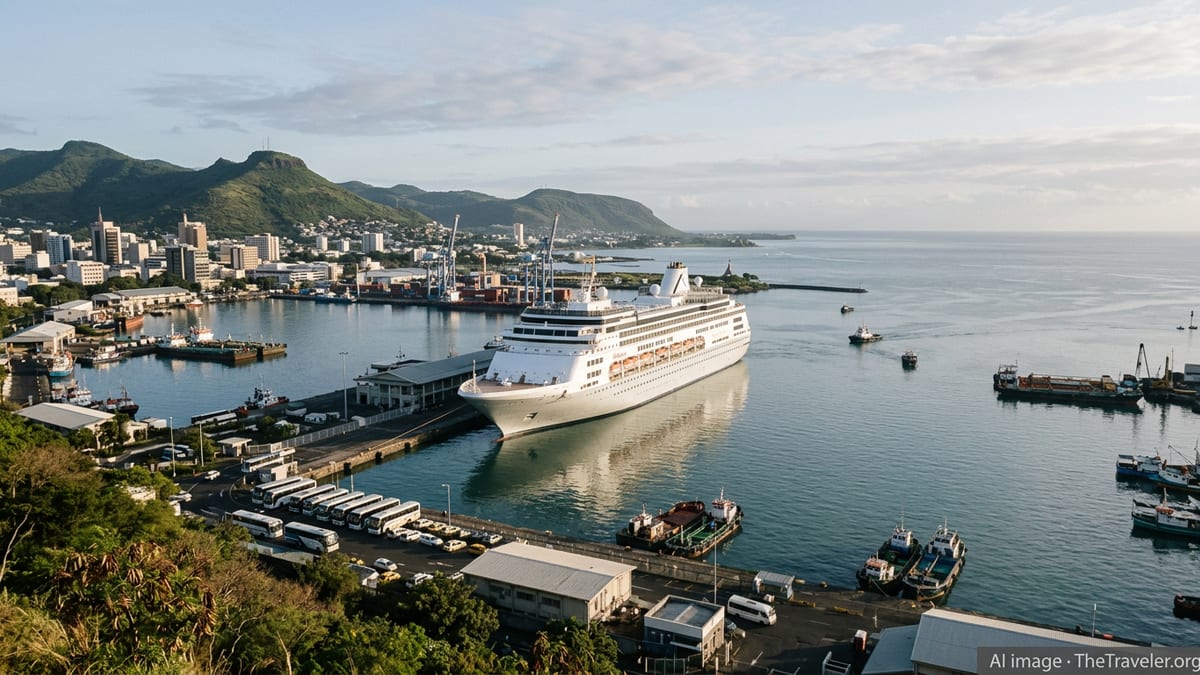
Vasco da Gama Joins Wave of Red Sea Reroutings
The cruise ship Vasco da Gama is among the latest vessels to bypass the Red Sea and Suez Canal, reflecting a broader realignment of global cruise routes prompted by the Middle East crisis and ongoing Red Sea insecurity. Publicly available itineraries show the ship reconfigured to sail via Africa instead of using traditional East–West corridors through the region, aligning it with a pattern seen across the industry as operators seek safer alternatives.
This shift follows months of heightened risk for commercial shipping and passenger vessels in the Red Sea and adjacent waters, where attacks on merchant traffic have disrupted long-established sea lanes. Industry data and trade reporting indicate a sharp decline in transit traffic and a corresponding rise in diversions around the Cape of Good Hope, adding time and cost to voyages but reducing exposure to conflict-affected waters.
For Vasco da Gama, the alternative routing opens up a string of ports around southern and eastern Africa, turning what began as a risk-management decision into a new marketing opportunity. Itineraries highlight extended segments along the African coast and Indian Ocean islands, positioning the voyage as a once-rare overland sea journey that connects multiple continents without passing through the Middle East.
Analysts following the sector note that such changes echo earlier reroutings by other lines, including world cruise segments and repositioning sailings that were shifted via Africa in 2024 and 2025. While many of those detours were temporary, the continued volatility in Middle Eastern waters is now encouraging operators to test more ambitious Africa- and Indian Ocean-focused products.
Mauritius Emerges as a Strategic Cruise Call
Mauritius has quickly become one of the principal beneficiaries of this reconfiguration. Port statistics and government reports show cruise tourism to the island trending upward, with cruise arrivals contributing tens of thousands of visitors in 2024 and a growing number of vessel calls in the 2024/25 and 2025/26 seasons. Port Louis, long a regional hub for cargo and bunkering, is increasingly marketed as a key Indian Ocean turnaround and transit port for rerouted cruises.
The Mauritius Ports Authority has reported rising cruise calls, including a series of maiden visits during the latest season and published expectations for further growth as itineraries around the Cape of Good Hope multiply. The country’s broader tourism indicators also point to increased arrivals, and cruise passengers are becoming a more visible component of that mix as ships like Vasco da Gama incorporate Port Louis into their African arcs.
Observers note that Mauritius offers several advantages for cruise lines seeking to redesign itineraries. The island occupies a strategic position along the Cape route between Asia, southern Africa and Europe, and it already functions as a well-established bunkering hub with expanding maritime infrastructure. Investments in terminal capacity and passenger facilities over recent years have been framed in public documents as part of a strategy to position Port Louis as a leading cruise destination in the Indian Ocean.
For the island’s tourism sector, each diverted itinerary represents incremental revenue for hotels, tour operators, transport providers and retailers. Industry assessments in southern Africa have previously estimated substantial passenger spending per port call for large ships, and local stakeholders in Mauritius are looking to capture a similar boost as more vessels add the destination to their schedules.
African Ports See Rising Cruise Traffic Along the Cape Route
Beyond Mauritius, African ports along the Cape and eastern seaboard are also seeing increased cruise activity as ships avoid the Middle East. Publicly available itineraries for multiple lines document calls at South African ports such as Cape Town and Durban, Namibia’s Walvis Bay and island destinations in Cape Verde and the wider Atlantic, forming extensive Africa-focused segments on world cruises and repositioning voyages.
Reporting on the sector shows that rerouted sailings have included long-haul cruises from Australia and Asia to Europe that now feature stops in Mauritius, South Africa, Namibia and West Africa rather than Middle Eastern and Red Sea ports. Earlier seasons saw vessels like Virgin Voyages’ Resilient Lady and several ships from major European brands repositioned around Africa, and the Vasco da Gama’s new route follows a similar pattern.
While many cruise operators are still absorbing the additional fuel, time and operational costs associated with these diversions, some are using the opportunity to test demand for Africa-centric itineraries. Travel trade coverage from recent seasons describes growing interest in southern African and Indian Ocean cruises, with lines experimenting with homeporting arrangements in ports such as Cape Town and Port Louis as passenger awareness increases.
The reorientation is also intersecting with wider maritime trends. Studies of shipping patterns since late 2023 have highlighted a substantial shift of commercial traffic from the Red Sea to the Cape of Good Hope, and cruise vessels are following similar tracks, albeit with more complex passenger-facing implications. As a result, ports along Africa’s coastline are receiving a higher profile within global cruise deployment plans than at any point in the past decade.
Middle East Crisis Reshapes Cruise Planning and Investment
The underlying driver of these changes remains the broader Middle East and Red Sea crisis, which continues to unsettle shipping and tourism more than two years after the first major disruptions. International bodies and regional analyses have documented a prolonged downturn in port calls for destinations in Egypt, Jordan and Saudi Arabia, while insurance premiums and security costs for transits through affected waters remain elevated.
For cruise operators, itinerary planning that once relied on predictable Suez Canal passages has become a more complex exercise in risk assessment and scenario modelling. Published coverage of the sector describes widespread cancellations of Middle East programs for the 2024/25 and 2025/26 seasons, with several lines entirely suspending voyages that would have required extended time in the Red Sea.
This environment is accelerating investment decisions in alternative regions. African and Indian Ocean ports, including Mauritius, are using the window of opportunity to strengthen their positioning as long-term cruise hubs through infrastructure upgrades, marketing campaigns and regional partnerships. Conferences and maritime events in 2024 and 2025 have highlighted Port Louis in particular as a rising logistics and cruise node along the Cape corridor.
However, analysts caution that the sustainability of this traffic boost will depend on both security dynamics in the Middle East and the ability of African destinations to maintain service standards suitable for the modern cruise market. If tensions ease and Red Sea routes become viable at scale again, some deployment is likely to return to traditional East–West corridors, potentially reducing the extraordinary concentration of calls now seen around the Cape of Good Hope.
New Opportunities and Uncertain Horizons for Mauritius and the Region
For now, the Vasco da Gama’s rerouting encapsulates both the opportunities and uncertainties facing the cruise industry. On one hand, its Africa and Indian Ocean itinerary underscores how quickly operators can pivot to new destination clusters when geopolitical conditions demand it. On the other, the ship’s revised route is a reminder that these gains for Mauritius and African ports remain closely tied to instability elsewhere.
Tourism businesses in Mauritius are moving to capitalize on the current momentum by tailoring shore excursions and services to the expectations of cruise passengers, while national planners emphasize in public documents the potential of cruise tourism to complement the island’s well-established air-based holiday market. Similar efforts are under way in competing African ports that have also been thrust into the spotlight by detours away from the Middle East.
As itineraries for 2026 and beyond are gradually published, industry observers will be watching whether Vasco da Gama and other ships retain their Africa-focused routes even if conditions improve in the Red Sea. A lasting shift could entrench Mauritius and its regional counterparts as core waypoints in global cruising, rather than temporary stand-ins during a period of crisis.
In the meantime, each new call by vessels like Vasco da Gama signals how the map of cruise tourism is being redrawn in real time. For Mauritius and many African ports, the challenge will be to turn this surge of diverted traffic into a durable presence in the world’s cruise calendars, long after the current Middle East crisis subsides.