

More news on this day
Mauritius is emerging as one of the biggest winners from the global reshuffle of cruise routes, as security tensions in the Red Sea and wider Middle East push major lines to replace traditional passages with African and Indian Ocean itineraries.
Get the latest news straight to your inbox!
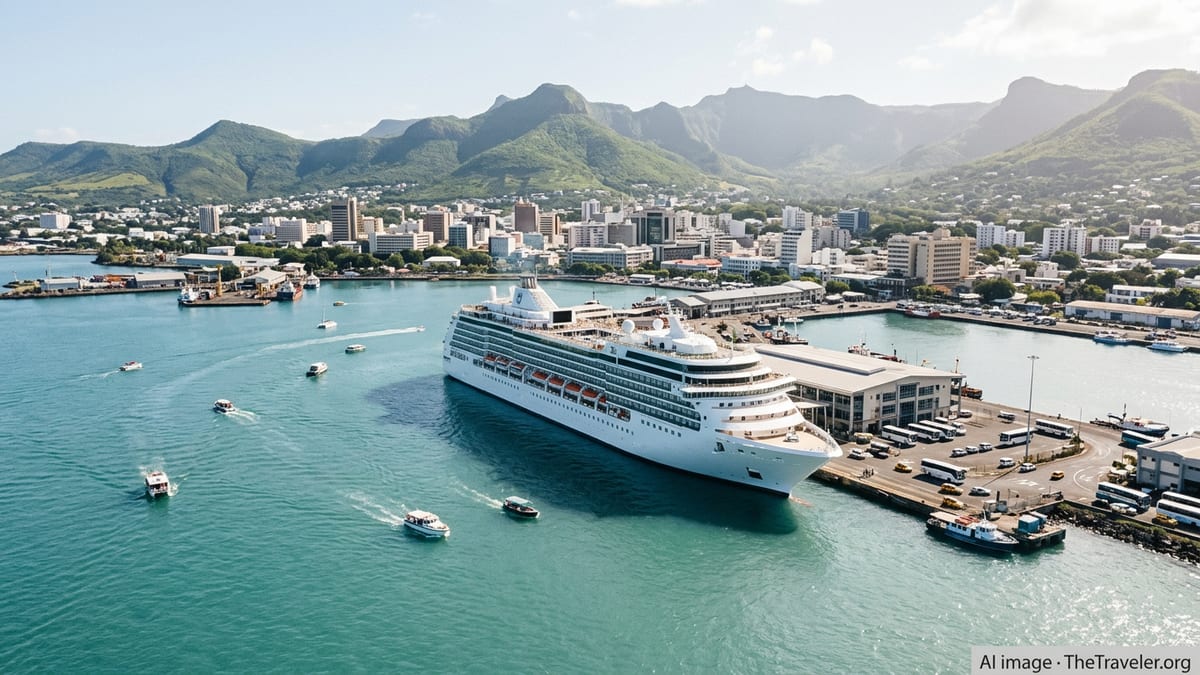
Red Sea Instability Redirects Global Cruise Corridors
Persistent security risks in the Red Sea and Gulf of Aden since late 2023 have reshaped maritime traffic worldwide, with cruise operators among the sectors most affected. Publicly available information shows that attacks on commercial vessels in these waters have continued despite international naval patrols, increasing insurance costs and prompting cruise companies to reassess the appeal of itineraries linking the Mediterranean with the Arabian Gulf.
Industry coverage indicates that several global brands began cancelling or reworking voyages that would traditionally transit the Suez Canal and sail past Yemen. Cruise lines initially pursued short-term substitutions, such as dropping ports in Israel and Egypt, but as the crisis extended into 2024 and 2025, more radical adjustments emerged. Repositioning cruises that once relied on the Suez shortcut increasingly opted for detours around the Cape of Good Hope, adding days at sea but also opening new opportunities for African destinations.
This redirection has had clear regional winners and losers. Reports prepared for multilateral institutions note that ports in Egypt, Jordan and Saudi Arabia have recorded reduced cruise and passenger traffic, while operators search for safer and more marketable alternatives. In parallel, southern and eastern African ports that once saw only occasional world-cruise calls are now appearing more regularly in global deployment plans.
Mauritius Positions Port Louis as an Indian Ocean Cruise Hub
At the centre of this realignment is Mauritius, which has moved quickly to capture diverted demand. A dedicated cruise terminal at Port Louis became operational in 2023, giving the island the infrastructure required to handle larger ships and higher passenger volumes. Government documentation and tourism statistics show that 27 cruise vessels called at the country during 2023, a total that has since been surpassed as operators reroute ships via the Indian Ocean.
Local and regional travel coverage reports that the Port Louis Cruise Terminal welcomed more than 35 ships and in excess of 40,000 passengers within its first five months of operation through early April 2024. Subsequent figures for the 2024 season indicate that Mauritius has consolidated its position, with over 58,000 cruise passengers recorded between January and September 2024, nearly tripling the previous year’s arrivals. These numbers underscore how infrastructure investment, combined with global geopolitical shifts, has elevated the island’s status in the cruise sector.
Port Louis is now marketed not only as a picturesque stopover but also as a strategic turnaround port for certain itineraries. Reports from regional tourism bodies highlight that some ships embark guests in Mauritius for segments that continue onwards to La Réunion, South Africa or Namibia, while others use the island as a disembarkation point before repositioning. This flexibility has helped the destination integrate more deeply into global deployment patterns rather than remaining a niche call.
African Itineraries Replace Middle East Voyages on Long-Haul Cruises
The most visible manifestation of this shift is on extended world and grand voyages that previously relied on the Suez Canal and Middle East port calls. Cruise media coverage in 2024 and 2025 documents multiple instances of world cruises being reconfigured to bypass the Red Sea, replacing Middle Eastern segments with coastal calls along eastern and southern Africa. Published itineraries show ships adding ports such as Seychelles, Mauritius, La Réunion, Durban, Cape Town and Walvis Bay as substitutes for Dubai, Jeddah and other Gulf and Red Sea destinations.
One widely reported example involves a major European operator adjusting a 2026 world voyage to avoid the Red Sea corridor entirely. According to industry reports, the rerouting adds nearly two weeks to the itinerary and introduces a string of African and Indian Ocean calls, including several days in and around Mauritius. Similar patterns have been observed among premium and luxury lines, which have recast sections of their global routes as “Grand Africa” segments, framing the detour as an opportunity to showcase lesser-visited coastlines rather than a compromise forced by security concerns.
This pivot has implications well beyond any single season. By giving passengers extended exposure to African destinations that were rarely featured on mainstream itineraries, cruise lines are effectively testing long-term demand. If guest satisfaction and shore-excursion spending remain strong, there is potential for these ports to retain a share of traffic even if Middle East routes become more predictable in the future.
Economic Ripple Effects Across Mauritius and the Region
The cruise tourism boom is feeding into a broader recovery of Mauritius’s visitor economy. Data released by national industry bodies for 2024 and 2025 show rising overall tourist arrivals and hotel occupancy, supported in part by the increased flow of cruise guests. While most cruise passengers sleep onboard, travel agents and port operators note that ships generate significant demand for tours, transport, dining and retail during day calls, with spending concentrated in Port Louis and nearby coastal areas.
The island is also benefiting from its role as a logistical and provisioning hub on longer repositioning sailings. Reports from local business press indicate that cruise operators source fuel, fresh produce and technical services in Port Louis to support extended voyages around Africa. This activity generates additional revenue streams for port authorities, suppliers and service providers, diversifying the economic impact beyond direct tourism spend.
Neighbouring destinations in the south-west Indian Ocean are similarly gaining visibility. Coverage from regional tourism alliances describes how multi-stop itineraries now often combine Mauritius with La Réunion, Madagascar and the Seychelles, marketing the cluster as an “island-hopping” alternative to Gulf city circuits. This collaborative positioning is contributing to new shore-excursion products and joint promotion campaigns aimed at attracting more cruise deployments to the wider region.
Long-Term Outlook: From Temporary Detour to Structural Shift
Although the immediate trigger for the cruise industry’s rerouting has been instability in the Red Sea and parts of the Middle East, analysts caution that some of the resulting itinerary changes may endure. Cruise deployment decisions are typically made years in advance, and once a region demonstrates strong commercial performance, lines are reluctant to abandon it entirely. Early evidence from passenger numbers and repeat calls suggests that Mauritius and its African neighbours are on track to secure a lasting share of global cruise schedules.
At the same time, the Middle East is unlikely to disappear from the cruise map. Industry forecasts continue to describe the Arabian Gulf as a major growth opportunity in the longer term, particularly for winter sun itineraries. A more probable scenario is that global capacity will be spread across a broader set of corridors, with Indian Ocean and African routes evolving from backup options into established pillars of worldwide deployment.
For Mauritius, the challenge will be to manage this newfound popularity sustainably. Tourism officials have outlined ambitions to increase visitor numbers while preserving marine ecosystems and local culture, and the surge in cruise arrivals is intensifying discussions about port congestion, shore-excursion management and environmental safeguards. How the island balances growth with preservation will help determine whether today’s cruise boom becomes a durable advantage in a changing global travel landscape.