

More news on this day
Frustrated travelers at Knoxville’s McGhee Tyson Airport have faced an unusual run of delays and cancellations in recent weeks, raising questions about whether mounting disruptions at this key East Tennessee gateway could threaten the momentum of one of the nation’s fastest-growing tourism states.
Get the latest news straight to your inbox!
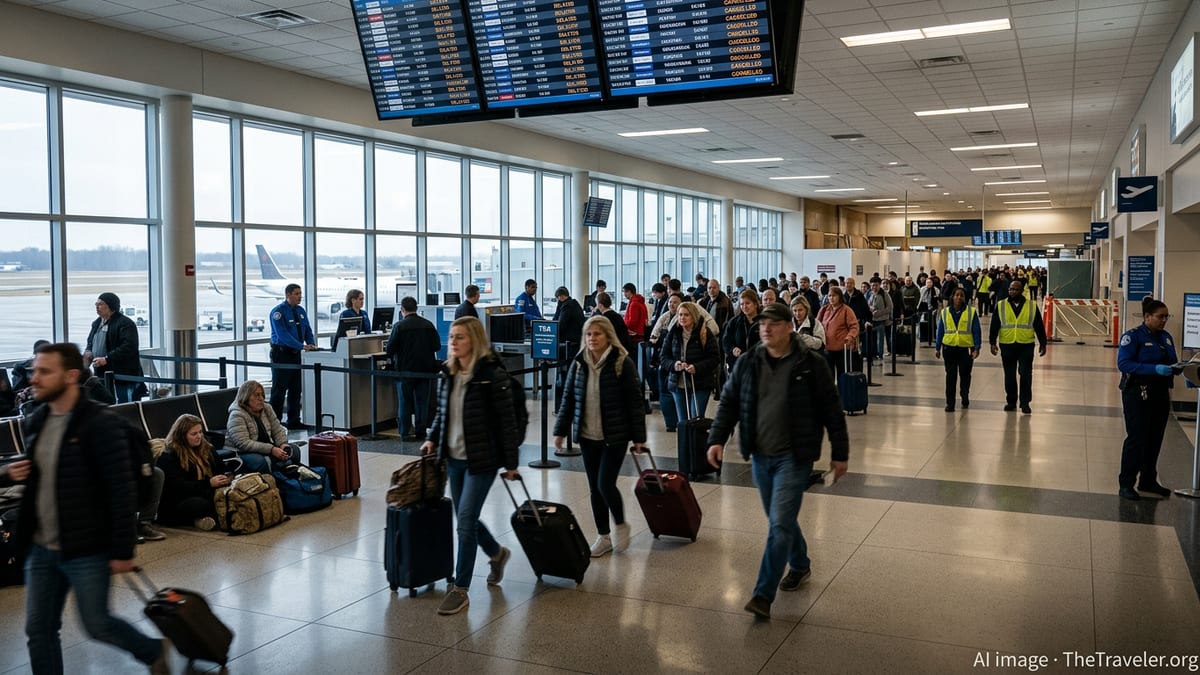
Winter Weather and Operational Strains Collide at TYS
McGhee Tyson Airport, which serves Knoxville and much of East Tennessee, has grappled with a spate of schedule disruptions tied to severe winter weather and broader operational pressures across the U.S. air network. During the late January 2026 North American winter storm, airlines trimmed schedules nationwide, with regional airports like TYS seeing a disproportionate share of cancellations as carriers protected capacity on larger hub routes.
Published coverage shows that on one particularly difficult day, McGhee Tyson recorded 15 flight cancellations and 28 delays, affecting a mix of regional and mainline carriers and disrupting connections to cities including Charlotte, Atlanta, Chicago, Dallas and New York. These numbers are significant for an airport of McGhee Tyson’s size, where even a handful of disrupted departures can quickly ripple through the day’s schedule.
Local television and travel-industry reports describe passengers scrambling to rebook itineraries ahead of and during the winter storm, with some travelers shifting flights by a day or more in anticipation of weather impacts. Social media and community forums have echoed those frustrations, with accounts of missed connections, long holds with airlines and extended waits inside the relatively compact terminal.
At the same time, publicly available information indicates that many of the worst disruptions have been tightly clustered around major storm systems rather than spread evenly across the calendar. That pattern suggests a stress test of McGhee Tyson’s resilience to extreme events, rather than evidence of a sustained breakdown in day-to-day operations.
A Growing Airport Under Pressure
McGhee Tyson’s recent operational headaches are unfolding against a backdrop of rapid growth. Knoxville and East Tennessee have seen rising demand for air travel in recent years, supported by population gains, new corporate investment and surging interest in nearby attractions such as the Great Smoky Mountains and popular mountain resort towns.
Public remarks from state tourism officials in 2025 highlighted roughly 40 percent growth in certain Tennessee air travel metrics over the previous six years and pointed to McGhee Tyson as a beneficiary of new routes and airline interest. The announcement that Southwest Airlines would begin serving the airport underscored TYS’s emergence as a more significant regional player, adding competitive pressure but also greater complexity for scheduling and gate management.
Infrastructure around the airport has also faced strain. Local coverage has noted traffic disruptions on access roads and construction-related changes in traffic patterns near the terminal, adding to traveler stress during peak periods. While these issues are largely separate from airline-controlled delays and cancellations, they contribute to a perception among some visitors that the Knoxville gateway is struggling to keep up with demand.
Community discussions online suggest a mixed on-the-ground experience. Some recent travelers describe moving through security in minutes, even amid a federal funding squeeze, while others report scattered delays tied to weather, crew availability or congestion at larger hub airports. That variability is common at mid-sized U.S. airports, but the contrast has sharpened the sense that McGhee Tyson is in a transitional moment.
Tourism Numbers Tell a Different Story
While the images of stranded passengers and departure boards full of red ink are striking, statewide tourism data currently point to a sector that remains robust. The Tennessee Department of Tourist Development reported that direct visitor spending reached approximately 31.7 billion dollars in 2024 and continued to set records into 2025, with daily visitor spending estimated in the tens of millions of dollars.
Independent analyses and state reports show that Tennessee welcomed well over 140 million visits in 2024, lifting tax revenues and supporting hundreds of thousands of jobs. Major destinations such as Nashville, Memphis and the Smokies continue to anchor that growth, with national park visitation alone contributing billions of dollars in economic activity across lodging, food service and retail.
Knox County, which includes Knoxville and McGhee Tyson Airport, has been identified in tourism-focused reporting as one of several counties driving the latest wave of visitor spending increases. Travel and hospitality publications describe a “tourism boom” that stretches from urban music hubs to outdoor recreation regions, with East Tennessee’s mountain gateways playing a central role.
So far, there is little evidence in publicly available data that the recent flight disruptions at McGhee Tyson have translated into a measurable slowdown in arrivals or spending. Tourism-related agencies and economic reports released through late 2025 continue to emphasize record or near-record performance, even as they acknowledge operational challenges in transportation and hospitality.
Visitor Sentiment and the Risk to Tennessee’s Brand
Even when the broader numbers stay strong, repeated travel disruptions can shape visitor sentiment in ways that matter over the long term. For many out-of-state travelers headed to East Tennessee, McGhee Tyson is the first and last impression of the region. Extended delays, confusing rebooking experiences and limited options when flights are canceled can leave visitors vowing to drive next time or to consider alternative destinations.
Firsthand accounts from recent storms highlight the emotional toll of last-minute cancellations, especially for leisure travelers with fixed lodging, event tickets or park reservations. Families trying to reach Knoxville for long-planned vacations, or to connect through TYS to other U.S. destinations, have described losing full days of their trips once cascading delays at major hubs reached the smaller airport.
Tourism strategists warn in public reports that convenience and reliability remain central to destination competitiveness, alongside attractions and pricing. If travelers come to see certain airports as routinely unpredictable, they may shift to nearby gateways with more frequent service or better resilience to disruptions, even if the ultimate destination remains Tennessee.
So far, anecdotal complaints about McGhee Tyson have not been matched by large-scale cancellations of East Tennessee holidays or convention bookings. However, the gap between Tennessee’s polished marketing of effortless getaways and the real-world experience of navigating weather-hit travel days underscores a potential vulnerability for the state’s tourism brand.
What Comes Next for McGhee Tyson and Tennessee Tourism
The recent surge in delays and cancellations at McGhee Tyson has sharpened debate over how mid-sized airports can adapt to more volatile weather patterns and a tightly stretched national aviation system. Industry coverage points to investments in deicing capacity, airfield snow removal, staffing resilience and improved passenger communication as key tools for limiting disruption during severe events.
For Tennessee, the stakes are high but not yet dire. Tourism has become one of the state’s most important economic engines, consistently generating record visitor spending and significant state and local tax revenue. Maintaining that trajectory will likely depend on ensuring that transportation infrastructure, including regional airports like McGhee Tyson, keeps pace with demand.
In the near term, travelers using TYS can expect periodic turbulence in the form of weather-related disruptions and schedule adjustments as airlines continue to fine-tune operations. Over a longer horizon, the airport’s growing route map, new carrier interest and East Tennessee’s enduring appeal position it as a critical asset rather than a liability for the state’s visitor economy.
For now, the frustrations playing out in departure lounges around Knoxville appear to be a symptom of a strained but expanding travel system, not a sign that Tennessee’s tourism boom is reversing. The ultimate test will be whether frequent fliers and first-time visitors alike decide that the scenery, culture and experiences on offer still outweigh the risk of a rough travel day on the way there.