

More news on this day
Middle East Airlines is reshuffling parts of its network for March 9 as continuing airspace restrictions across the region force schedule changes on flights linking Beirut with Amman, Cairo, Riyadh and Dubai.
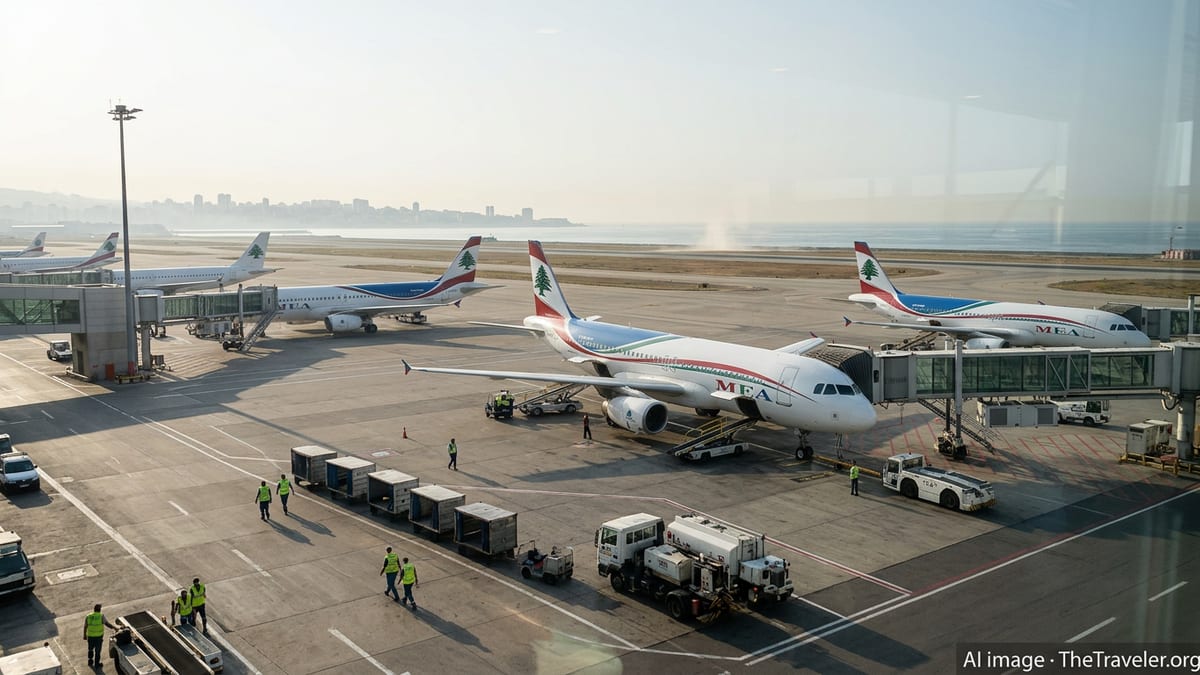
Regional Airspace Controls Force Fresh Schedule Changes
The decision by Middle East Airlines to retime multiple flights on Monday, March 9, 2026, comes amid one of the most severe disruptions to Middle East aviation in recent years. Wide swaths of regional airspace remain restricted or subject to operational curfews following an escalation in conflict that has already prompted thousands of cancellations and diversions since late February.
Authorities in several countries are limiting overflights and nighttime operations, complicating route planning for carriers that rely on tightly timed connections and short-haul links between major Arab capitals. Aviation officials have stressed that safety remains the overriding concern, with airlines required to adapt to rapidly changing notices to airmen and evolving risk assessments.
While some Gulf and regional carriers have begun cautiously restoring a limited number of frequencies, capacity across the Middle East remains well below normal levels. For Lebanon’s flag carrier, that has meant redrawing its March 9 operating plan around the latest airspace windows and slot restrictions affecting Jordan, Egypt, Saudi Arabia and the United Arab Emirates.
The rescheduling of services to Amman, Cairo, Riyadh and Dubai underscores how even relatively short regional hops are now subject to sudden operational changes. Passengers booked on these routes are being urged to monitor their reservations closely as departure times are adjusted and, in some cases, consolidated onto fewer flights.
Impact on MEA’s Beirut Hub and Key Regional Links
Middle East Airlines relies on Beirut–Rafic Hariri International Airport as a compact hub that depends on quick turnarounds and precise timing to feed regional and medium-haul connections. With airspace corridors narrowed and certain routes only available during daytime windows, MEA’s planners have had to move several departures on March 9 into narrower operating bands.
Flights to Amman and Cairo are among those most acutely affected by new restrictions and airport curfews, leading MEA to shift some services into midmorning and early afternoon slots when overflight approvals are more predictable. The airline is also adjusting ground times in Beirut to ensure that aircraft are not left waiting for last-minute clearances that could further disrupt the day’s rotations.
Services to Riyadh and Dubai, which normally operate at multiple frequencies and support significant business and diaspora traffic, are being reorganised around the latest capacity and routing constraints in Saudi and Emirati airspace. That could mean retimed departures, longer flight paths and altered arrival patterns, all of which can ripple through the rest of the daily schedule.
Industry analysts note that even when full cancellations are avoided, widespread retiming carries a cost both for airlines and travellers. Crews must be reassigned, maintenance windows rescheduled and connecting itineraries recalculated, often with only a few hours’ notice as regional authorities update their guidance.
What Passengers Traveling on March 9 Should Expect
For passengers booked on Middle East Airlines flights between Beirut and Amman, Cairo, Riyadh or Dubai on March 9, the most immediate impact will be changes to departure and arrival times. In some cases, flights originally scheduled for late evening have been brought forward into daytime hours to align with safer and permitted airspace windows. In others, morning services have been pushed back to allow for revised routings around restricted zones.
Travellers are being advised to treat itineraries as dynamic rather than fixed, checking their booking status repeatedly in the 24 hours before departure. Airlines across the region, including MEA, are prioritising direct communication via SMS and email, but intermittent connectivity and high call volumes at contact centres mean that not all passengers receive updates at the same time.
Those connecting beyond Beirut on the same ticket may find that minimum connection times have been tightened, with carriers proactively offering alternative routings or date changes where misconnect risk is high. Agencies and travel management companies are reporting a surge in rebooking requests as corporate travellers in particular seek to avoid overnight disruptions or extended layovers.
Passengers already in transit are being encouraged to remain flexible and to keep accommodation plans cancellable where possible. With hotel occupancy in key hubs rising on the back of stranded travellers, last-minute availability in cities such as Dubai and Riyadh can be limited, adding an extra layer of complexity for those whose flights are now operating at different times.
Wider Middle East Travel Landscape Remains Volatile
MEA’s March 9 adjustments are part of a broader patchwork of responses from airlines across the Middle East as they navigate a volatile operating environment. Several Gulf and regional carriers have announced waves of cancellations or temporary suspensions to cities including Amman, Dubai and Riyadh during the same period, even as limited evacuation and relief services resume.
Major airports that usually function as key global transit nodes are operating at reduced capacity, with slots tightly controlled and ground operations stretched by irregular traffic flows. Airlines are frequently required to redesign flight paths to avoid closed or conflict-affected airspace, increasing block times and fuel burn on routes that would ordinarily be short and direct.
Travel advisers say that the disruption is exposing just how interconnected the region’s air transport system has become. A closure affecting one country’s skies can now ripple quickly through Lebanon, Jordan, Egypt, Saudi Arabia and the UAE, challenging carriers’ ability to offer reliable timetables and predictable connection options.
Despite the partial reopening of some airspace segments, officials caution that further adjustments are likely in the days ahead. Any new military activity, additional government advisories or damage to airport infrastructure could trigger fresh rounds of retimings and cancellations, particularly on sensitive short-haul corridors such as those linking Beirut with its immediate neighbours.
Guidance From Aviation Authorities and Travel Advisers
In tandem with the airlines’ operational changes, civil aviation and foreign affairs authorities around the world continue to issue advisories related to travel in and through the Middle East. Many are urging passengers to reconsider nonessential journeys and to build in extra contingency time for any itineraries that require transiting regional hubs or overflying affected airspace.
Travel management companies are relaying these messages to corporate clients, encouraging businesses to review duty-of-care obligations and ensure that employees have clear lines of communication while on the move. For leisure travellers, advisers are placing renewed emphasis on flexible tickets, comprehensive insurance and real-time flight monitoring tools.
Airlines, including Middle East Airlines, are also reminding passengers to arrive at the airport with all necessary documentation and to be prepared for longer-than-usual check-in and security queues. With many flights operating on retimed slots, ground staff often need to verify updated manifests, reissue boarding passes and handle an elevated volume of standby and rebooked customers.
As MEA and its regional peers continue to recalibrate operations for March 9 and beyond, the message to travellers remains consistent: stay informed, remain flexible and be prepared for schedules to evolve quickly as the situation in the skies over the Middle East continues to unfold.