

More news on this day
Chicago O’Hare International Airport, the busiest hub in United Airlines’ network, has recorded the world’s highest number of flight cancellations in recent days as a measles exposure alert and staffing-related ground stops converged to halt departures and strand thousands of travelers.
Get the latest news straight to your inbox!
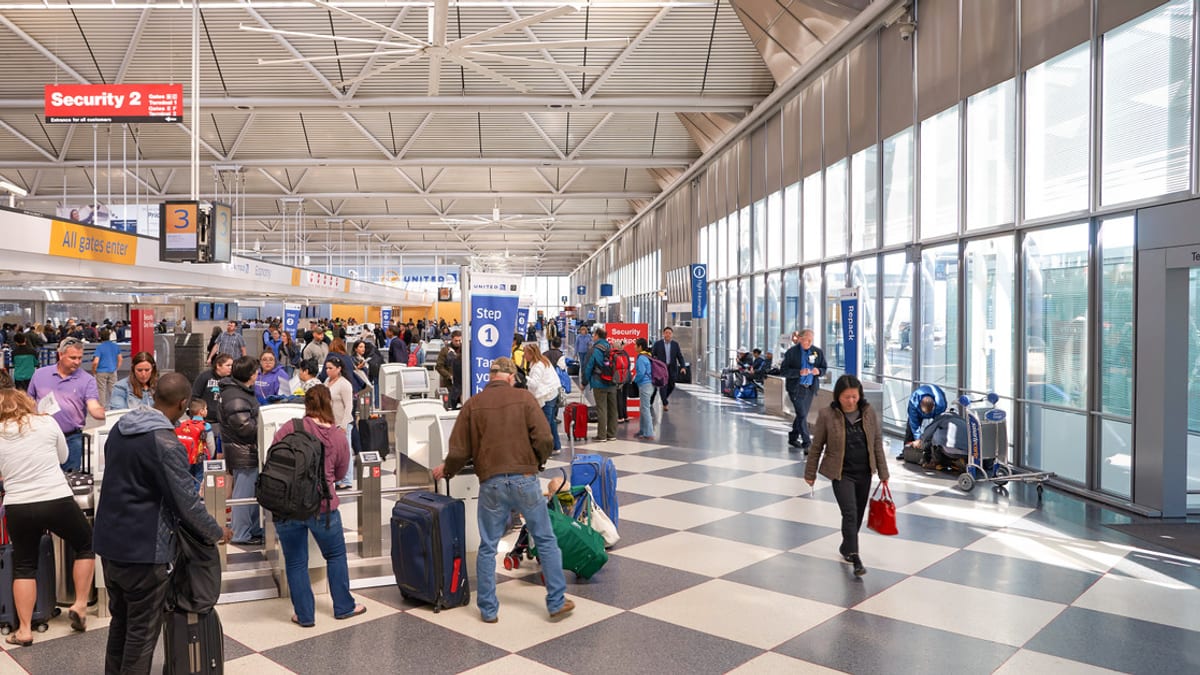
Image by TheTravel
Measles Exposure Triggers Health Advisory At O’Hare
Health agencies in Cook County have issued alerts about potential measles exposure at Chicago O’Hare International Airport after an infected traveler passed through the facility’s international terminal. Publicly available information indicates that the individual, later confirmed to have measles, spent several hours in Terminal 5 during late March, prompting warnings to anyone who may have been in the area during that period.
According to published coverage, the exposure window at Terminal 5 included a mid-day period in which arriving and departing international flights were operating at peak volume. Passengers who were in the terminal at overlapping times have been advised through public notices to monitor for symptoms, check their vaccination status and seek medical guidance if concerned.
The measles alert has not directly shut down airport operations, but it has added a new layer of concern for travelers already facing significant disruption. Airlines, including United, have been fielding questions from passengers about the exposure, while airport information channels have amplified health department guidance on how to respond.
The episode comes amid a broader resurgence of measles cases in the United States, with federal data in early 2026 showing hundreds of infections nationwide and multiple exposure alerts linked to transportation hubs. For a global gateway such as O’Hare, even a single confirmed case is enough to generate heightened scrutiny and anxiety among international travelers.
Ground Stop And Staffing Constraints Halt Departures
While the measles alert grabbed health headlines, operational data shows that staffing limitations and weather-related air traffic control restrictions have been the more immediate drivers of flight stoppages at United’s Chicago hub. Federal Aviation Administration updates for O’Hare have repeatedly listed ground delay programs in recent weeks, citing a combination of traffic volume, storms and controller staffing levels that reduce the airport’s capacity.
Travel waiver notices monitored by passenger forums indicate that United issued multiple flexible rebooking policies for Chicago in March, including on days when thunderstorms, winter weather and severe storms hit the Midwest. Those waivers covered flights into and out of O’Hare over several multi-day windows, signaling that the carrier expected prolonged disruptions rather than isolated delays.
Accounts from travelers on public message boards describe ground stops that kept aircraft on the tarmac or at remote stands while crews waited for available gates and updated departure slots. Some passengers reported diversions to nearby airports when storms or traffic constraints made it impossible to land safely in Chicago, further complicating crew scheduling and aircraft rotations for United.
Aviation commentary has also highlighted the role of tight staffing at key points in the system, including air traffic control facilities and airport ramp operations. When weather or heavy volume pushes the network beyond those staffing limits, regulators impose ground stops that effectively freeze departures until conditions improve, creating cascades of cancellations that can last well beyond the initial disruption.
United’s Expansion Strategy At O’Hare Faces Fresh Scrutiny
The latest wave of cancellations comes as United is pursuing an aggressive expansion at O’Hare, planning hundreds of daily departures from the airport during the peak summer schedule. Opinion coverage in Chicago-based outlets has noted that the airline’s strategy aims to consolidate its dominance at the airport even as federal regulators weigh whether the current runway, gate and staffing infrastructure can safely handle the planned flight volume.
Publicly available commentary points to recent federal notices discussing proposed schedule reductions at O’Hare to address congestion and air traffic control limitations. Critics argue that adding more flights into an already constrained hub increases the likelihood that any shock, from storms to staff shortages to health alerts, will translate into disproportionately high cancellation and delay totals for passengers.
United’s leadership has positioned O’Hare as a centerpiece of its global network, with extensive domestic connections feeding transatlantic and transpacific services. That strategy has clear benefits for travelers when operations are smooth, offering one-stop access to dozens of international destinations. However, the current disruptions underline the downside of concentrating so much traffic through a single megahub when capacity and resilience are under strain.
For Chicago-area travelers, United’s prominence at O’Hare means that operational turbulence at the airline is quickly felt in the form of crowded terminals, long customer-service lines and limited alternatives on competing carriers, particularly at short notice. The recent cancellations have revived local debate over whether regulators should push more aggressively for schedule caps or infrastructure upgrades before further growth at the airport.
Travelers Confront Global Ripple Effects
Data from flight-tracking and aviation analytics platforms shows that O’Hare’s recent operational turmoil has reverberated across United’s worldwide network. Because Chicago functions as a central connecting point, cancellations there often lead to missed onward flights, crew dislocations and further cancellations at downline airports in North America, Europe and Asia.
On peak disruption days, publicly available flight boards and tracking services have shown O’Hare near the top of global rankings for cancellations and delays, outpacing many international hubs. That pattern has pushed United customers to seek alternative routings through other hubs such as Newark, Washington Dulles or Houston, where capacity is also finite and can quickly become oversubscribed.
For international travelers, the combination of health-related advisories and operational uncertainty has added complexity to trip planning. Some have opted to rebook through other gateways to avoid transiting through O’Hare during the current wave of disruptions, while others have taken advantage of travel waivers to adjust dates or times in hopes of a more stable operating day.
Industry analysts note that large-scale cancellation events are increasingly visible to the public in real time, as flight-tracking apps and social media spread images of packed concourses and growing delay boards. For a carrier that relies heavily on business travelers and high-yield international traffic, the reputational impact of repeated days with the most cancellations worldwide can be as damaging as the immediate financial hit.
What Passengers Passing Through O’Hare Should Know
For travelers with upcoming itineraries on United through Chicago O’Hare, published guidance from airlines, airports and health agencies underscores the importance of preparation. Passengers are encouraged to monitor their flight status frequently, sign up for airline alerts and review any travel waivers that might allow fee-free changes if disruption appears likely.
Given the measles exposure alert linked to Terminal 5, health information campaigns advise travelers to review their vaccination history, particularly if they plan to spend extended time in busy international terminals. Those who are unsure of their status or who fall into higher-risk categories are being directed, through public advisories, to consult healthcare providers before travel.
Operationally, flyers connecting through O’Hare in the near term may benefit from building longer layovers into their plans, especially when flying through weather-prone periods or at peak hours. Consumer advocates frequently recommend early-morning departures, which tend to be less affected by cascading delays, and suggest maintaining flexible backup options when possible.
The current disruptions at United’s largest hub highlight how quickly a convergence of health concerns, staffing constraints and volatile weather can turn a routine travel day into a global logjam. For now, Chicago O’Hare remains at the center of that storm, with passengers worldwide feeling the effects every time the departure boards tilt toward red.