

More news on this day
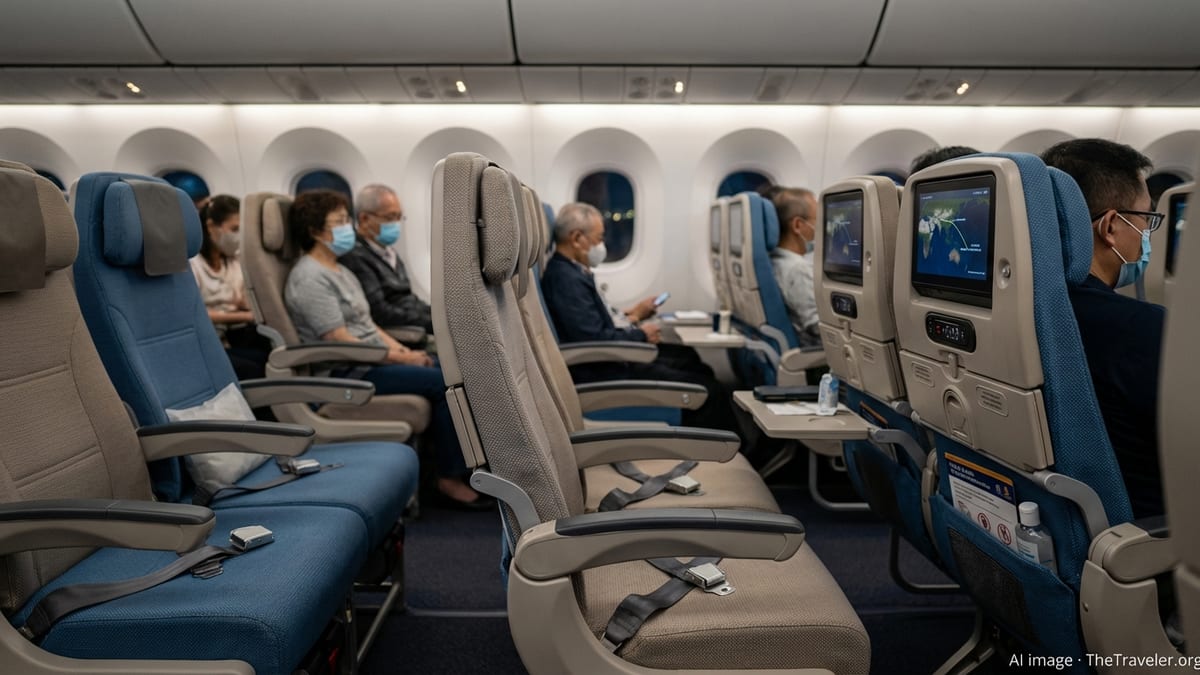
New Zealand health authorities have issued a travel health alert after two confirmed measles cases in Auckland were traced to Singapore Airlines flight SQ281 from Singapore to Auckland, raising fresh concerns about in-flight exposure and onward spread in the community.
New Travel Health Alert as Cases Tied to Flight SQ281
Health New Zealand Te Whatu Ora confirmed on 24 February that two related cases of measles in Auckland have been linked to Singapore Airlines flight SQ281, which arrived in Auckland late on 17 February. The cases are from the same household and had recently travelled internationally before transiting through Singapore and continuing on to New Zealand.
The warning comes only weeks after officials declared an earlier measles outbreak over, underscoring how quickly the virus can be reintroduced through global air travel. Authorities have classified the event as a significant exposure on a long-haul international service and at Auckland International Airport shortly after arrival.
Investigations by both New Zealand and Singapore health agencies indicate that the infected passengers were already incubating the virus before their transit through Changi Airport and developed symptoms around the time of the Auckland flight. Nevertheless, officials stress that people seated nearby on SQ281 may have been exposed during the infectious period.
New Zealand’s alert highlights the continued vulnerability of countries with patchy measles immunisation coverage, even when domestic outbreaks appear to have been brought under control.
Which Travellers Are Most at Risk
Public health teams are focusing contact tracing efforts on passengers who were seated in rows 31 to 46 of flight SQ281, considered the highest risk zone for exposure. Those travellers are being contacted directly where possible using airline manifests, but authorities acknowledge that contact details are incomplete for some passengers.
Anyone who was on SQ281 arriving in Auckland on 17 February and has not yet been reached is being urged to check their seat number and, if they were in the affected rows or are unsure, to call New Zealand’s Healthline for tailored advice. People who transited through the arrival area of Auckland International Airport between approximately 11.30pm on 17 February and 1.30am on 18 February are also considered potential contacts.
Officials say the risk is highest for those who are not fully immunised against measles, including infants too young for vaccination, people who missed childhood doses, and some adults born after the late 1960s who may not have received two doses. Immunised travellers are regarded as having a much lower risk of contracting the disease but are still being asked to monitor for symptoms during the standard incubation window.
The two Auckland cases subsequently spent time in the emergency department waiting room at Waitākere Hospital on 21 February, prompting an additional round of alerts for people who were present there that morning.
What Passengers and Airport Visitors Should Do Now
Health officials are advising anyone who was on flight SQ281, at Auckland International Airport during the specified times, or in the Waitākere Hospital emergency department waiting room on 21 February to closely watch for signs of measles for up to 18 days after their possible exposure.
Early symptoms typically resemble a severe flu, including high fever, cough, runny nose and red, sore eyes, followed several days later by a distinctive blotchy rash that starts on the face and spreads down the body. People who develop these symptoms are being told not to present without warning at clinics, after-hours centres or emergency departments, in order to avoid exposing others in waiting rooms.
Instead, those who feel unwell are asked to phone ahead to their general practitioner or to call Healthline for advice on testing, isolation and care. Anyone who knows they have not received two doses of the measles, mumps and rubella vaccine is strongly encouraged to discuss vaccination with a health provider, as immunisation remains the most effective protection against infection and serious complications.
Airline passengers with onward domestic or international connections from Auckland are also being reminded to notify carriers and seek medical advice if they become symptomatic, given the possibility of further spread across borders.
Impact on Singapore Airlines Customers and Operations
Singapore Airlines has not announced schedule disruptions as a result of the measles alert, and flight SQ281 continues to operate between Singapore and Auckland. The airline is working with health authorities on contact tracing by providing passenger manifests and facilitating communication with affected travellers.
Customers booked on upcoming SQ281 services are not currently subject to special travel restrictions beyond routine health guidance, but may experience additional health screening questions or in-flight announcements relating to measles on the route. Travel insurers and agents are advising passengers to check policy details for any provisions related to communicable disease alerts.
Health officials emphasise that aviation-related measles exposure events, while serious, do not usually lead to mass cancellations or border closures. Instead, the focus is on rapidly identifying close contacts, confirming immunity where possible and isolating suspected cases to prevent onward transmission.
Travellers with concerns about vulnerable family members, such as infants, pregnant people or those with weakened immune systems, are being encouraged to discuss individual risk with their healthcare providers before flying on long-haul routes where measles exposure has recently been reported.
Low Immunisation Rates Heighten New Zealand’s Risk
The alert linked to SQ281 has reignited concern about New Zealand’s measles immunisation coverage, which remains below the level needed to reliably prevent outbreaks. Public health experts note that about 95 percent of the population needs to be fully immunised to ensure robust herd immunity against such an infectious virus.
Recent figures show that coverage is particularly low among some younger age groups, as well as in certain Māori and Pasifika communities. These gaps mean that even a single imported measles case can spark chains of transmission, as seen during New Zealand’s significant 2019 to 2020 outbreak and the more recent 2025 outbreak that extended into early 2026.
Officials are using the current incident to renew calls for people to check their vaccination records and, if in doubt, to seek a free MMR dose if they are eligible. Clinics, pharmacies and community providers have been reminded to prioritise measles vaccination and to maintain a high index of suspicion for any patient presenting with compatible symptoms, especially if they have a history of recent international travel.
While the number of new cases linked to flight SQ281 remains small, authorities warn that the situation could change quickly if additional secondary infections emerge in the coming weeks, particularly among unvaccinated contacts in schools, workplaces and households.