

More news on this day
Health authorities in New Zealand and Singapore are stepping up surveillance and contact tracing after two passengers infected with measles travelled from Hyderabad, India, via Singapore’s Changi Airport before landing in Auckland earlier in February.
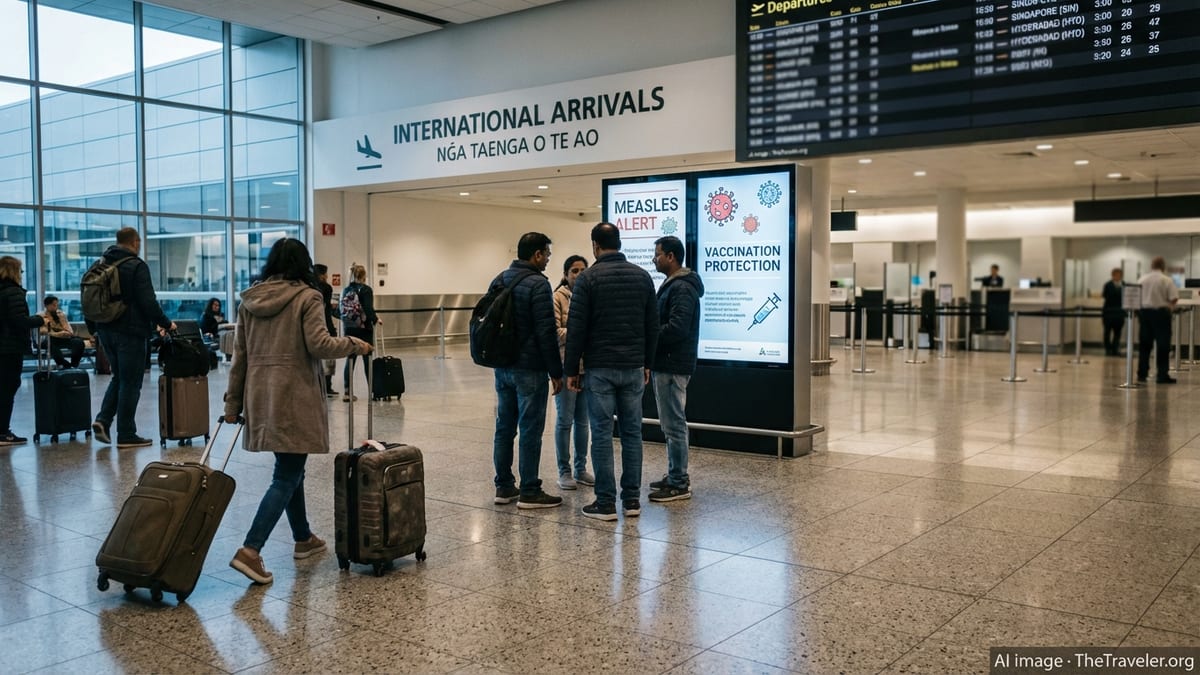
Linked Cases Highlight Ongoing Measles Risk for Air Travellers
New Zealand’s public health authorities confirmed that two related measles cases identified in Auckland are connected to international travel, with both individuals having flown from Hyderabad to Singapore before boarding Singapore Airlines flight SQ281 to Auckland on 17 February 2026. The pair, from the same household, later sought medical care in Auckland, triggering a fresh round of alerts only weeks after officials declared the country’s 2025 measles outbreak over.
Health New Zealand said the infections are part of two newly identified cases in Auckland linked to overseas travel, and have listed the international airport and hospital emergency facilities among key locations of interest. Officials stressed that while the earlier outbreak was declared closed on 4 February, the latest imported cases show that the risk of reintroduction through international travel remains significant.
New Zealand media have reported that the passengers were identified after arrival and that both had been infectious while in the community during part of the following week. Public health teams are now working to prevent any onward spread, particularly among those who may not be fully immunised against measles.
Singapore Confirms Infection Occurred Before Transit at Changi
In Singapore, the Communicable Diseases Agency said it was notified on 25 February that two Singapore Airlines passengers who landed in Auckland had tested positive for measles. The agency’s investigation found that both travellers had departed from Hyderabad and spent about two hours in transit at Changi Airport before boarding their onward flight to New Zealand.
Officials in Singapore concluded that the individuals were infected before they arrived at Changi. According to the agency, symptom onset occurred only while they were onboard the flight from Singapore to Auckland, and their time in the transit area did not overlap with any other recent measles case known to have passed through the airport.
The clarification is important for travellers using the busy hub. As the passengers remained within the transit zone and were already incubating the virus when they arrived in Singapore, authorities say there is no evidence of wider transmission linked to their brief stay at Changi. Nonetheless, the episode underscores how quickly highly contagious diseases can cross borders via modern air routes.
Contact Tracing Under Way on Flight SQ281 and in Auckland
New Zealand’s public health teams have issued an alert for passengers who were on Singapore Airlines flight SQ281 from Singapore to Auckland, which arrived late on 17 February. People seated in rows 31 to 46 are being treated as close contacts and are being contacted where possible by public health services. Those who believe they may have been in these rows but have not yet heard from officials are being urged to seek advice from health services.
Authorities have also listed Auckland International Airport and the waiting room of Waitākere Hospital’s emergency department as locations of interest at specific times after the travellers’ arrival. Members of the public who were at these sites during the specified periods are being advised to monitor for measles symptoms such as fever, cough, runny nose, red eyes and a characteristic rash, and to phone ahead before visiting a clinic or hospital if they become unwell.
Health New Zealand has reiterated that contact tracing and isolation remain central tools for containing any potential spread. People identified as close contacts who are not fully immunised may be asked to quarantine or receive post-exposure vaccination, depending on their vaccination history and level of exposure.
Vaccination Gaps Put Travellers and Communities at Risk
The latest cases come against the backdrop of a prolonged measles resurgence internationally and recent domestic outbreaks in New Zealand. Officials have repeatedly warned that lower than ideal immunisation rates leave gaps in community protection, particularly for babies too young to be vaccinated and people with weakened immune systems.
New Zealand health guidance strongly encourages all travellers heading overseas to ensure they have received two doses of the measles, mumps and rubella vaccine. Authorities note that as measles continues to circulate in various parts of the world, any unimmunised traveller can contract the virus abroad and reintroduce it to New Zealand on their return, creating chains of transmission similar to those seen in 2025.
Travel medicine specialists say the Hyderabad to Singapore to Auckland itinerary illustrates how easily an infection acquired in one region can present thousands of kilometres away within days. They are urging airlines, airports and travel agents to remind passengers of pre-travel vaccination checks, especially for long-haul routes that connect multiple regions currently dealing with measles activity.
What International Travellers Need to Know Now
For travellers planning trips through regional aviation hubs such as Changi and long-haul destinations like New Zealand, health agencies are reiterating a simple message: check your measles immunity before you fly. Adults and children born after 1969 are generally advised to have two documented doses of the MMR vaccine, while certain infants travelling to areas with active outbreaks may be eligible for an early dose on medical advice.
Experts recommend that travellers schedule vaccination at least two weeks before departure to allow time for immunity to develop. Those unsure of their vaccination status are being advised to consult their healthcare provider or travel clinic, particularly if they are heading to or transiting through countries that have recently reported measles cases.
While the current incident linked to the Hyderabad-to-Auckland journey appears to be contained, officials in both New Zealand and Singapore describe it as a reminder of how quickly infectious diseases can cross borders in an interconnected world. For airlines and global travellers alike, maintaining high vaccination coverage is being framed as a crucial part of keeping routes open and journeys safe.