

More news on this day
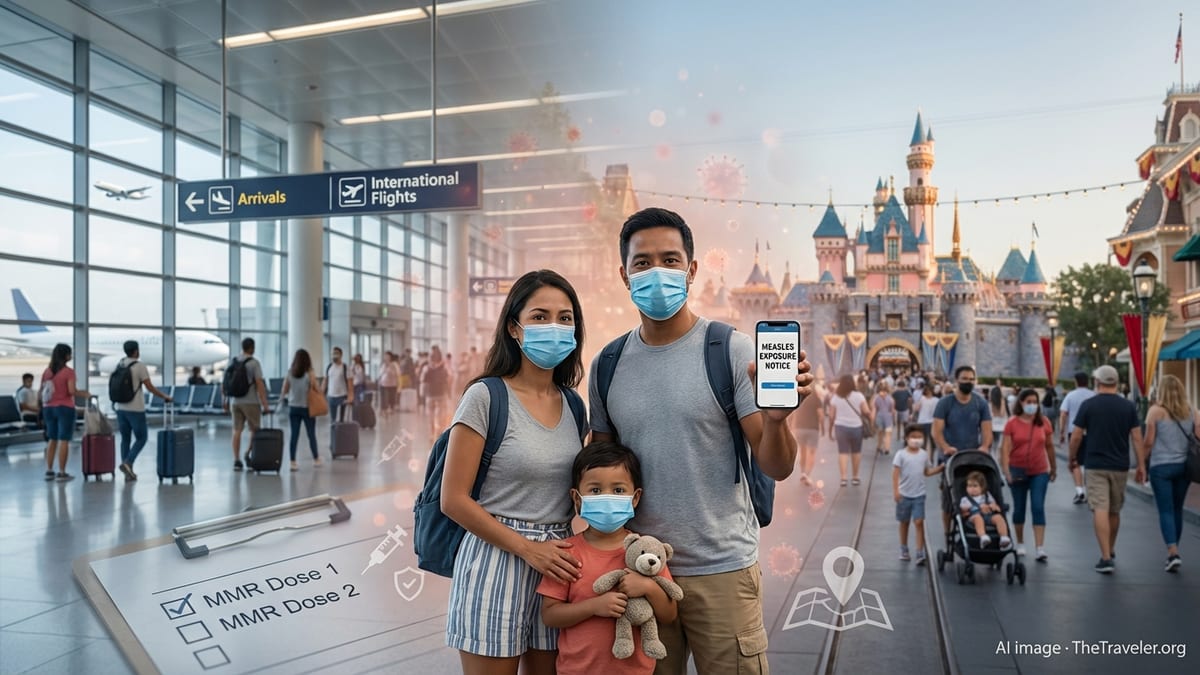
Health officials in Southern California are racing to contain potential measles exposures after an international traveler, infectious with the virus, passed through Los Angeles International Airport and spent a full day at Disneyland Resort in late January.
The case, now linked to multiple high-traffic locations across Los Angeles and Orange Counties, has renewed concern about vaccine-preventable diseases at major U.S. travel hubs and theme parks, and prompted urgent alerts to thousands of residents and visitors who may have crossed paths with the traveler.
More News
- TSA Rolls Out $45 ConfirmID Fee for Travelers Without REAL ID at Security
- Flying Blue Launches February 25% Promo Rewards on Transatlantic and Regional Routes
- United Fast-Tracks Starlink Wi‑Fi Across Fleet, Free for MileagePlus Members
International Traveler Brings Measles to LAX and Disneyland
The Orange County Health Care Agency confirmed on January 31 that a child visiting from overseas had measles while traveling through Southern California. According to county and state health officials, the traveler arrived at Los Angeles International Airport’s Tom Bradley International Terminal on January 26, then visited Disneyland Resort in Anaheim on January 28 during peak operating hours. Local authorities describe the individual as contagious throughout that period and say the exposures likely involved large numbers of people.
Los Angeles County’s Department of Public Health has identified this as the county’s second measles case of 2026 involving an international traveler. The person arrived on Viva Aerobus Flight 518, disembarking at Gate 201A in Terminal B late on the night of January 26, with a public exposure window at the terminal stretching from 10:45 p.m. into the early hours of January 27. Passengers seated near the infected traveler are being contacted directly by health agencies in coordination with federal officials, while anyone else in the terminal during that time is urged to monitor for symptoms.
Two days later, while still infectious, the same traveler spent hours at Disneyland Resort, moving between indoor and outdoor spaces at the parks. Officials warn that because measles spreads easily through the air and can linger in enclosed areas after an infected person has left, even brief, indirect contact at the resort or airport may have been sufficient for transmission among unvaccinated or non-immune visitors.
Precise Exposure Windows at Iconic Tourist Sites
Authorities have released detailed timelines so the public can determine whether they were potentially exposed. In Orange County, health officials say the traveler visited Goofy’s Kitchen at the Disneyland Hotel in Anaheim on Wednesday, January 28, from 10:30 a.m. to 1:30 p.m. During that same day, the person also spent time in Disneyland Park and Disney California Adventure Park from about 12:30 p.m. until park closing, creating a broad window of possible exposure for day guests, hotel diners, and resort employees.
In Los Angeles County, the measles case has been linked to multiple locations frequented by travelers and residents. In addition to the Tom Bradley International Terminal exposure at LAX on January 26 and 27, officials say the same traveler visited a Dunkin’ Donuts on Ventura Boulevard in Woodland Hills on January 30 between 3 p.m. and 4:45 p.m. Health alerts issued over the weekend advise anyone who was in the terminal, at Disneyland Resort during the specified hours, or at the Woodland Hills cafe to check their vaccination records and watch closely for symptoms in the coming weeks.
Public health agencies note that the risk period for developing measles lasts from seven to 21 days after exposure. That means individuals who visited the affected locations on the listed dates could still develop symptoms into mid and late February. Those without documented immunity or who are unsure of their vaccination status are being encouraged to contact their health care providers promptly to discuss preventive options and testing if symptoms emerge.
Officials Warn of Highly Contagious Virus as Cases Climb
While the current situation involves a single traveler linked to multiple sites, it is unfolding against the backdrop of a broader measles resurgence in the United States and in California. Federal data show hundreds of cases reported nationwide already in 2026, with the majority occurring among unvaccinated individuals or those with unknown immunization status. In 2025, the country recorded its highest annual measles count in decades, reversing years of progress since the disease was declared eliminated as a continuous presence in 2000.
California has already logged several measles cases in 2026, including an earlier infection in the Bay Area tied to international travel. State health officials emphasize that every new imported case carries the potential to spark larger outbreaks, particularly in pockets where vaccination coverage has slipped below the level needed to maintain community protection. They point to the 2015 Disneyland-linked outbreak, which ultimately sickened more than 100 people across multiple states, as a stark reminder of how quickly the virus can spread from a single introduction at a major tourism destination.
Measles is among the most contagious human diseases, with experts estimating that one infected person can spread the virus to nine out of ten unvaccinated people in close proximity. The virus travels through respiratory droplets and can remain suspended in the air or on surfaces for up to two hours after an infected person leaves a room. This level of transmissibility is what makes exposure events at crowded sites like airports, theme parks, and restaurants particularly concerning for public health officials.
What Travelers and Theme Park Guests Are Being Told to Do
Health authorities in Los Angeles and Orange counties are urging people who were at LAX, Disneyland Resort, or the identified Woodland Hills restaurant during the specified windows to take immediate stock of their immunity. Adults and children who have received two documented doses of the measles, mumps, and rubella vaccine are considered well protected, with about 97 percent effectiveness. Those who have had only one dose, are uncertain of their records, or know they are unvaccinated are being advised to call a medical provider, especially if the exposure occurred within the last week.
For individuals exposed less than seven days ago and not fully immune, doctors may recommend a prompt MMR vaccination or, in certain high-risk cases, an injection of immune globulin to reduce the likelihood or severity of illness. These measures are especially important for infants too young for routine vaccination, pregnant people without established immunity, and individuals with weakened immune systems. Public health departments stress that anyone seeking care for possible measles should call ahead before visiting a clinic or emergency department so staff can arrange isolation and reduce the risk of exposing other patients.
Those who were in the listed locations during the exposure windows are being asked to monitor their health for three weeks. Classic early signs of measles typically include high fever, cough, runny nose, and red, watery eyes, followed several days later by a distinctive rash that usually starts on the face and spreads downward. Officials say that anyone who develops such symptoms and may have been exposed should stay home from work, school, or travel and contact a health provider immediately for evaluation and testing.
Impact on Disneyland, LAX, and Southern California Tourism
The incident has placed Disneyland Resort and LAX back in the spotlight as nodes in the global movement of infectious disease. Both facilities welcome large numbers of international travelers daily, a feature that is central to Southern California’s economy but also means communicable diseases circulating abroad can quickly arrive in the region. Tourism officials acknowledge the concern but stress that there is no current recommendation to avoid travel or cancel trips, as the risk is largely confined to unvaccinated or non-immune individuals.
Disneyland officials say they are cooperating closely with county and state health agencies, providing information to staff and assisting with efforts to identify employees who may have been exposed on January 28. The resort has longstanding protocols for managing infectious disease concerns, including staff vaccination policies, on-site medical services, and enhanced cleaning procedures during public health alerts. Guests with upcoming trips are being encouraged to confirm that all members of their party are up to date on routine childhood and travel vaccines before arriving.
At LAX, the Department of Public Health is working with airport authorities and airlines to notify passengers and employees who may have had close contact with the infected traveler. Health officials emphasize that they do not expect airport operations or flight schedules to be significantly affected. Still, they say the case underscores the importance of pre-travel vaccination for people flying to and from destinations where measles is circulating, and of quickly isolating travelers who develop symptoms shortly after arrival.
Why Measles Keeps Returning: Vaccination Gaps and Global Travel
Experts say the California exposures illustrate the same forces driving measles resurgence around the world: patchy vaccination coverage and constant international movement. The virus continues to circulate in many parts of the globe, and travelers who are not fully immunized can become infected abroad and bring measles into the United States, often without realizing they are sick until after they arrive. In some cases, symptoms begin only after travelers have already passed through airports, resorts, and other crowded venues.
Although California’s overall childhood vaccination rates remain relatively high, health officials warn that local pockets of under-immunization can create vulnerable communities where measles can spread rapidly once it is introduced. National vaccination rates have slipped in recent years, and misinformation about vaccine safety has made some parents hesitant to complete the recommended two-dose MMR series for their children. Physicians and public health leaders are using the latest exposures as an opportunity to reiterate that the vaccine has a long record of safety and is essential for preventing serious complications such as pneumonia, brain swelling, and, in rare cases, death.
Travel medicine specialists advise that anyone planning international trips, including adults who may have received only one dose of measles vaccine decades ago, should review their immunization records in advance. In some cases, especially for people born after 1957 without clear documentation of two doses or prior infection, an additional MMR shot may be recommended as a precaution. The latest California case, they say, is a vivid example of how a lapse in protection can transform a long-awaited vacation into the starting point of a costly public health investigation.
Guidance for Parents, Tourists, and Local Residents
For families who recently visited Disneyland Resort, LAX, or the Woodland Hills restaurant during the listed times, pediatricians recommend a calm but proactive approach. Parents should check immunization cards or patient portals to confirm that children have received both routine doses of MMR, typically administered at around 12 to 15 months of age and again between 4 and 6 years. Children who are behind schedule or who have missed the second dose can often receive it sooner than originally planned in response to a known exposure or during an outbreak.
Adults who are unsure of their vaccination history have several options. Many will be considered immune if they were born before 1957, when measles infection was widespread; others may have records documenting vaccination for school, college, or certain jobs. Where records are unavailable, a blood test can sometimes confirm immunity; alternatively, a health provider may recommend simply receiving the MMR vaccine again, as there is no harm in being vaccinated if a person is already immune.
Local residents who were not at the identified locations are not being advised to take special measures beyond ensuring that their vaccinations are current. However, public health messaging around the case is being broadcast broadly as a reminder that lapses in routine immunizations can quickly become a community problem when imported infections occur. School districts and childcare centers in Orange and Los Angeles counties are also receiving updated guidance on how to respond if suspected cases are identified among students or staff in the coming weeks.
FAQ
Q1. What specific locations and times are linked to this measles case?
Health officials say the infectious traveler was at Los Angeles International Airport’s Tom Bradley International Terminal late on January 26 into the early hours of January 27, at Goofy’s Kitchen in the Disneyland Hotel on January 28 from 10:30 a.m. to 1:30 p.m., at Disneyland Park and Disney California Adventure from about 12:30 p.m. to closing that same day, and at a Dunkin’ Donuts on Ventura Boulevard in Woodland Hills on January 30 from 3 p.m. to 4:45 p.m.
Q2. How long after visiting these places should people watch for symptoms?
People who may have been exposed are being advised to monitor for signs of measles for 7 to 21 days after the date of possible exposure, which means symptoms could appear well into February for those who were at the listed locations during the identified time windows.
Q3. What are the early symptoms of measles that travelers should look for?
Typical early symptoms include a high fever, cough, runny nose, and red or watery eyes, followed a few days later by a red, blotchy rash that usually starts on the face and then spreads down the body; some people may also experience small white spots inside the mouth before the rash appears.
Q4. Who is most at risk of serious complications from measles?
Infants who are too young to be fully vaccinated, pregnant people without immunity, adults with weakened immune systems, and unvaccinated children face the highest risk of severe outcomes such as pneumonia, ear infections that can lead to hearing loss, and, in rare cases, brain inflammation or death.
Q5. What should someone do if they think they were exposed and now feel sick?
Anyone who develops symptoms consistent with measles after being at one of the exposure sites should stay home, avoid public places including work, school, and travel, and call their health care provider or local health department before arriving so arrangements can be made for safe evaluation and testing.
Q6. Is it safe to visit Disneyland or fly through LAX right now?
Health authorities have not issued any recommendations to avoid Disneyland or LAX, emphasizing that the primary risk is to people who were at the specific locations during the identified exposure periods or who are unvaccinated, and that both the airport and resort are working closely with officials to notify anyone who may have been affected.
Q7. How effective is the measles, mumps, and rubella (MMR) vaccine?
Two documented doses of the MMR vaccine provide about 97 percent protection against measles, while a single dose is about 93 percent effective; vaccination greatly reduces a person’s chance of getting sick and also lowers the likelihood of spreading the virus if an infection does occur.
Q8. What if I cannot find my vaccination records before a planned trip?
If records are missing or incomplete, a health care provider may recommend a blood test to check for immunity or simply administering the MMR vaccine again, since receiving an extra dose is safe even if you were previously immunized and can offer added reassurance before international travel.
Q9. Are there special recommendations for pregnant travelers or people with weak immune systems?
Pregnant people without confirmed immunity and those with conditions or treatments that weaken the immune system should consult their physicians promptly about possible exposures, as they may be candidates for immune globulin or other tailored precautions and should not receive the live MMR vaccine during pregnancy or certain types of immunosuppression.
Q10. How does this case fit into the broader measles situation in the United States?
The California exposures are part of a wider uptick in measles across the country, with hundreds of cases reported in recent months, most among unvaccinated individuals, and health officials say imported infections linked to international travel can ignite outbreaks when they reach communities where immunization coverage has declined.