

More news on this day
Prince Mohammad bin Abdulaziz International Airport in Medina has secured the title of Best Regional Airport in the Middle East for 2024, a Skytrax World Airport Award that underscores the Saudi gateway’s rising profile as a modern hub for pilgrims and leisure travelers alike.
Get the latest news straight to your inbox!
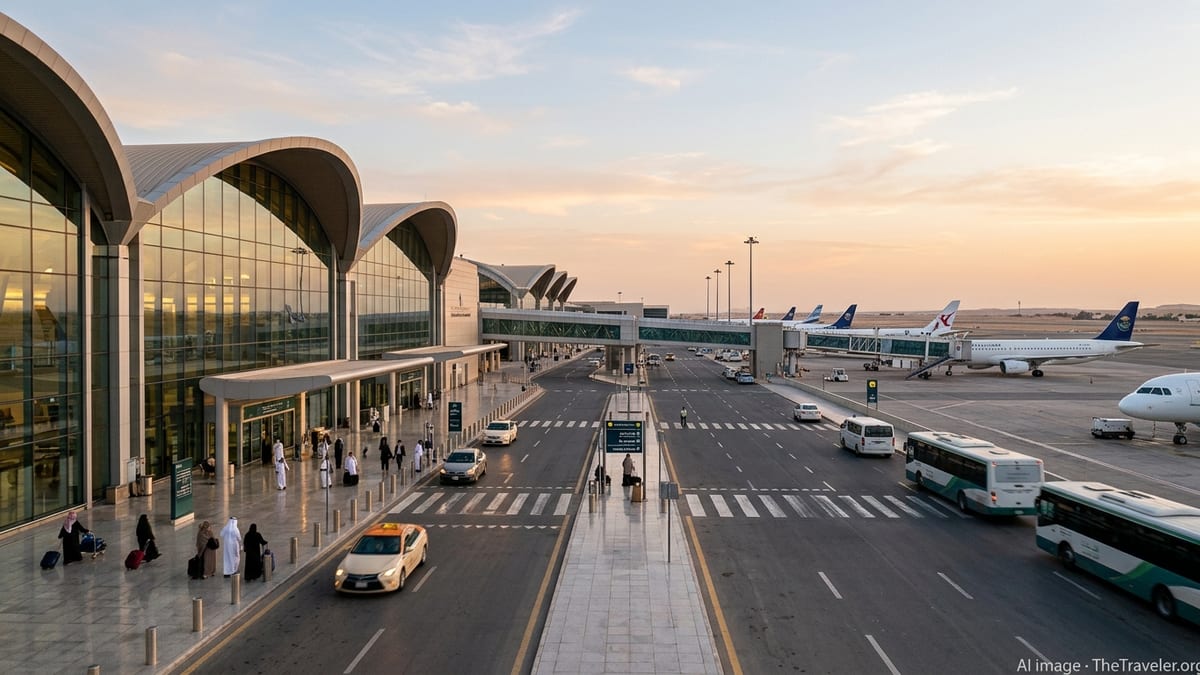
What the Best Regional Airport Award Means
The Best Regional Airport in the Middle East title is part of the annual Skytrax World Airport Awards, one of the aviation industry’s most closely watched rankings. The regional category highlights airports that primarily serve their surrounding area rather than operating as large global transfer hubs, and recognizes consistent performance in areas such as terminal design, cleanliness, comfort, wayfinding, security processing, and value for money.
Medina’s win places Prince Mohammad bin Abdulaziz International Airport alongside a select group of regional airports worldwide that are viewed as benchmarks for passenger experience. In the Middle East ranking, the airport topped a field that included Dammam, Salalah, Amman and Dubai World Central, according to Skytrax’s published results.
The accolade sits alongside other recent recognitions for the airport’s operations. Publicly available information from the operator, Tibah Airports Operation Company, indicates that the facility also features in global top-100 airport rankings and has drawn praise for service quality and overall travel experience.
For travelers, the award is a practical signal that the airport has invested heavily in customer-facing services, from check-in and security to boarding gates, retail, and dining. Recognition in multiple categories suggests that the improvements are not isolated upgrades, but part of a broader strategy to position Medina as one of the region’s most efficient and comfortable mid-sized gateways.
Growth, Traffic, and Pilgrim Travel
Prince Mohammad bin Abdulaziz International Airport occupies a strategic position in Saudi Arabia’s air network as the main gateway to Medina, Islam’s second holiest city. That status makes it a critical entry point for millions of pilgrims traveling for Hajj and Umrah, in addition to a growing segment of domestic and regional leisure passengers.
Data shared by Tibah Airports Operation Company shows that the airport handled around 72,000 flights and approximately 10 million passengers in 2024, cementing its role among Saudi Arabia’s busiest airports. Those volumes reflect a rapid rebound in international travel and a sustained surge in religious tourism as the kingdom continues to expand capacity for pilgrims.
The airport has been designed with peak seasonal flows in mind, particularly during Hajj and Ramadan, when passenger numbers rise sharply. Terminal layouts, circulation spaces, and ground handling operations are structured to absorb these spikes while limiting congestion, an operational challenge that has weighed on many airports in the wider region.
The latest award suggests that Medina has been able to pair this high-demand profile with a quality experience on the ground. For pilgrims who may be undertaking a once-in-a-lifetime journey, smoother arrivals, clearer signage in multiple languages, and more efficient processing can significantly shape impressions of both the city and the broader Saudi travel experience.
Design, Sustainability, and Passenger Experience
Prince Mohammad bin Abdulaziz International Airport’s terminal complex has long attracted technical recognition for its architecture and sustainability. The airport was an early recipient of Leadership in Energy and Environmental Design (LEED) Gold certification in the Middle East and North Africa region, reflecting features such as optimized natural lighting, energy-efficient systems, and environmentally conscious construction choices.
Those design credentials feed directly into the passenger experience highlighted by the Skytrax ranking. Generous glass façades allow daylight to filter through departure and arrival halls, while high ceilings and wide concourses reduce the sense of crowding, even at busy times. Waiting areas have been planned with clear sightlines to flight information screens and boarding gates, which can help reduce stress for travelers unfamiliar with the airport.
Service enhancements have run in parallel with the physical design. Public information points to improved security and immigration processing, expanded retail and dining options, and facilities tailored to the needs of families and older travelers. Prayer areas, rest zones, and accessible pathways are particularly important in a gateway that serves large numbers of elderly pilgrims and group tours.
The combination of architecture, sustainability, and service quality has become a defining feature of many new Middle Eastern airports. Medina’s latest recognition indicates that mid-sized regional hubs can match, and in some areas surpass, the standards found at the region’s larger intercontinental gateways.
How Medina Compares With Other Regional Airports
The Best Regional Airport in the Middle East title places Medina in a competitive field of regional airports that are increasingly central to national tourism strategies. Skytrax rankings list Medina at the top of the regional category, ahead of airports such as Dammam’s King Fahd International Airport and Oman’s Salalah International Airport, which have themselves earned strong reputations for service quality.
In parallel, industry reports show that the airport has joined the global top-100 list, a group traditionally dominated by larger hubs in Europe and Asia. Securing a place in that cohort is significant for an airport of Medina’s size, and indicates that travelers are rating their experience favorably when compared with many bigger and better-known facilities.
The recognition also sits within a broader pattern of Saudi airports collecting awards from both Skytrax and Airports Council International, as the kingdom invests in infrastructure upgrades and new terminals. Medina’s success highlights how investment is no longer concentrated solely on major hubs such as Jeddah and Riyadh, but is spreading to regional gateways that support religious tourism and domestic connectivity.
For travelers comparing options within the Middle East, the award offers a shorthand guide to quality. It signals that Medina’s airport is keeping pace with, and in some respects outpacing, other regional contenders on factors like comfort, cleanliness, staff service, and overall ease of journey.
What Travelers Need to Know Before Flying Through Medina
For passengers planning a trip that routes through Prince Mohammad bin Abdulaziz International Airport, the new award provides useful context on what to expect. As a mid-sized gateway, Medina is large enough to offer a full range of modern facilities, yet compact enough to keep walking distances manageable and transfer times relatively short.
International travelers will find dedicated terminal areas for arrivals and departures, with services oriented toward both scheduled carriers and the charter flights that support Hajj and Umrah traffic. Publicly available information highlights an emphasis on multilingual signage and announcements, which is particularly important for pilgrims arriving from Asia, Africa, and Europe.
Within the terminal, travelers can expect standard amenities such as currency exchange, food and beverage options, duty-free retail, and ground transport desks. Accessibility features, including elevators, ramps, and priority services for passengers with reduced mobility, are designed to support the diverse age profiles seen on religious routes.
Given the airport’s role in religious tourism, passengers should be prepared for very busy periods tied to the Islamic calendar, when check-in and security lines can lengthen despite operational planning. Outside these peak windows, however, reports suggest that the airport’s scale and layout support a smoother, less crowded experience than many of the region’s mega-hubs, which may be an advantage for travelers seeking a calmer start or finish to their journey through Saudi Arabia.