

More news on this day
Instability and flight diversions linked to ongoing tensions in the Middle East are accelerating an already powerful shift in global travel demand, with Cyprus, Turkey, Greece, Spain, Portugal, Malta and Italy among the Mediterranean destinations seeing sharp growth in bookings as holidaymakers seek perceived safer alternatives for sun and sea getaways.
Get the latest news straight to your inbox!
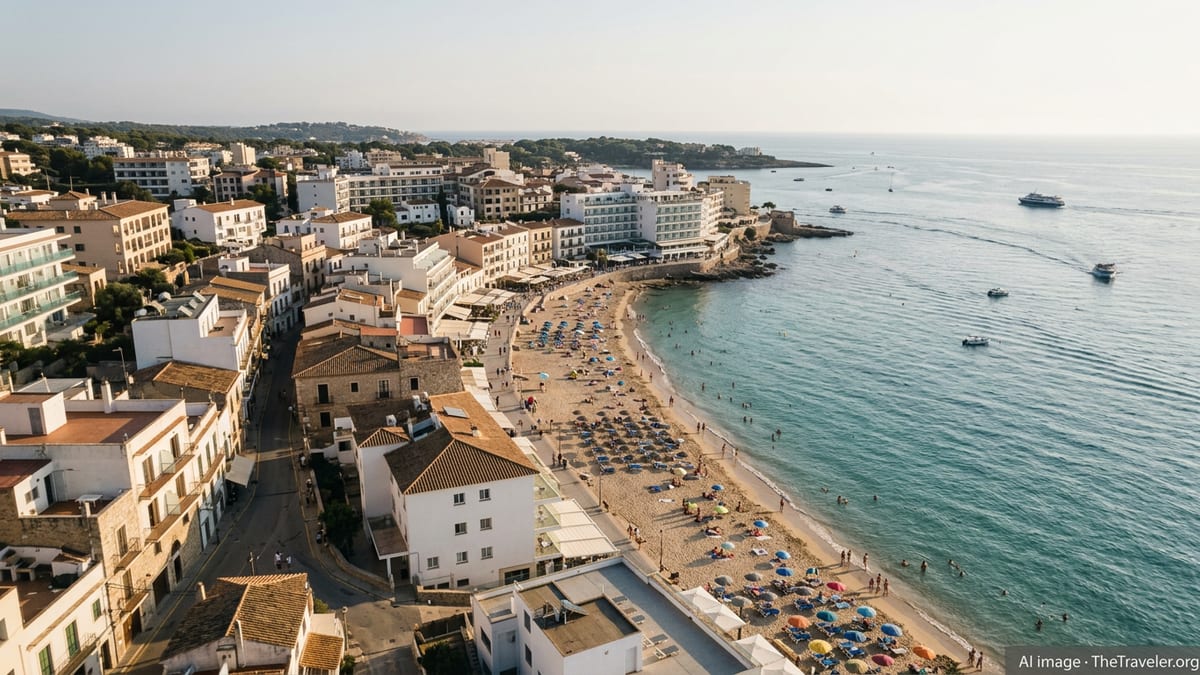
Mediterranean Demand Accelerates Amid Geopolitical Jitters
Publicly available airline and tourism data indicate that Europe’s Mediterranean coastline is consolidating its position as the world’s leading leisure region in 2025, even as conflict and airspace disruptions reshape traditional travel corridors in the Middle East. Recent analyses from European and international tourism bodies show international arrivals to Southern Europe rising faster than the broader global average, buoyed by travelers from North America and Europe who are recalibrating plans away from volatile areas further east.
According to recent tourism barometers, international tourist arrivals worldwide grew around 5 percent in the first quarter of 2025, with Southern Mediterranean Europe outperforming this pace. Within that regional picture, Spain has reported around 9 percent growth in tourism receipts in the opening months of the year compared with 2024, while Turkey has posted around 7 percent growth in arrivals and Greece, Italy and Portugal are estimated at roughly 4 percent growth each for the same period.
The Middle East as a region continues to attract visitors, but its expansion has cooled markedly. Global monitoring shows that the area recorded only about 1 percent growth in early 2025 compared with the previous year, a sharp moderation after several seasons of exceptional post‑pandemic recovery. Analysts note that rerouted air traffic, heightened security concerns and traveler risk perceptions are combining to nudge many holidaymakers toward Mediterranean Europe instead.
Industry commentary also links this shift to airline routing decisions following episodes of regional tension and the need to avoid certain airspace corridors. Longer flight times and higher operating costs for routes transiting the Middle East have, in some cases, made direct services to Southern Europe relatively more attractive, reinforcing a trend that already favored the Mediterranean’s established tourism infrastructure.
Cyprus and Malta Stand Out With Double‑Digit Growth
Within the wider Mediterranean, smaller island states such as Cyprus and Malta are emerging as some of the biggest relative winners from the current diversion in demand. Recent European Travel Commission data show arrivals to Cyprus up by roughly 16 percent year on year on a year‑to‑date basis, while Malta has recorded increases close to 19 percent over a similar period, albeit from more modest visitor numbers than larger rivals.
Additional seasonal reporting for summer 2025 points to Cyprus achieving around 10 percent growth in tourism volumes, with beach‑focused travel dominating. Malta has registered increases of roughly 12 percent over the peak months, supported by expanded air connectivity and targeted marketing of its coastal resorts to travelers from the United Kingdom, Germany and emerging long‑haul markets.
Travel trade publications have also highlighted Cyprus and Malta as primary beneficiaries of what they describe as a “global tourism diversion” away from Middle East hubs. Package holiday comparisons show that while all‑inclusive trips across popular Mediterranean destinations have risen in price for 2025, search and booking interest for Cyprus in particular has surged, even where average per‑person costs are reported to be more than 20 percent higher than a year earlier.
These trends are helping both islands to extend their tourism seasons further into spring and autumn as travelers seek flexible dates outside the hottest months. Tourism analysts note that Cyprus’s position at the crossroads of Europe and the Levant gives it both proximity to and distance from Middle East flashpoints, a combination that appears increasingly attractive to risk‑aware visitors.
Greece, Spain, Portugal and Italy Absorb Diverted Sun‑Seekers
Larger Mediterranean states are also benefiting from the redirection of global leisure travel. Spain, Italy, Greece and Portugal continue to rank among Europe’s most visited countries, and the latest European Union tourism statistics confirm that Spain and Italy anchor the bloc’s accommodation sector, accounting for hundreds of millions of overnight stays in 2025. Southern coastal regions in all four countries are reporting strong hotel occupancy and rising average room rates over the latest summer season.
Sector reports indicate that Spain recorded about 7 percent growth in nights spent during the main summer period, with Portugal close behind at around 3 percent. Off‑season data show that Greece and Italy have kept momentum into the shoulder months, supported by increased airlift from the United States and northern Europe. Ferry booking platforms for the Mediterranean also report double‑digit year‑on‑year increases in passenger volumes for routes serving Greek and Italian islands, with demand from the United States alone estimated up by nearly 15 percent.
At the same time, travel and tourism publications describe how Greece, Portugal, Croatia, Spain, Malta, Montenegro and Italy are all reporting sudden surges in tourist arrivals, explicitly linked in several analyses to the ongoing Middle East conflict. Coverage points to travelers shifting bookings away from Gulf destinations and Red Sea resorts toward Mediterranean alternatives that are perceived as more stable, while still offering similar sun‑and‑sea experiences.
The influx is not without tensions. In Spain, for example, 2024 and 2025 have seen repeated anti‑tourism protests in hotspots such as Barcelona, the Balearic Islands and the Canary Islands, where residents have raised concerns about housing pressures and overcrowding. Parallel demonstrations in Portuguese and Italian cities underscore how the latest surge in diverted demand is colliding with longstanding debates about overtourism and sustainable capacity in Europe’s coastal destinations.
Turkey Balances Regional Headwinds With Continued Appeal
Turkey occupies a more complex position in this shifting geography of demand. On the one hand, early 2025 data compiled by international tourism observers show Turkey achieving around 7 percent growth in international arrivals in the first quarter relative to 2024, placing it in line with or ahead of several Southern European competitors. Popular resort areas along the Aegean and Mediterranean coasts continue to attract visitors seeking comparatively good value for money.
On the other hand, national border statistics and trade press coverage from mid‑2025 point to a softening trend as the year progressed, particularly during the peak summer months. Some reports highlight a mid‑single‑digit decline in foreign tourist arrivals in July 2025 compared with the previous year, with especially sharp falls recorded from key source markets such as Germany and Italy. Rising domestic inflation and the perception of Turkey as an increasingly expensive destination are cited as key challenges.
Despite these headwinds, Turkey remains a significant beneficiary of the broader shift away from the Middle East’s conflict‑adjacent tourism hubs. Coastal resorts that cater to European package holidaymakers are still drawing strong volumes relative to pre‑pandemic baselines, and all‑inclusive pricing remains competitive compared with many eurozone destinations. Analysts suggest that if inflationary pressures ease, Turkey could regain some of the market share it appears to be ceding to Spain, Greece and Portugal.
Turkey’s position between Europe and the Middle East also makes it a bellwether for traveler sentiment. Industry observers are closely watching whether further escalations in regional tensions will dampen demand, or whether Turkey’s diversified source markets and extensive resort infrastructure will allow it to continue attracting visitors who prefer to stay on the periphery of conflict zones while still traveling within the broader Eastern Mediterranean.
Capacity, Climate Risks and the Sustainability Question
The redirection of demand toward the Mediterranean is taking place against a backdrop of mounting climate and capacity pressures. The summers of 2024 and 2025 brought repeated heatwaves and severe wildfires across parts of Greece, Spain, Portugal, Italy, Turkey and Cyprus, with evacuations from resort areas periodically dominating headlines. Meteorological data show that several Mediterranean countries have recorded some of their hottest Junes on record, while wildfire statistics point to thousands of incidents across the region.
These events have not yet significantly dented aggregate visitor numbers, but they are reshaping seasonality patterns. Tourism bodies report increased off‑season travel to Southern Europe, as visitors attempt to avoid the most intense summer heat and potential disruption from fires and extreme weather. At the same time, European tourism organizations are emphasizing the need for more distributed flows across regions and months to reduce pressure on coastal hotspots.
Infrastructure and pricing are also under strain. Studies of all‑inclusive packages show that average costs to leading Mediterranean beach destinations such as Spain, Greece, Turkey, the United Arab Emirates and Portugal have risen markedly for 2025, with Cyprus seeing some of the steepest percentage increases. While demand currently remains resilient, observers warn that prolonged price inflation could test the willingness of cost‑sensitive travelers to keep rebooking in Southern Europe year after year.
Regional tourism strategies are responding with efforts to expand capacity in secondary cities and lesser‑known coastal areas, as well as to promote cultural and nature‑based tourism away from overcrowded resort belts. However, as long as conflict and instability continue to weigh on parts of the Middle East, market signals suggest that the Mediterranean arc from Portugal to Cyprus will remain the primary beneficiary of travelers seeking a balance of perceived safety, accessibility and familiar holiday experiences.