

More news on this day
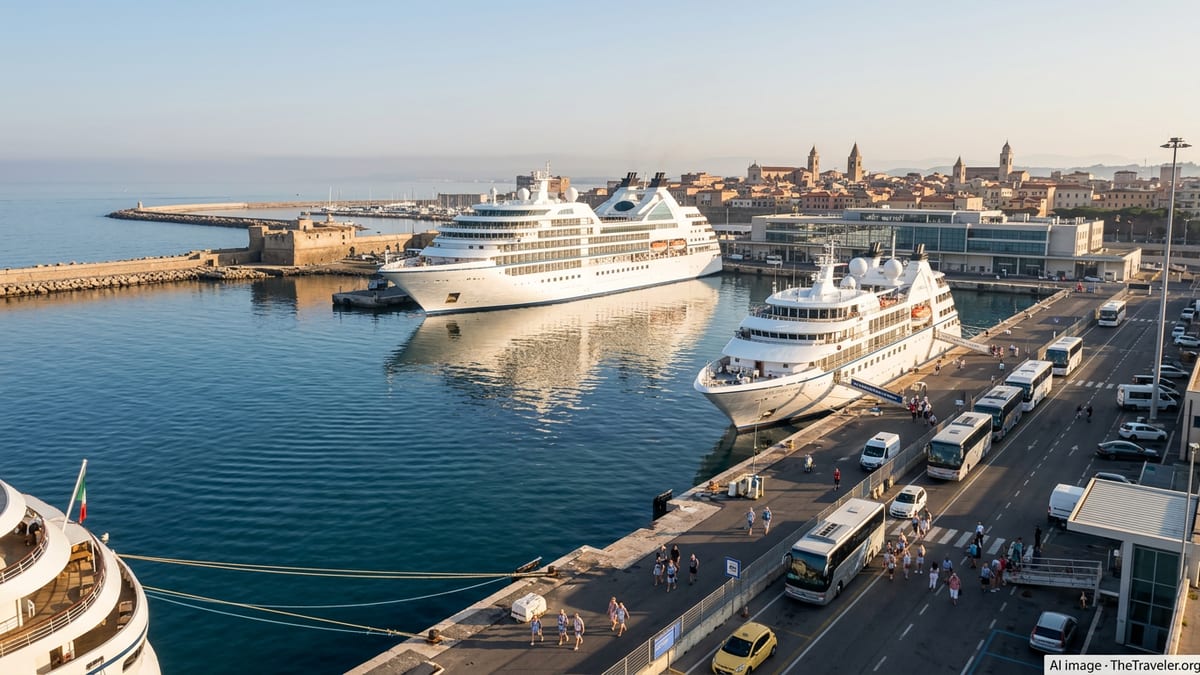
Civitavecchia, the main maritime gateway to Rome, is stepping up investment and marketing to position itself alongside Taranto, Piraeus, Barcelona, Funchal and other Mediterranean ports that are rapidly becoming magnets for luxury cruise ships and high-spending nautical tourists.
Civitavecchia Moves to Capture Rome’s Luxury Cruise Boom
Long known as the primary cruise access point for the Italian capital, Civitavecchia is increasingly repositioning itself from a simple turnaround port to a destination in its own right. Local authorities and terminal operators are investing in upgraded facilities, smoother passenger handling and premium shore excursions targeted at higher-yield cruise guests.
Industry officials say the strategy is to retain more visitor spending in the Lazio region by encouraging pre- and post-cruise stays in Rome and nearby coastal towns. Tour products are being redesigned to highlight food, wine and cultural experiences, reflecting the demand from luxury and expedition lines for more curated, small-group activities.
Capacity planning has become a key focus as the Mediterranean sees a sustained return of large, upscale vessels. While Civitavecchia continues to welcome mass-market megaships, port planners are working to ensure berthing windows and terminal flows can also accommodate the smaller, higher-end ships that are expanding their presence in Europe.
Operators note that the ability to guarantee efficient embarkation, short transfer times to Rome and reliable premium services such as luggage handling and lounge access is becoming a deciding factor as cruise brands allocate ships across Mediterranean ports.
Taranto and Funchal Rise as Boutique Cruise Gateways
On the southern Italian coast, Taranto has emerged as one of the region’s newest cruise stories. The Ionian Sea port recently closed its 2025 season with a high-profile event that included the maiden call of AIDAblu and a waterfront fireworks display, underscoring its ambitions to be seen on par with more established Mediterranean hubs. Projections through 2028 include confirmed programs from major brands such as Costa, signaling confidence in the destination’s long-term appeal.
Taranto’s port authority has highlighted “qualitative growth” as its priority, emphasizing tailored hospitality depending on ship size and segment, from large contemporary vessels to smaller luxury ships. The city is promoting its UNESCO-listed heritage, archaeological sites and lesser-known beaches to differentiate itself in a crowded itinerary market.
Further west in the Atlantic, Funchal on Madeira continues to leverage its strategic position at the crossroads of Mediterranean, Atlantic and transatlantic routes. The port has consolidated its status as a favored technical and leisure stop for repositioning voyages, including luxury and ultra-luxury ships sailing between Europe, the Americas and Africa.
Funchal’s waterfront redevelopment, together with a focus on wine tourism, hiking and nature-based excursions in Madeira’s interior, has made the destination especially attractive to cruise lines seeking authentic experiences that can be marketed as alternatives to traditional sun-and-sea stops.
Piraeus and Greek Ports Extend the Mediterranean Cruise Season
Greece’s main port of Piraeus has become one of the biggest winners of the region’s cruise rebound. Preliminary data for 2024 show around 810 cruise ship calls and an estimated 1.7 million cruise passengers, of whom roughly one million used the port as their embarkation or disembarkation point. Recent financial disclosures and sector reports point to double-digit year-on-year growth in both transit and homeport passengers in 2024 and into early 2025.
The trend is continuing into this year, with Piraeus port authorities reporting strong pre-bookings and additional homeport commitments from international brands. Royal Caribbean, for example, has scheduled two ships to homeport from Piraeus in 2025, as global lines increasingly rely on the Greek hub for Eastern Mediterranean and Aegean itineraries.
Greek tourism officials say the expansion of homeporting at Piraeus and other national ports is helping to extend the season beyond the traditional summer peak. More year-round calls, including winter and shoulder-season visits by premium and luxury ships, are spreading economic benefits across a longer period and encouraging investment in hotels, transport and services in Athens and the islands.
The wider Greek cruise sector continues to set records in ship calls and passengers, with forecasts for ports such as Mykonos and Santorini pointing to further growth through 2025. This reinforces Greece’s position as one of Europe’s three leading countries for cruise port stops, behind only Italy and Spain.
Barcelona Balances Record Demand With Overtourism Pressures
Barcelona remains the Mediterranean’s largest cruise homeport by passenger volumes, even as city and port authorities move to cap future growth to address overtourism. Recent statistics from regional port associations indicate the Catalan capital handled more than two million homeport passengers in 2024, with total cruise visitor numbers exceeding 3.6 million. Officials expect that record to be surpassed in 2025.
In response to mounting local pressure over crowds and environmental impact, the city has agreed with the port authority to reduce the number of dedicated cruise terminals and consolidate operations into fewer, higher-capacity facilities. Announced measures include cutting active cruise terminals from seven to five and eventually demolishing several older terminals on the central Barcelona pier, a move aimed at better controlling passenger flows.
Port executives emphasize that the strategy is not simply about reducing ship calls, but about managing them more efficiently and shifting traffic away from the most sensitive urban areas. New purpose-built terminals at the outer pier will concentrate most cruise activity farther from the historic center, while investments in shore power and cleaner fuels are designed to curb emissions from berthed ships.
Despite these constraints, luxury and premium cruise brands continue to rely on Barcelona as a key gateway for Western Mediterranean itineraries. Its extensive air connections, hotel inventory and urban appeal ensure the city remains a central node in European nautical tourism, even as growth is redirected toward quality rather than volume.
Luxury Segment Drives Investment Across Mediterranean Ports
The rapid expansion of high-end cruising in Europe is prompting ports across the Mediterranean arc to reassess infrastructure and destination strategies. From Civitavecchia’s terminal upgrades to Taranto’s new double-call capabilities and Funchal’s repositioning as a transatlantic boutique stop, port authorities are aligning their offerings with the requirements of luxury and ultra-luxury ships.
These vessels typically carry fewer passengers but generate greater per-capita spending, both on board and ashore. As a result, destinations are prioritizing premium shore experiences, including private tours, gastronomy-led itineraries, small-group cultural visits and access to exclusive venues. Investments in security, baggage handling and VIP lounges are increasingly seen as essential elements of a competitive cruise product.
Industry data from regional cruise associations underscore this shift. More than 50 Mediterranean ports now report regular homeport operations, with a growing share of calls from upscale brands and expedition-style ships. While traditional hubs like Barcelona and Piraeus still dominate by volume, emerging ports such as Taranto are capturing a niche share of itineraries focused on authenticity and off-the-beaten-path appeal.
Analysts expect that competition among ports will intensify as global cruise capacity grows and more ships are deployed to Europe. For Mediterranean destinations, the challenge will be to attract luxury cruise traffic while managing environmental impacts and community concerns, a balance that will shape the next phase of nautical tourism development across the region.