

More news on this day
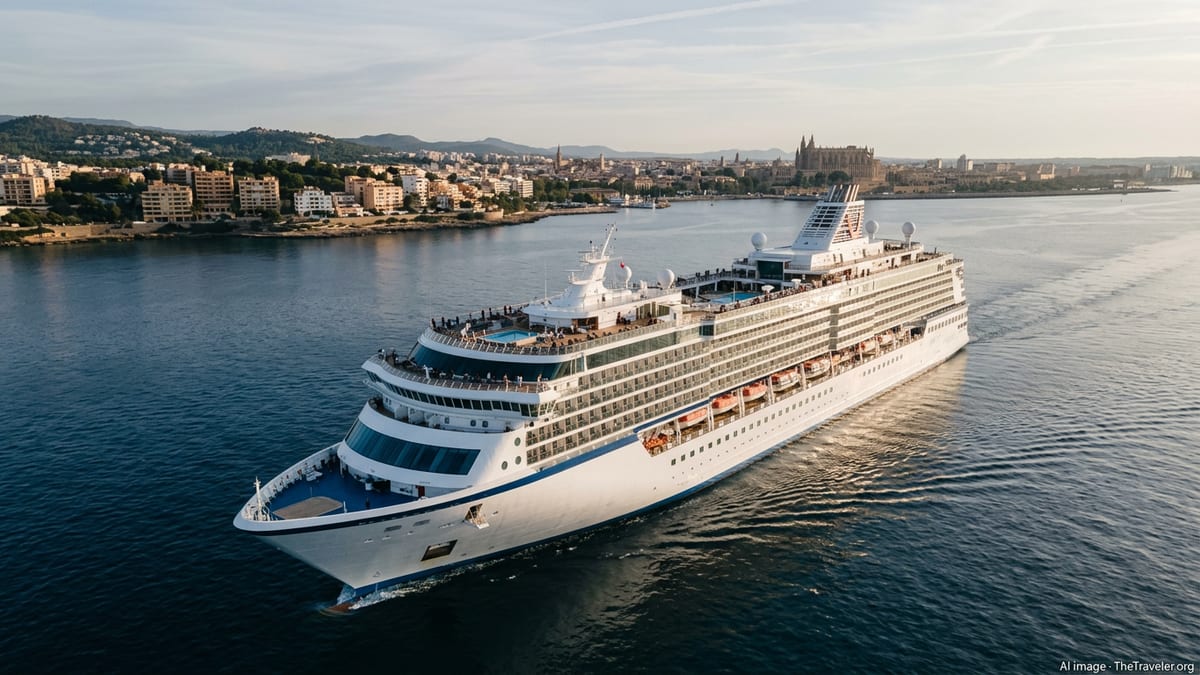
TUI Cruises’ upcoming Mein Schiff Flow is emerging as one of 2026’s most closely watched new cruise ships, combining low-emission technology, data-driven efficiency and Mediterranean-focused itineraries aimed at climate-conscious global travelers seeking quieter, premium experiences at sea.
Get the latest news straight to your inbox!
Next-Generation InTUItion-Class Ship Targets Eco-Luxury Segment
Mein Schiff Flow is set to join the TUI Cruises fleet in mid-2026 as the second vessel in the line’s new InTUItion class, a platform positioned around spacious design, upgraded suites and advanced environmental technology. Publicly available information from the company and industry reports indicate that the ship will carry around 4,000 passengers and continue the brand’s premium all-inclusive concept, which has helped TUI Cruises cultivate a loyal following in German-speaking markets and attract more international guests.
The newbuild is under construction at Fincantieri in Italy and is being described in trade coverage as a suite-led vessel, with a particular focus on high-end accommodations and large outdoor areas. Design details highlighted in recent briefings point to a minimalist aesthetic with extensive glass, open decks and sightlines intended to connect guests more directly with sea and skyline rather than interior showpieces alone.
Industry observers note that Mein Schiff Flow arrives at a time when European cruise lines are recalibrating for travelers who prioritize comfort, space and environmental performance over sheer scale. The InTUItion class concept positions the ship as an alternative to the largest megaships, aiming to deliver a quieter, more curated onboard atmosphere without sacrificing amenities or entertainment.
According to travel trade reports, TUI Cruises has been expanding its presence beyond its core German market, and the deployment of Mein Schiff Flow in both the Mediterranean and the Arabian Gulf is expected to broaden the ship’s appeal to guests from across Europe, the Middle East and long-haul markets such as North America.
LNG-Ready Power and Smart-Sailing Technology
A central part of the Mein Schiff Flow story is its technical platform. The ship is being built with dual-fuel engines designed to operate on liquefied natural gas as well as conventional marine fuels, with preparations to use bio-LNG and e-LNG in future as these become more widely available. Company sustainability documents and independent cruise analysts describe this as a key step in aligning the fleet with longer-term climate targets and tightening regulatory requirements in European waters.
In addition to its fuel flexibility, Mein Schiff Flow is reported to feature a shore-power connection that allows the ship to draw electricity from the grid while in port, reducing local emissions where suitable infrastructure is available. Sister vessel Mein Schiff Relax, which shares key engineering concepts, incorporates exhaust after-treatment and waste-heat recovery systems, and industry coverage suggests similar or enhanced solutions are being integrated into Mein Schiff Flow.
Smart-sailing capabilities are also part of the concept. Although detailed specifications are still emerging, trade publications point to the use of advanced energy-management systems, optimized hull design and digital tools to reduce fuel consumption, adjust speed profiles and fine-tune hotel operations. These technologies are increasingly common on new premium ships and are seen as essential to improving efficiency without eroding the onboard guest experience.
Cruise analysts note that while LNG and smart systems are not exclusive to TUI Cruises, the combination of lower-emission technology with a mid-size, comfort-focused ship could prove attractive to travelers who are skeptical of very large vessels but still expect contemporary amenities and year-round deployment in popular regions.
Western Mediterranean Focus for the Inaugural Season
The first phase of Mein Schiff Flow’s deployment is centered on the Western Mediterranean, one of Europe’s most competitive and high-profile cruise arenas. Industry news outlets report that the ship will operate week-long and slightly longer itineraries from Palma de Mallorca beginning in July 2026, visiting classic port cities across Spain, France and Italy, with some routes extending to Morocco.
Booking announcements published in late 2025 and early 2026 describe a series of “welcome” or christening voyages in the Western Mediterranean ahead of regular service. These sailings are structured to blend sea days for exploring the ship with port calls that highlight regional contrasts, from historic old towns and art districts to beach destinations and modern waterfronts.
Further schedule information, including a summer 2026 logbook released by the line, shows itineraries branded around “cities of the Western Mediterranean,” reinforcing the ship’s role as a floating base for urban and cultural discovery rather than purely resort-style cruising. Ports such as Palma, Barcelona and other marquee Mediterranean cities feature prominently in early-season planning.
Travel trade coverage suggests that TUI Cruises is using Mein Schiff Flow’s Med season to compete more directly with other European and global brands that base new tonnage in the region. By emphasizing quieter luxury, sustainability features and a premium all-inclusive model, the line appears to be courting guests who might otherwise favor small-ship or boutique products but still want the scale and facilities of a contemporary mainstream vessel.
Arabian Gulf Winter Routes Extend Global Reach
From late 2026, Mein Schiff Flow is slated to reposition from the Mediterranean to the Arabian Gulf for the winter 2026 to 2027 season. Cruise industry reports indicate that the ship will run seven-night itineraries interporting between Dubai, Abu Dhabi and Doha, placing the InTUItion-class experience into one of the fastest-growing cruise regions.
According to published coverage, these Gulf itineraries are designed to showcase both skyline cities and beach-focused shore experiences, with the ship serving as a premium base for shopping, dining and desert excursions during cooler winter months. The deployment also aligns TUI Cruises with a wider industry trend of sending newer, more efficient tonnage to the region as port infrastructure and fly-cruise demand grow.
For global travelers, the combination of Western Mediterranean summers and Arabian Gulf winters effectively turns Mein Schiff Flow into a year-round warm-weather option, with contrasting cultural settings but a consistent onboard product. Travel commentators note that this dual-regional strategy can help the line keep the vessel in high demand while exposing new audiences to the Mein Schiff brand.
Observers suggest that the Gulf season may be particularly appealing to guests interested in shorter flight times from Europe, as well as travelers from the Middle East seeking a cruise product that balances relaxed environments with upscale dining and wellness options, supported by the ship’s environmental and technical credentials.
Onboard Design Prioritizes Space, Wellness and Smart Experiences
Beyond its itineraries and propulsion, Mein Schiff Flow is being framed in industry reporting as an evolution of the brand’s “feel-good ship” philosophy. Early design previews emphasize light-filled atriums, extensive outdoor lounging areas and promenades that encourage guests to move between indoor and open-air spaces. The aim, according to public presentations, is to create a more intuitive flow around the ship, reducing bottlenecks and allowing guests to discover quieter corners.
Restaurant and bar concepts on Mein Schiff Flow continue the line’s emphasis on varied dining within a largely inclusive model, with reports highlighting new venues that shift from relaxed, beach-club atmospheres during the day to more refined Mediterranean-influenced dining in the evening. Partnerships with high-profile chefs are being used to reinforce the eco-luxury positioning, particularly around regional sourcing and modern interpretations of coastal cuisine.
Wellness is another focus. Trade descriptions point to an expanded spa and fitness offering, including outdoor wellness zones where guests can work out or relax with sea views. Combined with the ship’s relatively generous space per passenger compared with some larger megaships, these features are aimed at travelers who view a cruise as an opportunity to reset rather than as a non-stop entertainment spectacle.
Digital tools are also expected to shape the onboard journey, with app-based services and smart-cabin features designed to streamline everything from dining reservations to environmental controls. Cruise commentators argue that this blend of discreet technology, space-conscious design and lower-emission hardware positions Mein Schiff Flow as a notable test case for how mainstream cruise products can evolve toward eco-luxury without moving fully into the ultra-luxury price tier.