

More news on this day
Successful sea trials for TUI Cruises’ new LNG‑ready flagship Mein Schiff Flow off Palma de Mallorca are sharpening focus on how next‑generation cruise hardware could reshape Mediterranean tourism from summer 2026 onward.
Get the latest news straight to your inbox!
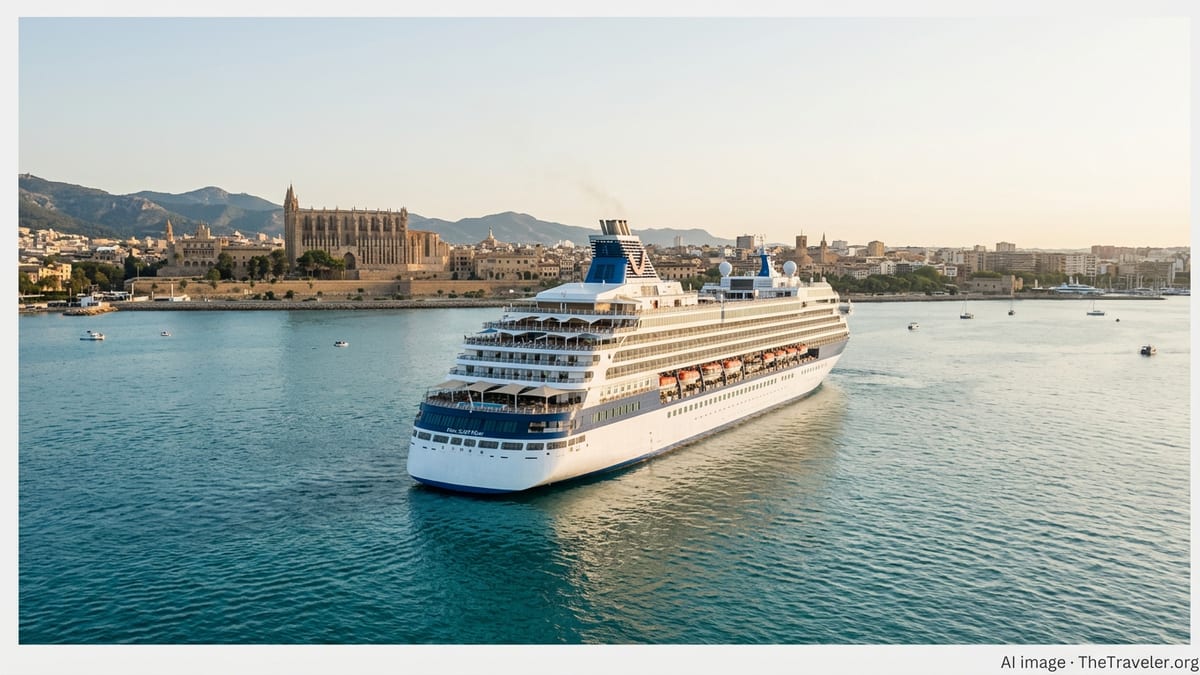
Sea Trials off Palma Signal a New Phase for TUI Cruises
Publicly available shipyard and industry reports indicate that Mein Schiff Flow has completed key sea trial milestones in the waters off Palma de Mallorca, a crucial step before the vessel’s planned debut in 2026. Sea trials typically test propulsion, maneuverability and safety systems under real conditions, and are regarded as a final proving ground before a cruise ship welcomes paying guests.
Mein Schiff Flow is the second vessel in TUI Cruises’ InTUItion class, following the 2025 delivery of Mein Schiff Relax, and continues a rapid expansion of the German‑language brand’s fleet. Earlier construction updates from Italian builder Fincantieri showed the 160,000‑gross‑ton newbuild being floated out and prepared for final outfitting, with completion scheduled for summer 2026.
The choice of Palma de Mallorca for trials underlines the port’s strategic position in the western Mediterranean. Palma already serves as a homeport for other Mein Schiff vessels, and industry schedules show the city handling a growing number of turnaround calls even under new limits on large‑ship arrivals. Successful testing near Mallorca strengthens expectations that the island will feature prominently in future deployment plans for Mein Schiff Flow.
For local tourism stakeholders, a smooth trial program is an early indication that one of Europe’s most anticipated new cruise ships is on track to join peak‑season rotations. That prospect comes at a time when cruise volumes in Palma are edging higher than in recent years, although still sitting below pre‑pandemic peaks.
Onboard Features: Suites, Quiet Decks and LNG Power
According to published coverage from cruise specialists, Mein Schiff Flow is being positioned as a suite‑led ship, with an expanded focus on premium accommodations and dedicated retreat spaces compared with earlier Mein Schiff vessels. The design builds on concepts introduced with Mein Schiff Relax, offering more upper‑tier cabins, private sun decks and exclusive dining options aimed at higher‑spending guests.
Digital previews and early fact sheets highlight a multi‑deck sundeck complex with ample shaded areas, quiet lounging zones and bar spaces intended to spread guests more evenly across outdoor decks. This approach is meant to appeal to travelers who favor a calmer atmosphere over high‑decibel poolside entertainment, a trend that market analysts associate with the premium and upscale segments of the European cruise market.
From a technical standpoint, Mein Schiff Flow continues TUI Cruises’ shift toward lower‑emission operations. The ship is configured with dual‑fuel engines designed to run primarily on liquefied natural gas, and documentation from TUI Group and Fincantieri notes that the vessel is being prepared for future use of bio‑LNG and synthetic e‑LNG. The ship is also expected to feature shore‑power connectivity to reduce stack emissions while berthed in ports that offer electrical hookups.
TUI Cruises has framed the InTUItion class as a bridge between current LNG propulsion and longer‑term climate‑neutral ambitions, using new hull forms, waste‑heat recovery and energy‑efficient hotel systems to cut fuel consumption per passenger. For Mediterranean ports grappling with air‑quality and overtourism concerns, these incremental gains are likely to be closely watched as more large ships transition to alternative fuels.
Palma de Mallorca Balances Cruise Growth and Limits
The timing of Mein Schiff Flow’s sea trials intersects with a sensitive phase for Palma’s cruise strategy. Recent coverage from regional media and port statistics shows that Palma welcomed close to two million cruise passengers in 2025, roughly 5 percent more than in 2024 but still below 2019 levels. At the same time, a political agreement to limit large‑ship arrivals remains in place, capping the average number of daily cruise visitors from larger vessels.
Updated accords between the Balearic regional government and major cruise operators foresee a weekly average ceiling on passengers arriving on ships with more than 500 berths, now set at about 7,500 per day on average across a week. Industry associations note that this formula still allows days of very high activity, provided the weekly mean remains within the agreed threshold.
Port authority data and cruise association forecasts suggest that the total number of cruise calls in Palma is continuing to rise modestly, even under these constraints. Reports indicate that ship operators are adjusting schedules, ship sizes and turnaround patterns to comply with the caps while maintaining a strong presence in the western Mediterranean’s largest island hub.
In this context, an LNG‑ready, premium‑positioned ship such as Mein Schiff Flow may fit the profile of vessels that local stakeholders are more inclined to accommodate. With a focus on higher onboard spending, quieter deck areas and lower emissions at berth, the ship aligns with a broader shift toward “value over volume” in Mediterranean cruising, even as passenger numbers inch up.
What the New Ship Means for Mediterranean Itineraries
Mein Schiff Flow is scheduled to enter service in 2026, initially with itineraries that, according to cruise deployment previews, concentrate on classic sun‑belt routes in the Mediterranean and Middle East. Earlier announcements pointed to a roundtrip debut season from Dubai, followed by strong summer deployment in European waters as the ship joins the wider Mein Schiff network of homeports and embarkation ports.
For Mallorca and neighboring ports such as Barcelona, Málaga and various Balearic and Greek islands, the arrival of a large, LNG‑powered vessel widens the options available to travelers looking for German‑language sailings with a quieter, resort‑style profile. Travel trend reports for the 2026 wave season show robust demand for Mediterranean and broader European cruises, with particular interest in itineraries that blend marquee ports with smaller, less crowded destinations.
Port calendars and industry commentary point to a continued expansion of shoulder‑season sailings, especially in April, May, September and October, when temperatures are milder and city centers less congested. A ship like Mein Schiff Flow, designed for extensive outdoor use with shaded retreats and flexible dining, is well suited to these periods, and operators may leverage the vessel to stretch the profitable season in the western and central Mediterranean.
At the same time, the vessel’s dual‑fuel setup and shore‑power capabilities give TUI Cruises more flexibility in routing under emerging environmental rules. As additional ports tighten air‑quality standards and set specific requirements for cruise calls, ships with newer propulsion technologies may find it easier to secure berthing slots during peak demand.
Planning a Trip: What Travelers Should Watch
For travelers considering a Mediterranean cruise that may involve Mein Schiff Flow, several practical themes are emerging. Booking data points and wave‑season analyses suggest that demand for new ships with advanced sustainability features tends to be strongest in their first one or two seasons, particularly in balcony and suite categories. Early planners may find that premium cabins sell out faster than inside and oceanview options once final deployment is confirmed.
Given Palma’s dual role as both a popular embarkation point and a heavily visited day‑call destination, travelers may wish to monitor how many ships are scheduled on the same date when comparing departures. Local tourism and resident groups have periodically raised concerns about crowding in Palma’s historic center on peak cruise days, and passengers who prefer a quieter experience may benefit from sailing on dates with fewer concurrent ship calls.
Travel advisors note that shoulder‑season sailings from Mediterranean ports often deliver lower prices and more comfortable conditions ashore. With Mein Schiff Flow expected to join a dense network of itineraries from 2026, itineraries that depart in late spring or early autumn could offer a balance between reliable weather and manageable visitor numbers in cities such as Palma, Barcelona and Marseille.
Ultimately, the successful sea trials of Mein Schiff Flow near Palma de Mallorca highlight how ship design, port policy and traveler preferences are converging. As Mediterranean destinations push for cleaner fuels and tighter visitor management, ships that combine LNG propulsion, shore power and a premium, lower‑key onboard experience may set the tone for the next phase of regional cruise tourism.