

More news on this day
Australia is stepping up its aviation ambitions as Melbourne Airport unveils a sweeping A$4.5 billion international terminal expansion, positioning the Victorian gateway alongside major global hubs in the United States, Mexico, the United Kingdom, China, South Korea and Saudi Arabia in a new race for airport capacity, technology and passenger experience.
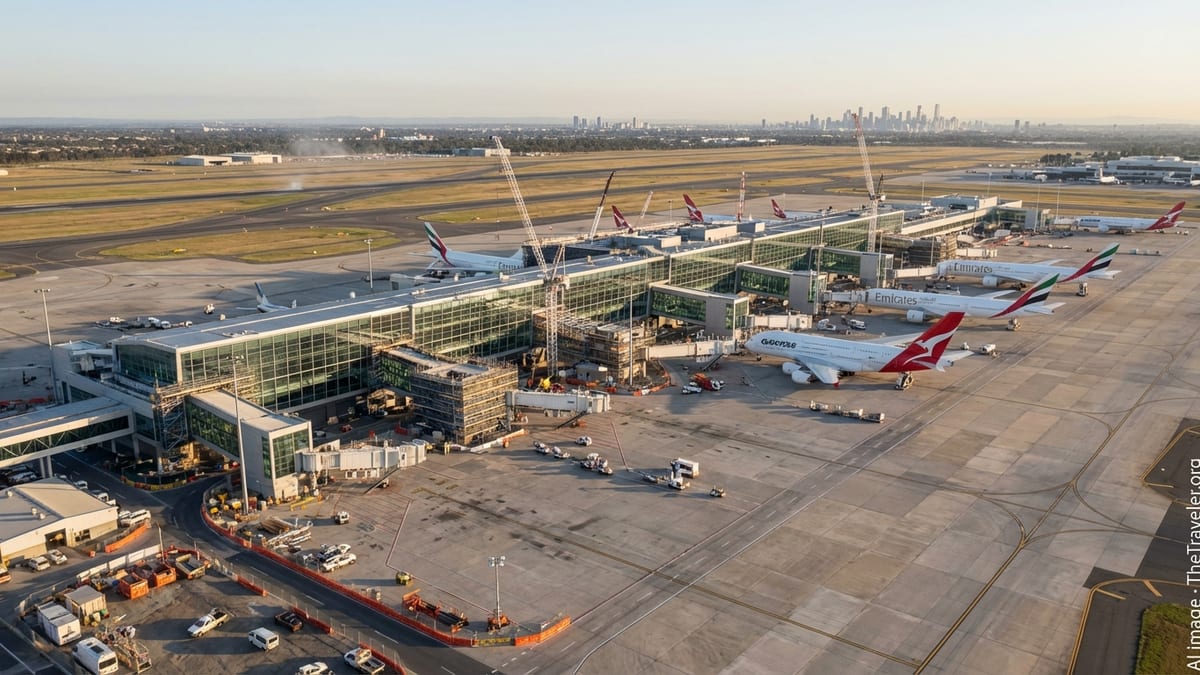
A Mega Investment to Match Global Aviation Heavyweights
Melbourne Airport’s newly announced transformation plan will overhaul its busy international Terminal 2, with a privately funded project valued at A$4.5 billion. The airport, which now handles more than 37 million passengers annually, is betting that long-term growth in global travel and Victoria’s tourism and trade will justify one of the largest single airport investments in Australian history.
The project will add five new international gates and five new aircraft stands designed to handle either widebody or narrowbody aircraft, boosting Melbourne’s capacity to accommodate the latest long-haul jets as well as high-frequency regional services. Larger check in and baggage halls, new common user baggage systems and expanded security and border processing areas are planned to ease congestion and support faster turnarounds.
Airport executives say the program is calibrated to keep Melbourne competitive with airports such as Los Angeles and Dallas in the United States, Mexico City, London Heathrow, Shanghai Pudong, Seoul Incheon and Riyadh, where multi billion dollar expansion plans are reshaping the global aviation map. By significantly enlarging its international footprint, Melbourne aims to attract more direct long haul services and become a stronger one stop option between the Americas, Europe and Asia.
The A$4.5 billion commitment comes on top of broader infrastructure works around the precinct, including new access roads and forecourt redesigns now under construction, underlining the scale of Melbourne’s ambition to operate at the level of the world’s premier hubs.
Terminal 2 Reimagined for Capacity, Comfort and Speed
At the heart of the plan is a staged expansion of Terminal 2, which currently features 20 gates dedicated to international flights. The terminal footprint will grow substantially, allowing for an enlarged check in hall, more generous circulation zones and a reconfigured security and border processing sequence designed to minimise bottlenecks during peak departure and arrival waves.
Plans call for high tech common user baggage systems capable of serving multiple airlines simultaneously, improved queuing layouts and upgraded screening equipment to keep pace with international standards. Larger, brighter waiting areas and upgraded passenger lounges are also in the pipeline, aimed at raising comfort levels and spending opportunities while travellers are in transit.
Retail and dining areas inside the expanded terminal will be reshaped to reflect Melbourne’s reputation for food, coffee and design, an increasingly important differentiator as airports worldwide compete to turn concourses into curated lifestyle spaces. Airport management has signalled that local brands and Victorian producers will feature heavily, tying the gateway more closely to the city and state identity.
The works will roll out over several years to maintain operations at a 24 hour airport that remains open through construction. To enable the first phase inside Terminal 2, Melbourne is completing a new ground transport hub and road system, which will reroute vehicles away from the existing forecourt and provide construction teams with space and access to build while flights continue.
Technology, Operations and the Third Runway Horizon
The physical expansion is being paired with a significant digital upgrade. Melbourne Airport has just completed the rollout of an integrated operations platform that provides a single view of real time data across flights, gates, baggage and ground handling. The system is intended to sharpen decision making, allow more precise scheduling and improve resilience when weather or disruptions hit.
By consolidating operational information that was previously scattered across multiple legacy systems, the platform supports the more complex gate and stand choreography that will come with extra widebody aircraft and higher traffic peaks. Airport leaders argue that this sort of technology is now a baseline requirement for any hub aspiring to match the performance of leading airports in Asia, Europe and North America.
The Terminal 2 expansion is also aligned with Melbourne’s long term airfield strategy, including planning for a proposed third runway targeted for around 2031. Additional runway capacity would unlock more peak hour movements and enable the airport to fully leverage its new international gates, in line with forecasts that show sustained growth in both inbound tourism and outbound travel by Australians.
Discussions with the federal government are continuing on border technology upgrades, from smarter passport control to biometric systems, to ensure that passenger processing keeps pace with the physical and digital improvements on the airport side of the fence.
Connecting Victoria’s Big Build With a Global Gateway
Melbourne Airport’s upgrade is unfolding in parallel with major transport investments across Victoria, including the under construction Metro Tunnel and the planned Melbourne Airport Rail link that will eventually connect the terminals to the city via Sunshine. Government funding of around A$4 billion has been earmarked to turn Sunshine station into a superhub for regional and airport services, tying the gateway into a broader reshaping of the state’s rail network.
These projects, collectively part of the Victorian Big Build, are intended to create a seamless journey from regional centres and metropolitan suburbs to the international terminal doors. For travellers, this should translate into shorter overall trip times and more predictable connections, particularly during peak periods when roads into the airport can be heavily congested.
The airport’s own landside works complement this strategy. A multi span elevated roadway now under construction will separate commercial and public traffic, improving safety and smoothing flows to each terminal. New drop off and pick up arrangements, additional parking capacity and clearer pedestrian links between terminals and transport hubs are designed to support the larger volumes of passengers expected once the Terminal 2 expansion is complete.
Business and tourism groups argue that the convergence of these projects will strengthen Melbourne’s hand as a destination for major events, international education and high value exports, aligning the city more closely with the infrastructure standards already seen at competitive hubs across the United States, Europe, the Middle East and Asia.
Economic Stakes and Australia’s Place in the Airport Arms Race
For governments and industry, the economic rationale behind Melbourne’s A$4.5 billion terminal project is clear. Each fully loaded international flight is estimated to generate hundreds of millions of dollars in annual economic activity through tourism, trade and investment, particularly for a state where international students and visitors are critical drivers of jobs and growth.
By lifting capacity and improving the travel experience, Melbourne aims to secure more direct long haul routes, reduce reliance on offshore hubs and capture a greater share of connecting traffic between Asia, the Americas and Europe. That ambition places it in a cohort of airports, from Mexico City’s new Felipe Angeles facility to expanded U.S. hubs and rapidly growing Middle Eastern and Asian gateways, that are investing heavily to anchor future airline networks.
Airport leaders say the privately funded nature of the Melbourne program underscores confidence in long term demand and in Victoria’s role as an economic engine within Australia. They contend that, without comparable upgrades, the country risks ceding market share to better equipped competitors in the region, particularly as airlines deploy larger fleets of modern long range aircraft that can choose from a growing list of global bases.
As design work progresses and early construction activity begins later this year, the A$4.5 billion blueprint is shaping up as a defining test of Australia’s ability to deliver a world class gateway that can stand alongside the new generation of mega hubs reshaping international aviation.