

More news on this day
Melbourne Airport has unveiled a multibillion-dollar transformation of its international precinct, pairing a new ground transport hub with expanded lounges and upgraded terminal facilities to meet surging passenger demand well into the 2030s.
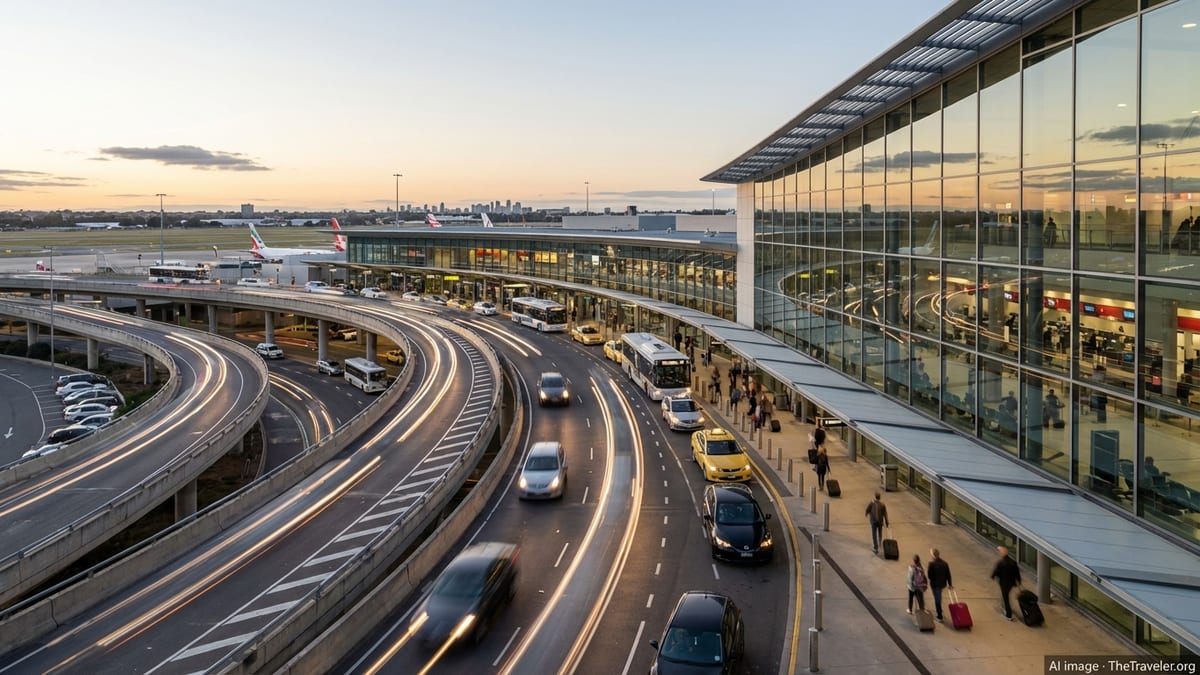
New T123 Transport Hub to reshape airport access
Central to Melbourne Airport’s long-term plan is the integrated T123 Transport Hub, a new pick-up and drop-off complex that will reroute traffic and unlock space for the international terminal to expand. Due to open in September 2026, the hub will consolidate forecourt roadways, short-stay parking and ground transport operations, aiming to relieve chronic congestion at one of Australia’s busiest gateways.
The elevated road network feeding the hub is designed to streamline curbside access for cars, taxis, rideshare vehicles and buses, reducing the time it takes international travelers to move between terminal doors and ground transport. Airport planners say the hub will also future-proof access for high-capacity vehicles and scheduled services as passenger volumes climb.
Airport chief executive Lorie Argus has framed the project as critical to Victoria’s economic growth, noting that record international traffic in January and strong long-haul demand have pushed existing forecourt and road layouts to their limits. By moving pick-up and drop-off activity into the T123 Transport Hub, the airport can repurpose valuable land directly in front of the terminal for new passenger facilities.
The transport hub also dovetails with wider changes underway across Melbourne’s rail network, including the Metro Tunnel’s full integration in 2026 and the start of construction on the Melbourne Airport Rail link works through the Sunshine corridor, which together will eventually connect the airport directly to the city and regional centers.
International terminal expansion targets capacity crunch
The headline element of the upgrade is a planned AUD 4.5 billion expansion of the international terminal, known as T2, which will begin once the transport hub is in operation. The program will add five new aircraft stands capable of handling five twin-aisle jets or up to eight single-aisle aircraft, significantly lifting the airport’s ability to schedule more flights at peak times.
Inside the terminal, the check-in hall will be enlarged and equipped with high-tech, common-user bag drop systems shared across multiple airlines. This is intended to cut queues, improve on-time performance and give carriers more flexibility in how they allocate counters during busy departure banks bound for Asia, the Middle East, North America and Europe.
Arrivals will see a larger baggage reclaim hall, additional carousels and more floor space for border processing agencies. Federal officials say they are working with the airport on modernized passport control and screening technology so that the physical expansion of the hall is matched by faster throughput for passengers.
The international pier, which dates back to 1970 and has expanded only incrementally, has long struggled with crowding as Melbourne’s global route network has grown. Airport executives say the multi-year construction schedule reflects the complexity of rebuilding a 24-hour international terminal while maintaining operations for millions of passengers.
Expanded lounges and upgraded passenger experience
As part of the redevelopment, Melbourne Airport is promising a significantly enhanced lounge and retail precinct tailored to long-haul travelers. The enlarged T2 footprint will accommodate new and expanded airline lounges, with carriers such as Singapore Airlines expected to relocate from older basement-level spaces into larger, light-filled facilities on upper levels.
The upgraded lounge zone aims to relieve peak-hour crowding before heavily booked departures to major Asian and European hubs. More generous floorplates will allow for additional seating, quiet zones, family areas and upgraded shower and workspace facilities designed for passengers facing overnight flights or long connections.
Across the wider departures area, refreshed waiting zones, improved wayfinding and a renewed mix of dining and retail outlets are planned to bring the airport in line with other major Asia-Pacific hubs. Airport managers say the focus is on creating a smoother end-to-end journey, from curb to gate, for both premium and economy travelers.
These enhancements are being developed in close consultation with airlines that are deploying larger aircraft and denser premium cabins to Melbourne, including new and upgraded services to India, Southeast Asia and the Middle East, which are driving demand for high-quality pre-flight spaces.
Future rail link and Sunshine superhub to integrate the airport
Beyond the terminal’s immediate footprint, work has now begun on the first stage of the long-discussed Melbourne Airport Rail connection, with major construction underway in the Sunshine corridor. The project includes new tracks, rail bridges and a rebuilt Sunshine Station, which will act as a central interchange linking regional lines, the Metro Tunnel and future airport services.
Once complete, the network is planned to support turn-up-and-go services every 10 minutes between the airport and the city, with travel times of around half an hour. Early works now under way are designed to remove bottlenecks in Melbourne’s west and create capacity for up to six trains per hour to and from the airport.
Federal and state ministers have described the start of construction as a turning point after decades of debate over an airport rail link. The upgraded Sunshine superhub is expected to improve access not only for Melbourne-based travelers but also for passengers from regional centers such as Ballarat, Bendigo and Geelong, who will be able to interchange more easily for airport-bound services.
This rail investment, combined with the T123 Transport Hub’s road upgrades, is intended to ensure that landside capacity keeps pace with the international terminal’s expansion, reducing reliance on private cars and easing congestion on arterial roads leading to the airport precinct.
Planning for a third runway and decades of growth
The international terminal makeover is part of a broader long-term blueprint that also includes a third runway, currently targeted for opening in 2031. Additional airfield and terminal capacity are seen as essential if Melbourne is to maintain and grow its network of long-haul routes while absorbing forecast increases in both inbound tourism and outbound travel.
Airport management has emphasized that the current wave of investment is privately funded and staged over several years, reflecting confidence in sustained demand growth following the recovery of international traffic to near or above pre-pandemic levels. January’s record of more than 1.26 million international passengers has reinforced expectations that Melbourne will continue to grow as a global hub.
Industry analysts say the combination of new gates, expanded lounges, modern baggage systems and integrated ground transport positions Melbourne Airport to compete more strongly with rival hubs across the region. For airlines, the promise of more flexible scheduling and additional aircraft parking stands could support new routes and increased frequencies.
For travelers, the changes will be gradual rather than overnight, as construction rolls through the terminal and surrounding precinct. But by the early 2030s, Melbourne Airport is slated to look and feel markedly different, with a larger international terminal, a new transport hub at its front door and a long-awaited rail connection finally in place.