

More news on this day
Melbourne Airport is preparing to break ground on a $4.5 billion transformation in 2026, gambling that new runways, roads and rail connections will future proof Australia’s second-busiest gateway just as global aviation enters another period of economic and geopolitical turbulence.
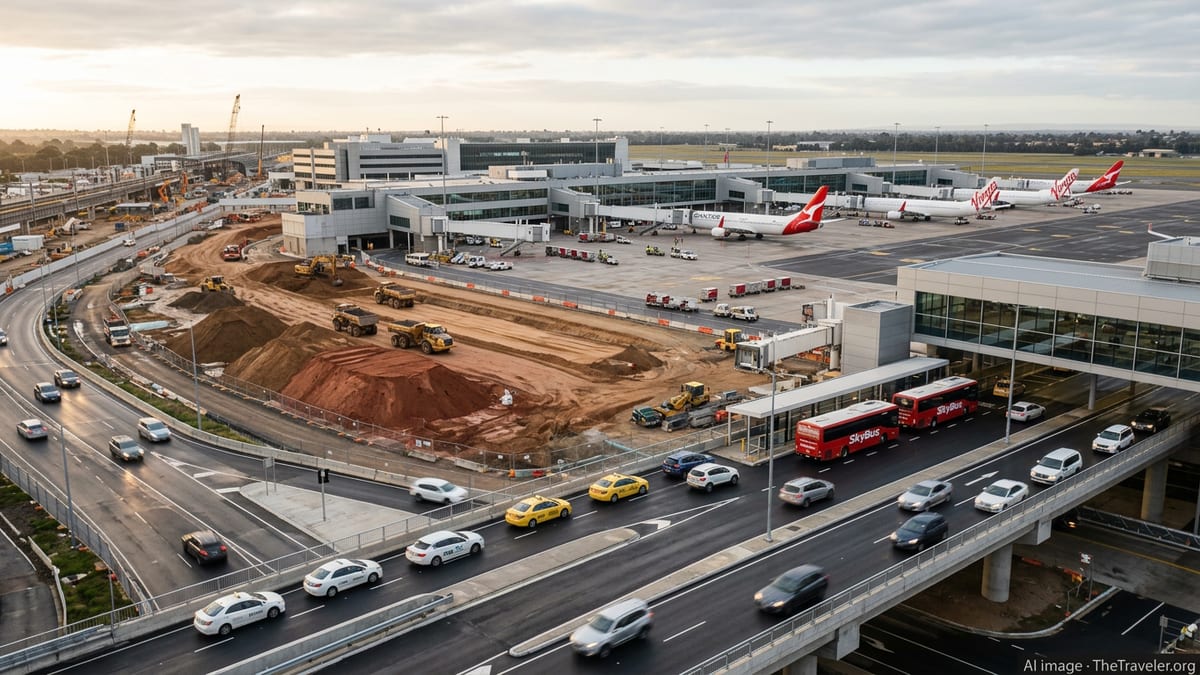
A Mega Upgrade Takes Shape on the Tarmac
After years of wrangling over design, timing and environmental impacts, Melbourne Airport is moving toward the main construction phase of a long planned third runway and associated airfield works, part of a capital program that industry sources value at around $4.5 billion over the coming decade. The centrepiece is a second parallel north–south runway, designed to expand capacity and cut chronic delays that have increasingly frustrated airlines and passengers.
Project documentation indicates that 2026 will mark the start of major earthworks to level the site and build new taxiways, aprons and support infrastructure. The runway is intended to support wide body jets and peak period scheduling more in line with Asia’s biggest hubs, lifting Melbourne’s ability to handle forecast long term growth in both domestic and international traffic.
Airport planners argue that without the extra strip, congestion will worsen as traffic rebounds and new routes are added across the Asia Pacific. Studies prepared for the project point to billions of dollars in potential lost economic activity if capacity constraints are allowed to harden, a warning that has become more pressing as rival airports in Sydney, Brisbane and Perth accelerate their own expansion plans.
Alongside the third runway, works already under way include a reconfigured elevated road network at the terminals, branded Naarm Way, intended to ease curbside gridlock from ride share, taxis and private cars. The road upgrade is regarded within the airport as an essential precondition for handling larger passenger volumes once the new runway is operational.
Rail Link Revival and the Race for Better Connectivity
The airside overhaul comes just as Melbourne’s long delayed airport rail link shifts from political football to active construction, reshaping how millions of travellers may access the terminals by the early 2030s. Preliminary works began this month on a multi billion dollar upgrade of Sunshine Station, the western hub that will anchor the new line and connect it to suburban and regional services.
The first stage, a more than $4 billion package between West Footscray and Albion, will add new tracks, bridges and passenger facilities to separate airport-bound trains from existing services. Government planners see the Sunshine superhub as a way to spread the benefits of the rail link deep into Melbourne’s fast growing western suburbs and regional Victoria, while also relieving pressure on the road network around the airport precinct.
The airport rail has been closely intertwined with runway expansion plans, with federal and state officials privately signalling that improved public transport access is a political and planning precondition for such a large increase in aircraft movements. That linkage helped break a long stalemate over whether the terminal station should be built above or below ground, clearing the way for the broader airfield program to proceed.
For airlines, an integrated rail connection is increasingly seen as a basic competitive requirement rather than a luxury. With Western Sydney’s new airport set to open later this decade with automated rail from day one, Melbourne’s ability to offer a comparable level of access could influence future route decisions and alliances in an already fiercely contested market.
Environmental Scrutiny and Community Concerns
As the 2026 works approach, the transformation is drawing intense scrutiny from local communities and environmental groups, particularly over aircraft noise, carbon emissions and contamination management. The third runway will alter flight paths over parts of Melbourne’s north and west, prompting fears of longer operating hours and more frequent overflights in suburbs that have so far been largely shielded from heavy jet traffic.
In response, the airport has prepared a suite of impact assessments and mitigation plans, including a government approved strategy for handling legacy PFAS contamination uncovered in soils and groundwater. Noise contour modelling and health impact studies have been released for public consultation, though critics argue that projections underestimate the cumulative impact of more flights in a warming climate already prone to extreme heat and smoke events.
Climate campaigners have also questioned the wisdom of locking in extra capacity just as aviation faces mounting pressure to curb emissions. While Melbourne Airport points to more efficient aircraft, evolving sustainable aviation fuel supply and tighter airline emissions regimes, environmental advocates counter that expanding runways inevitably encourages more flying at a time when governments are urging other sectors to decarbonise.
Local councils around the airport are watching closely, weighing the promise of jobs and investment against community concerns. Planning conditions attached to approvals are likely to cover everything from construction traffic and dust to long term monitoring of noise, air quality and water, adding further complexity to an already intricate build program.
A Big Bet in a Fragile Global Aviation Market
Melbourne’s mega project is unfolding against a backdrop of renewed uncertainty for global aviation. Industry forecasts for 2026 point to solid growth in passenger demand but warn that profits remain thin and vulnerable to shocks, from geopolitical tensions and trade disputes to fuel price volatility and climate driven disruptions.
Recent outlooks from aviation bodies suggest that while total passenger numbers are expected to rise, net margins across airlines may hover below 4 percent, leaving little buffer if costs spike or demand cools. Aircraft delivery delays and a worldwide shortage of pilots, engineers and air traffic controllers are constraining capacity just as travel appetite recovers, complicating fleet and network strategies for carriers that use Melbourne as a hub.
For Melbourne Airport, that turbulence cuts both ways. On one hand, infrastructure constraints elsewhere and tight global capacity could support healthy load factors and yields on key routes into Asia, North America and the Middle East. On the other, any downturn in travel or sustained pressure on airline finances could slow the pace at which extra runway slots are taken up, lengthening the payback period on a multibillion dollar investment.
Industry analysts note that airports which invested aggressively before previous downturns sometimes struggled to recoup costs, while those that failed to expand in time later faced chronic bottlenecks. Melbourne’s strategy, they argue, is to thread a narrow path between those extremes by phasing construction and keeping options open for further terminal expansion as demand evolves.
Positioning Melbourne as a Regional Super Hub
Despite the risks, the ambition behind the 2026 transformation is clear. Airport executives and state planners see an opportunity to cement Melbourne’s status as a premier Asia Pacific hub, capturing a larger share of long haul traffic and high value tourism and trade flows as the region’s middle class grows.
The combination of a third runway, a modernised terminal road network and a future rail link into the heart of the city is intended to create a seamless journey from gate to downtown and beyond. If realised, that vision would strengthen Melbourne’s hand in competition not only with Sydney and Brisbane, but also with emerging hubs across Southeast Asia that are racing to expand their own airports.
Much will depend on how deftly the airport navigates the next two to three years of planning approvals, contract awards and early works. Construction in a live operating environment, while airlines continue to rebuild their schedules, will test the resilience of both the terminal precinct and the travelling public’s patience.
For now, the 2026 start to major construction marks a symbolic turning point. In a world where aviation’s future is clouded by economic headwinds and climate imperatives, Melbourne Airport is choosing to build its way forward, betting that when the next wave of global travel arrives, it will be ready to catch it.