

More news on this day
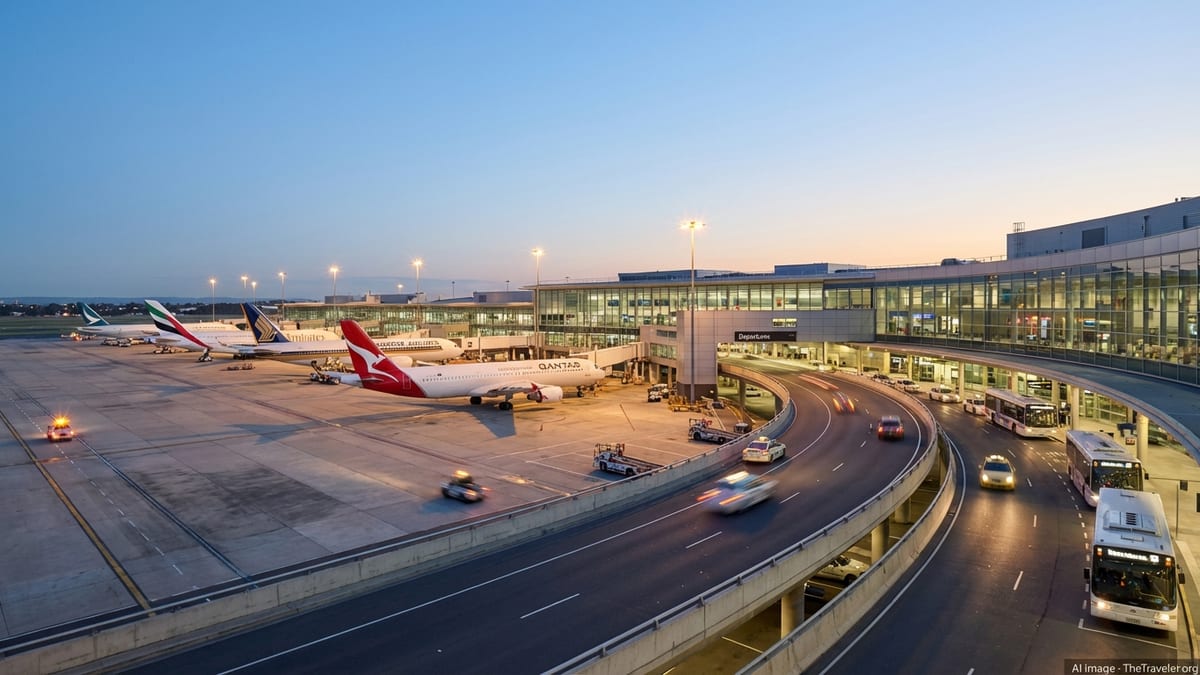
Melbourne Airport has confirmed a A$4.5 billion overhaul of its international Terminal 2, a privately funded expansion that promises to ease crowding, unlock new long-haul routes and cement the Victorian capital’s status as Australia’s round-the-clock global gateway.
A Mega Project Timed to Surging International Demand
The multibillion-dollar expansion comes as Melbourne posts record passenger numbers and international capacity well above pre-pandemic levels. Airport figures show more than 1.26 million international travellers passed through in January 2026 alone, following a string of record months that have pushed the existing 20-gate terminal to its limits during peak periods.
Planners have positioned the A$4.5 billion program as a long-term response to structural growth in global travel rather than a short-lived rebound. Victoria welcomed around 2.8 million international overnight visitors in the year to September 2025, generating billions in spending and reinforcing Melbourne’s role as a primary entry point to Australia for travellers from Asia, Europe and North America.
Airport executives argue that without a step-change in terminal capacity, chronic peak-time congestion, long queues and limited schedule flexibility would increasingly threaten the city’s competitiveness. Bringing forward the upgrade effectively future-proofs the terminal against forecast growth over the next decade and beyond, while giving airlines confidence to commit additional widebody aircraft and new city pairs.
The timing is also tightly linked to a broader decade-long infrastructure pipeline on the airfield and surrounding precinct, including a third runway due to open in 2031 and an elevated road network designed to untangle landside bottlenecks by 2026.
What Will Actually Change Inside Terminal 2
At the heart of the project is a physical expansion of the international pier and its supporting facilities. Plans released in recent days confirm five new international gates and five additional aircraft stands capable of handling up to five widebody jets or eight narrowbody aircraft, creating room for more simultaneous long-haul departures and arrivals.
The terminal footprint will grow substantially, with an enlarged check-in hall, higher ceilings and more natural light, built around common-user counters and a high-tech baggage system already being rolled out across the precinct. This next-generation system enables earlier bag drop, more automation and fewer choke points at security and screening, which airports and airlines hope will translate into shorter queues and smoother transfers.
Arrivals will see expanded baggage reclaim halls with extra belts and upgraded border processing zones, targeting one of the most frustrating pain points for visitors arriving during the evening long-haul bank. Airport management has signalled extra space for biosecurity and immigration agencies, aiming to speed up inspections while maintaining strict controls.
For passengers between flights, the blueprint includes larger airline lounges, refreshed rest and quiet areas, and a broader mix of retail and food outlets. Officials say the design brief prioritises intuitive wayfinding and accessibility, with a more inclusive layout, upgraded restrooms and reduced crowding at pinch points such as duty-free exits and security recomposure zones.
Enabling Infrastructure: Roads, Taxiways and a New Transport Hub
Much of the heavy lifting to enable the terminal expansion is taking place out of sight of most travellers. The completion of Taxiway Delta, Melbourne Airport’s largest international airfield expansion in almost a decade, has already freed up crucial space by shifting aircraft movements further north and reducing congestion on the ground.
On the landside, a new elevated road network, including the Naarm Way project now under construction, is being built above existing access routes to separate drop-off and pick-up traffic from through-movements. Due to open in late 2026, the road system is designed to double kerbside capacity and reduce the time vehicles spend trapped in queues approaching the terminal.
Central to the future-proofing strategy is the T123 Transport Hub, set to open in September 2026. This multi-level interchange will consolidate car parking, ground transport and terminal access in a single structure, allowing Terminal 2 to expand into the current forecourt. By relocating buses, taxis and rideshare pick-ups, the hub will create a larger pedestrian-friendly plaza and shorten walking distances between different modes.
These enabling works are sequenced with other long-horizon projects, including the planned third runway and state-backed upgrades to Sunshine Station and the wider rail and road network feeding the airport. Together, they are intended to ensure that the extra terminal capacity does not simply shift bottlenecks elsewhere in the system.
How the Expansion Will Change the Passenger Experience
For international travellers, the most immediate difference is expected to be felt in time and comfort. Additional gates and stands should reduce the number of aircraft forced to wait on taxiways or use remote bays with bus transfers, particularly during the late-night and early-morning long-haul waves that define Melbourne’s traffic profile.
In departures, a larger check-in hall with more automation and common-user facilities is expected to spread demand more evenly and offer airlines greater flexibility with counters and bag-drop positions. This should translate into shorter peak queues and less crowding around traditional banked departure times to Asia and the Middle East.
On arrival, expanded baggage halls and extra reclaim belts are pitched as a remedy for the long waits that have periodically accompanied record traffic. Combined with revamped border and biosecurity zones, the airport is aiming to compress the overall “kerb to gate” and “gate to kerb” journey, particularly for families, older travellers and those with tight domestic connections.
The redesign also aims to subtly change how travellers use time in the terminal. With more seating, upgraded lounges and a refreshed retail and dining strip, officials expect passengers to spend less time queueing and more time in dwell areas that feel closer to a modern city precinct than a traditional airport concourse.
Implications for Airlines, Routes and Victoria’s Visitor Economy
Airlines are watching the Terminal 2 program closely as they jockey for position in a sharply competitive Australian market. Carriers such as Qantas, Emirates, Singapore Airlines, Qatar Airways, United Airlines and Air New Zealand already operate dense schedules through Melbourne, and the extra gates and stands create new opportunities for upgauging aircraft, adding frequencies and launching additional city pairs.
With long-haul demand from markets such as China, India, the United Kingdom and the United States continuing to grow, the expanded terminal is seen as a critical bargaining chip in route development talks. More flexible gate allocation and improved late-night processing capacity could support new non-stop links deeper into Asia and North America, as well as additional one-stop options into secondary European cities.
For Victoria’s visitor economy, the stakes are high. Tourism and aviation analysts say the A$4.5 billion project is likely to ripple far beyond the airport perimeter, supporting hotels, resorts and major events that rely on steady inflows of international guests. By pairing terminal growth with better ground access and a forthcoming third runway, Melbourne is positioning itself as the country’s most resilient 24-hour hub for both leisure and business travel.
Crucially, the privately funded nature of the expansion underscores confidence from airport investors that international demand will remain robust through economic cycles. For travellers, the payoff will be measured in added choice, more direct connections and a smoother journey through one of the southern hemisphere’s busiest international gateways.