

More news on this day
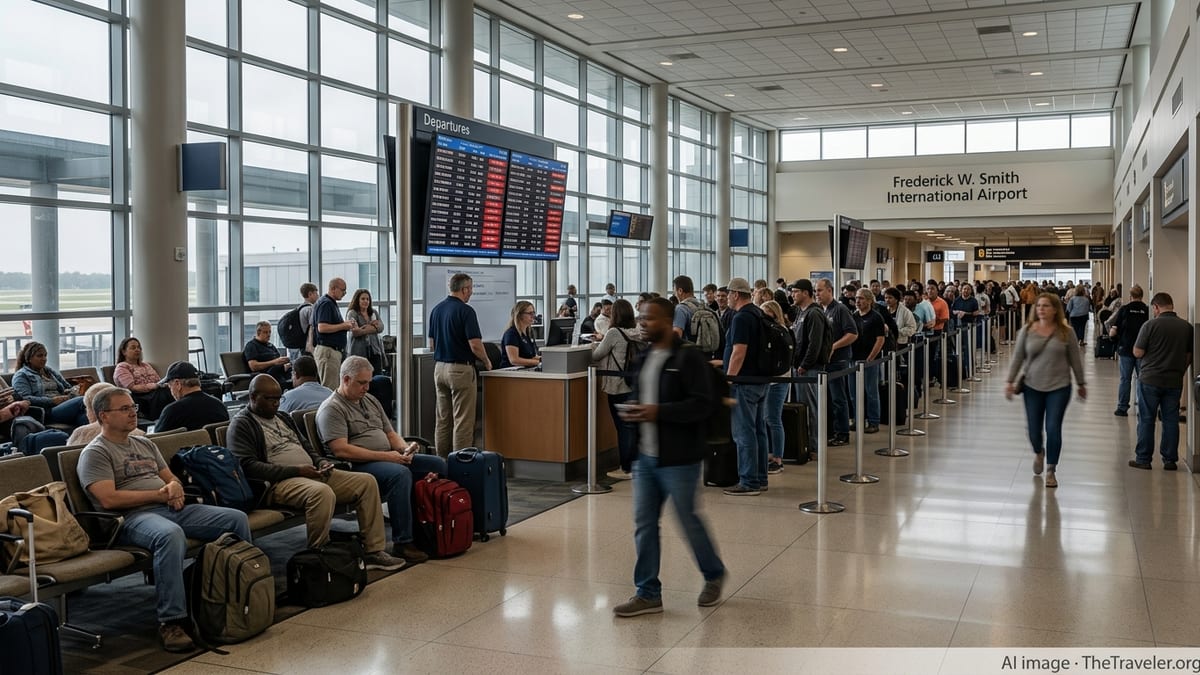
Hundreds of passengers across the United States are facing extended delays and missed connections after a wave of disruptions at Frederick W Smith International Airport in Memphis led to at least 15 flight delays and seven cancellations, rippling through major airline networks on one of the spring travel period’s busy weekdays.
Get the latest news straight to your inbox!
Operational Disruptions Hit Key Mid-South Hub
Frederick W Smith International Airport, the newly renamed facility that serves Memphis, functions as a critical passenger and cargo gateway for the Mid-South. Publicly available flight-tracking data on Thursday indicated a cluster of delayed and canceled departures and arrivals, concentrating around peak morning and early afternoon bank times. With 15 flights delayed and seven canceled, the impact has extended well beyond Tennessee, affecting connections to hubs such as Atlanta, Dallas, Chicago, Denver, and coastal gateways.
Reports from airline status boards show a mix of late-arriving inbound aircraft, aircraft swaps, and network congestion listed as primary causes. While the overall number of affected flights is modest compared with nationwide disruption events, the timing and concentration at a single mid-continent hub have created a cascade of missed connections, overnight rebookings, and unplanned stopovers for travelers.
Memphis has historically been known for its heavy cargo presence alongside scheduled passenger service. The recent pattern of delays underscores how even a relatively small set of flight adjustments at a secondary passenger hub can quickly spread through tightly timed bank structures, particularly on routes where there are limited alternative nonstop options.
Travelers Face Long Waits, Missed Connections, and Limited Options
Passengers connecting through Memphis on domestic itineraries reported long waits at departure gates, with rolling delay notifications and shifting departure times. Publicly available social media posts and consumer travel forums described families sleeping in terminal seating areas, solo travelers scrambling to rebook on later flights, and business travelers seeking same-day alternatives from neighboring airports such as Little Rock, Nashville, and Jackson.
For many affected passengers, the most significant challenge has been rebooking tight connections. When a short Memphis leg from a regional city arrives late, onward flights to major hubs or coastal destinations can already be closed or pushing back from the gate. As a result, travelers find themselves reprotected on later flights that may not depart until the following morning, prompting a spike in unplanned hotel stays and meal expenses.
Limited frequencies on certain regional routes have amplified the disruption. On smaller-city pairings that rely on only one or two daily services via Memphis, a single cancellation or rolling delay can erase the day’s only viable option, forcing passengers to accept circuitous routings or overnight layovers that significantly extend total journey times.
Airline Networks Strain Under Spring Weather and Tight Schedules
The Memphis disruption comes during a period of heightened sensitivity in U.S. aviation networks, following a winter and early spring marked by intense storms and tightly loaded schedules. Recent weather systems across parts of the South and Midwest have already stretched crew availability and aircraft positioning, leaving airlines with less flexibility when local problems emerge at a single hub.
Published flight-status data shows that once a handful of departures out of Memphis slipped behind schedule, knock-on effects quickly appeared on incoming flights. Aircraft and crews that were due to operate later legs from cities including Houston, Charlotte, and Phoenix arrived behind timetable, triggering a domino effect of pushed-back departures and, in several cases, preemptive cancellations aimed at resetting the schedule.
Operational experts frequently note that smaller hubs can be particularly vulnerable in such scenarios. With fewer spare aircraft on the ground and limited alternative gates or slots compared with mega-hubs, any disruption can be more difficult to absorb. Memphis’s dual role as a significant cargo center and passenger field adds an additional layer of complexity when timing and ground resources tighten.
Major Airlines Adjust Schedules as Disruption Spreads Beyond Memphis
According to airline schedule data and publicly accessible tracking services, multiple large U.S. carriers reduced or retimed Memphis rotations in response to the ongoing disruptions. Some airlines consolidated lightly booked services into single departures, while others shifted passengers onto itineraries that bypassed Memphis in favor of alternate hubs such as Atlanta, Dallas Fort Worth, and Chicago O Hare.
These changes helped stabilize same-day operations but also curtailed options for travelers who had been counting on specific departure times or nonstop links. In several cases, flights that were scheduled to operate from secondary cities into Memphis were pulled from the timetable for the day, with passengers offered reroutes via different hub airports or travel on subsequent days.
Network adjustments of this kind are often necessary to prevent further deterioration of on-time performance. However, they can extend the disruption far beyond the original hub, as aircraft and crews are repositioned to support more reliable operations elsewhere in the network, leaving some origin and destination pairs temporarily underserved.
What Stranded Travelers Can Do Next
Consumer advocacy groups and travel advisers note that passengers affected by delays and cancellations at Memphis should monitor airline apps and airport departure boards closely, as same-day options may appear with little notice when aircraft and crew availability improve. Same-day standby lists, alternate routings through other hubs, and rebooking onto partner carriers can all provide potential paths home, especially for travelers with flexible timing.
Publicly available guidance from the U.S. Department of Transportation highlights that compensation and care policies vary widely by airline. Some carriers offer meal vouchers, hotel accommodations, or travel credits during controllable disruptions, while others provide only rebooking on the next available flight. Travelers are encouraged to review each airline’s customer service plan to understand what assistance may be available in the event of extended delays or cancellations.
With Memphis serving as both a regional passenger connector and a national logistics linchpin, the latest disruption illustrates how quickly localized problems can radiate through wider transportation networks. For now, travelers scheduled to pass through Frederick W Smith International Airport are being advised by publicly available travel alerts and airline status tools to allow additional time, remain alert to schedule changes, and prepare for the possibility of overnight delays if conditions do not improve.