

More news on this day
Passengers traveling through the Memphis area faced mounting frustration today as flight-tracking data showed six cancellations and 17 delays at Frederick W Smith International Airport, disrupting schedules on American Airlines, Delta Air Lines, United Airlines, and Southwest Airlines.
Get the latest news straight to your inbox!
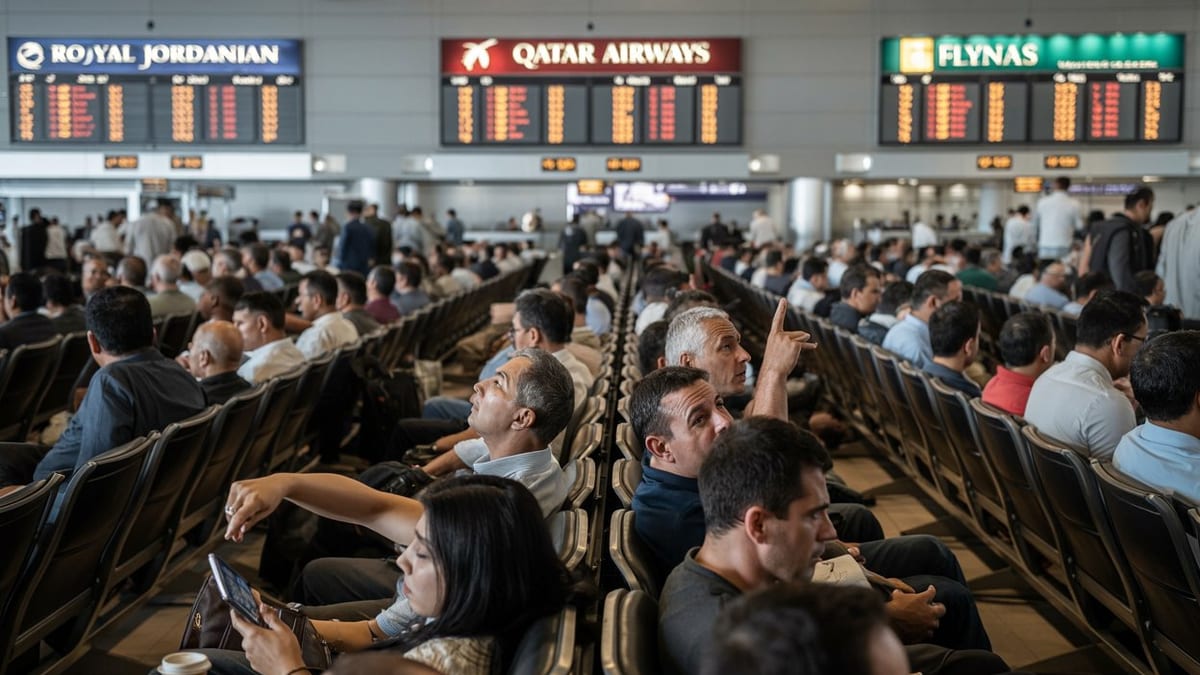
Image by Travel And Tour World
Localized Disruptions Hit Key Domestic Routes
Publicly available flight-status boards on Sunday indicated that Frederick W Smith International, a busy regional hub serving the Memphis area, experienced a cluster of cancellations and late departures concentrated in the late morning and early afternoon. The six cancellations and 17 delays represented a noticeable spike compared with typical Sunday operations at the airport, affecting both departures and arrivals.
The disruptions touched some of the most heavily used domestic corridors, including connections to major hubs such as Dallas Fort Worth, Chicago, Atlanta, Denver, and Houston. Data showed that the ripple effects were not limited to Memphis-bound passengers; travelers connecting onward to the Northeast, West Coast, and smaller regional cities also saw itineraries upended as missed connections cascaded through airline networks.
While the total number of affected flights remained small in national terms, the concentrated impact at a single regional facility amplified the inconvenience for travelers who often depend on a limited set of daily departures. For many, a canceled or significantly delayed flight at Frederick W Smith International can mean an unplanned overnight stay or a full-day setback in reaching their destination.
Flight-tracking services and airline status pages showed rolling schedule adjustments through the afternoon as carriers attempted to re-time certain departures, reassign aircraft, and consolidate lightly booked flights. Such mid-day reshuffling can help airlines recover operations but often leaves passengers contending with shifting departure boards and longer than expected waits at the gate.
American, Delta, United, and Southwest All Affected
According to publicly available information from airline status pages, American Airlines, Delta Air Lines, United Airlines, and Southwest Airlines each experienced disruptions at Frederick W Smith International on Sunday. No single carrier appeared solely responsible for the pattern of delays and cancellations, suggesting a mix of operational and scheduling pressures rather than an isolated airline-specific issue.
American Airlines and Delta, which rely on connecting traffic through their larger hubs, saw several Memphis flights pushed back as upstream aircraft arrived late or as crews bumped up against duty-time limitations. United and Southwest, while operating smaller schedules at the airport, were not spared either, with scattered late departures and at least one cancellation appearing on real-time boards.
Published airline policies indicate that carriers generally rebook passengers on the next available flight at no additional cost when disruptions occur for reasons within their control. However, when irregular operations are driven by factors such as air-traffic control constraints or weather along the route, options can narrow, especially at smaller airports where competing carriers may not offer comparable schedules or fares.
Many travelers turning to their airline apps and airport information screens encountered rolling estimated departure times, a hallmark of days when crews, aircraft positioning, and airspace congestion intersect. Industry analyses in recent years have highlighted how even modest disruptions can propagate quickly through tightly scheduled daily rotations across major airlines’ networks.
Weather, Airspace Constraints, and Tight Schedules Under Scrutiny
As of Sunday afternoon, there was no single publicly identified cause for the specific pattern of six cancellations and 17 delays at Frederick W Smith International. However, the broader operational backdrop across the United States offers clues as to how a relatively small airport can experience outsized disruption.
Winter and early spring in North America often bring fast-changing weather systems, with low ceilings, strong crosswinds, or convective activity forcing aircraft to slow down, reroute, or hold. Even when Memphis itself reports only marginal conditions, weather along the paths to and from major hubs can reduce capacity, triggering ground delays or schedule compression that ultimately shows up as late departures on local boards.
In addition, national airspace constraints and staffing challenges in air-traffic control facilities have periodically reduced throughput at key en route centers. When capacity is throttled in one segment of the network, airlines must juggle departure times and occasionally cancel flights outright to keep overall operations manageable. Regional airports often feel these effects most acutely, since carriers may prioritize keeping their largest hub flights moving.
Analysts tracking delay and cancellation statistics in recent seasons have pointed to a tighter operating environment across the industry, where high aircraft utilization and lean staffing leave limited slack in the system. In such conditions, a brief disruption early in the day can echo into the afternoon and evening, especially on Sundays when leisure and business travelers converge ahead of the workweek.
Knock-On Effects for Passengers Across the Country
The immediate impact of Sunday’s disruptions at Frederick W Smith International fell on travelers departing from or arriving into the Memphis area, but the knock-on effects extended well beyond Tennessee. Because many of the affected flights connected into major hubs, delayed arrivals into those hubs risked causing missed onward connections for passengers flying to other parts of the United States.
Airline rebooking tools generally attempt to keep travelers on the same carrier and itinerary pattern where possible, but a missed connection late in the day can severely limit options. For some passengers, this meant waiting for late-night departures; for others, especially on routes with only one or two daily frequencies, the next viable option might not depart until Monday.
Travel advisories issued on carrier websites in recent months have repeatedly urged passengers to monitor their flight status closely, arrive earlier than usual at the airport on days with known system strain, and consider booking longer connection windows through busy hubs. Sunday’s events at Frederick W Smith International served as a reminder that even modest disruptions at a single airport can reverberate through the broader network.
With spring travel volumes building and airlines operating near peak capacity on many routes, travel analysts note that flexibility remains one of the most valuable tools for passengers. Those able to shift to earlier flights, accept alternate connection points, or travel with carry-on baggage only may find it easier to navigate days when cancellations and delays cluster at particular airports.