

More news on this day
Across the global hotel and tourism sector, a new generation of mentorship and leadership programs is emerging as hospitality groups race to develop future-ready talent and retain ambitious young professionals in a highly competitive labor market.
Get the latest news straight to your inbox!
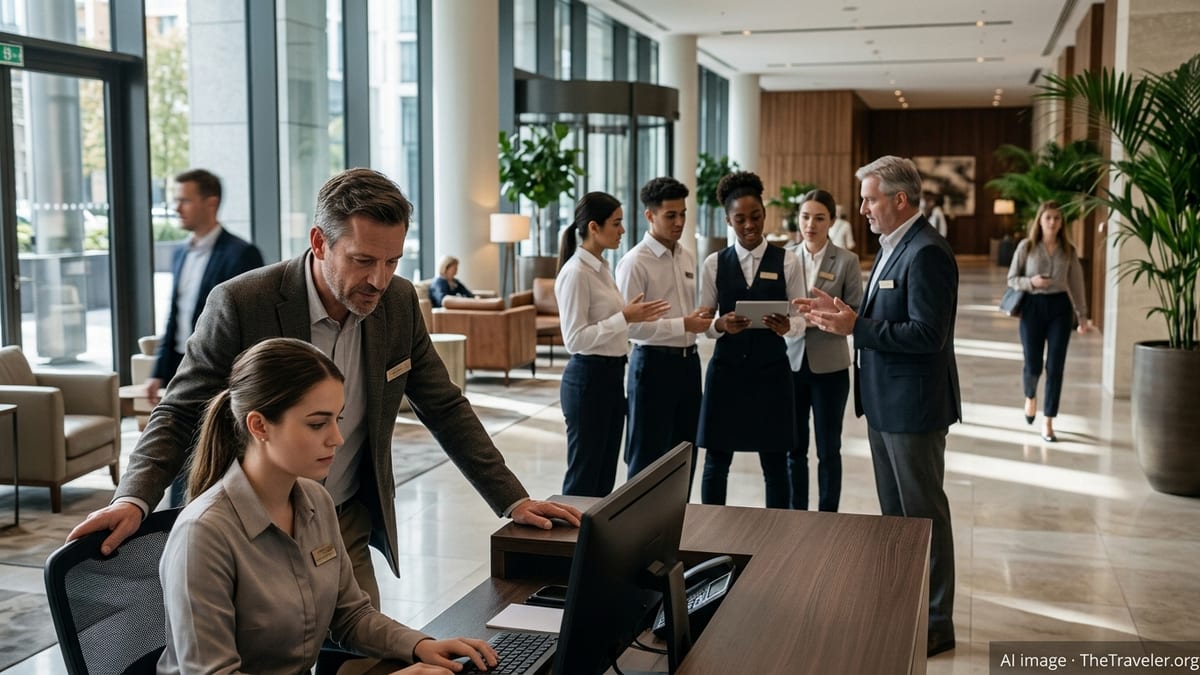
Doug Kennedy’s Focus on Everyday Leadership Coaching
Industry training specialist Doug Kennedy has long argued that the next generation of hospitality superstars will be shaped less by one-off workshops and more by consistent, on-the-job mentoring. Published coverage of his recent columns and conference sessions highlights a recurring theme: frontline supervisors and department heads are being urged to act as daily coaches, not just schedule managers, and to give emerging team members structured feedback, role-plays, and shadowing opportunities woven into regular shifts.
Kennedy’s guidance, shared through his training firm and hospitality trade publications, emphasizes practical coaching behaviors such as narrating decision-making at the front desk, debriefing challenging guest interactions, and documenting career goals for entry-level staff. Rather than relying solely on corporate training calendars, he encourages hotels to build internal “farm teams” of talent, where room attendants, guest service agents, and food and beverage staff can see a transparent pathway into supervisory and management roles.
His perspective aligns with a wider recognition across the sector that traditional classroom-style training is no longer sufficient to keep pace with changing guest expectations and technology. Operators are increasingly seeking to blend formal workshops with ongoing mentoring, using Kennedy’s philosophy that every shift can become a micro-learning lab if leaders are trained to coach.
As labor shortages and rising wage pressures continue to affect hotels in many markets, this approach is gaining traction among owners and general managers who view structured mentoring as a cost-effective way to improve engagement, reduce turnover, and build leadership benches from within.
Associations Scale Structured Mentorship Pipelines
Hospitality and lodging associations in the United States are rapidly expanding formal mentorship frameworks to systematize what leaders like Kennedy have championed. In Central Florida, the regional hotel and lodging association has built a multi-class leadership mentoring program that pairs rising professionals with senior figures from member properties. Public information about recent cohorts shows participants rotating through skill-building experiences in leadership, networking, public speaking, and emotional intelligence, with each mentee supported by at least two industry mentors.
In Nevada, the state hotel and lodging association has announced plans to consolidate and expand its award-winning mentor initiatives, which previously ran as separate tracks for emerging leaders and women in lodging. Reports on the program’s 2026 design indicate that it will be open to any team member working at a member hotel, reflecting an effort to democratize access to guidance, career planning, and industry networking that once tended to be reserved for high-potential managers only.
Nationally, hospitality conference organizers are building mentorship into event experiences for young professionals. The Hospitality Show’s Emerging Leaders program, for example, offers under-30 attendees career coaching, curated networking, and direct access to senior executives during the conference. Program descriptions stress “mentorship that matters,” positioning these events as accelerators where participants can test ideas with seasoned hoteliers and build relationships that continue after the show ends.
Together, these association-driven efforts represent a significant shift from ad hoc introductions toward structured, year-long or multi-month mentoring journeys, complete with defined learning outcomes, application processes, and alumni networks.
Brands and Foundations Elevate Women and Diverse Talent
Major hotel groups and industry foundations are also centering mentorship as a tool to close persistent leadership gaps, particularly for women and underrepresented groups. The AHLA Foundation’s FORWARD / BUILD & ELEVATE initiative, for instance, has grown into a premier leadership development program for women in hospitality. Publicly available program overviews describe a year-long curriculum that blends executive coaching, negotiation and advocacy workshops, and a three-day in-person practicum, supported by an advisory committee of senior female executives who provide strategic guidance and mentorship.
Reports on Rosewood Hotel Group’s “Rise to the Table” initiative show a similar focus on gender equity within food and beverage leadership. The program, launched by the Rosewood Foundation, selects a small cohort of experienced women working as cooks, sommeliers, bartenders, and service managers for a week-long residency in Hong Kong, followed by a year of tailored one-to-one mentoring with senior Rosewood leaders. The design combines technical exposure with personal branding, financial literacy, and sustainability-focused strategy sessions, signaling that high-potential women are being groomed for top-tier roles, not just incremental promotions.
Other organizations are embedding mentorship inside broader talent ecosystems. Industry documentation from Hilton’s Travel with Purpose reporting describes a suite of learning and development offerings, from on-the-job simulations to structured leadership curricula and multi-stage development programs for future hotel directors and general managers. While positioned as training, these initiatives rely on internal mentors and coaches who guide participants through rotations, performance feedback, and transition into higher-responsibility roles.
Together, these brand and foundation programs illustrate how mentorship is increasingly being used not only to fill skills gaps, but also to support diversity, equity, and inclusion objectives by ensuring that promising talent from a wide range of backgrounds has access to senior guidance and visible growth pathways.
New Councils and Forums for “Next-Gen” Voices
Beyond one-to-one mentoring, the industry is also experimenting with councils and forums that bring emerging leaders together as a collective voice. Preferred Hotels & Resorts, for example, has established a NextGen Leadership Council focused on the meetings and events segment. According to its first-year milestone announcements, the council convenes rising decision-makers for virtual and in-person programming, while providing them with mentorship from established executives and opportunities to shape how the brand responds to evolving MICE trends.
In the Caribbean, the regional hotel and tourism association has used its Young Leaders Forum to cultivate promising professionals aged roughly 25 to 40. Program information shows a blend of classroom-style leadership development and one-to-one mentoring with experienced hoteliers, with participants encouraged to apply classroom learning back at their home properties. Testimonials from past cohorts describe using mentorship insights to improve guest experience and navigate complex operational challenges, reinforcing the tangible impact of structured guidance.
Design-focused events are following a similar pattern. Hotel and resort interiors platforms have launched Future Leaders showcases, highlighting rising designers whose biographies often reference prior teaching, coaching, and mentoring roles. This creates a virtuous cycle in which emerging leaders are both mentees and mentors, spreading coaching culture across disciplines such as architecture, interior design, and cruise ship interiors that intersect closely with hospitality.
These councils and forums provide the peer community that many younger professionals say they lack within individual properties, while also giving ownership groups and brands access to real-time insights from the demographic segments most likely to shape travel demand in the coming decade.
From Programs to Culture: The Next Phase of Mentorship
Observers of these trends note that the hospitality sector is moving from seeing mentorship as a side benefit to recognizing it as a strategic pillar for workforce resilience. Trade coverage increasingly frames mentorship programs as talent insurance, especially in markets where rapid development is creating more hotel keys than there are experienced managers to run them.
Doug Kennedy’s long-standing message about turning supervisors into daily coaches dovetails with this evolution. Formal programs from associations, brands, and foundations can spark interest and provide structure, but their long-term impact depends on what happens back on property. When general managers and department heads embed mentoring into pre-shift briefings, cross-training, and performance reviews, they move the industry closer to the culture of continuous development that many of these initiatives envision.
Early evidence from association and corporate reports suggests that mentees often progress into supervisory roles more quickly, report higher engagement, and are more likely to stay within the sector rather than switching industries. For owners and asset managers facing ongoing recruitment challenges, such outcomes are increasingly viewed as justification for investing not only in front-of-house technology, but also in the human infrastructure of coaching and mentorship.
As more operators adopt and adapt these frameworks, the conversation that leaders like Kennedy have championed for years is gaining mainstream urgency: the hotels that will stand out in the next cycle are likely to be those that treat every interaction between a seasoned manager and a new recruit as a chance to mentor the next wave of hospitality superstars.