

More news on this day
Merlin Labs is moving from concept to concrete capability in special operations aviation, advancing autonomous flight systems that promise to reshape how U.S. special operations forces fly and sustain missions in some of the world’s most demanding environments.
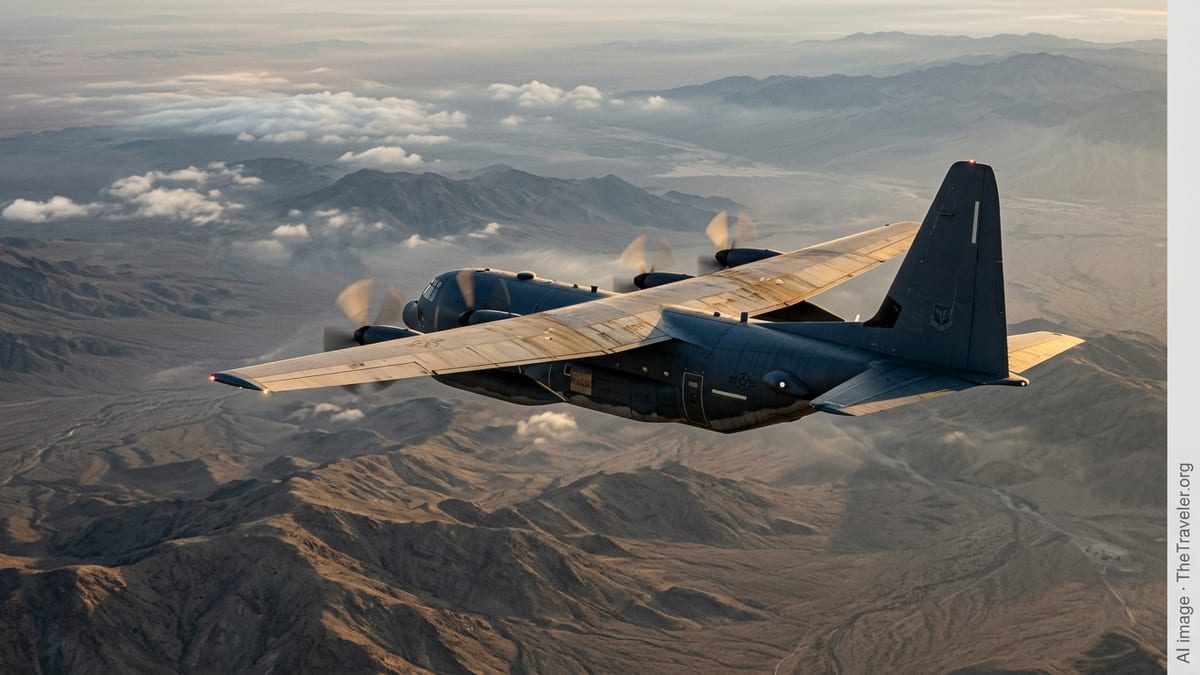
Special Operations Command Backs Autonomy for the C-130J
United States Special Operations Command has quietly become one of Merlin Labs’ most consequential customers. Under a contract worth up to 105 million dollars, Merlin is integrating its autonomy stack into the C-130J Super Hercules, the backbone of Air Force Special Operations Command’s MC-130J Commando II and AC-130J Ghostrider fleets. The deal, structured under Small Business Innovation Research authorities, gives the military a rapid way to test and field reduced-crew and eventually more autonomous operations on aircraft already central to special operations missions.
Program documents and company statements describe the work as a stepping stone, with the C-130J effort designed from the outset to scale across the broader fixed-wing special operations fleet. By focusing first on the C-130J, Merlin can prove its software and avionics in a platform that is heavily used for infiltration, exfiltration, resupply and armed overwatch, then port the technology to other aircraft as requirements mature.
For special operations planners, the attraction is clear. Automation that can reliably manage routine flight tasks, complex routing, and degraded-environment navigation could reduce crew workload on long, low-level missions and free human operators to focus on threat reactions and mission effects. It also offers a path to sustaining sortie rates even as pilot shortages and training demands continue to strain manned aviation.
From Caravan Testbed to Combat-Ready Hercules
Merlin’s work on the C-130J does not begin from a clean sheet. In 2024 the company launched a flight test campaign with a Cessna Caravan equipped with its “Merlin Pilot,” a highly automated flight control and decision system intended to meet civil certification standards. Engineers stripped the Caravan’s legacy cockpit, replacing it with modern avionics, custom hardware and software to support fully automated gate-to-gate operations, including takeoff and landing.
That Part 23 testbed allowed Merlin to validate its automatic flight control system, sensor fusion, and failure management in a lower-risk environment while working closely with regulators on a clear certification path. The same architecture, refined for military needs, underpins the autonomy the company is now tailoring for larger aircraft such as the C-130J and KC-135.
Merlin executives have repeatedly framed the Caravan work as a proving ground for the wider defense portfolio. With key milestones in that campaign achieved, attention has shifted to integrating autonomy into the far more complex flight control and mission systems of combat aircraft, where the stakes are higher but the potential payoff in resilience and efficiency is significantly greater.
USAF Design Reviews Mark a New Phase for C-130J Autonomy
In parallel with test flying, Merlin and the Air Force have been methodically maturing the C-130J autonomy program through the Pentagon’s formal design review gates. According to an investor filing that includes a transcript of a company video released on March 5, 2026, Merlin recently completed its Preliminary Design Review for the C-130J effort, clearing the way for deeper system integration and ground testing.
The next stages outlined by the company include full integration of the autonomy software with the C-130J’s existing avionics, hardware-in-the-loop testing, and a series of demonstrations that will take the aircraft from manual operations augmented by advisory automation toward highly automated “takeoff to touchdown” flight segments. Throughout, human pilots remain in the loop, but the system progressively assumes more responsibility for navigation, flight path management, and routine checklist-driven tasks.
These design reviews are not simply paperwork milestones. They force the combined government and industry team to show that autonomy can be inserted into an aging but heavily used airframe without compromising safety or mission performance. They also help Air Force Special Operations Command understand how autonomy will interact with other modernization efforts on the C-130J, from new sensors and electronic warfare suites to upgraded mission computers.
Tanker and Refueling Programs Hint at Broader Autonomy Roadmap
Merlin’s partnership with the Air Force on the KC-135 tanker fleet offers a preview of how autonomy could benefit special operations aviation beyond the C-130J. Under a separate contract, the company has been developing an AI-powered mission replanning and automation system to help tanker crews dynamically adjust refueling tracks, manage fuel offload, and communicate with air traffic control using natural language processing.
Progress on that front, including an accepted airworthiness plan and ongoing flight test campaign, has demonstrated that AI-enabled autonomy can be trusted with time-sensitive, multi-ship coordination tasks in controlled airspace. Those same technologies are directly relevant to MC-130J missions that combine long-range infiltration with air refueling support for helicopters and tiltrotors in contested theaters.
For special operations forces, the convergence of tanker autonomy and C-130J onboard automation suggests a future in which long-range packages can be planned, deconflicted and reflowed in near real time with far fewer humans in the loop. It also raises the possibility that small detachments of aircrew and maintainers could sustain high-tempo operations from austere forward locations by leaning on software to handle much of the flight management burden.
Implications for Special Operations Travel and Global Reach
For travelers who rarely see this world, these developments are largely invisible, unfolding at test ranges, in secure labs, and aboard unmarked aircraft flying from bases like Hurlburt Field in Florida or Cannon Air Force Base in New Mexico. Yet the impact on how and where special operations forces can go will be significant. More autonomous C-130Js mean crews can push deeper into hostile airspace, operate at lower altitudes and in worse weather, and remain on station longer while still managing fatigue and safety risks.
As autonomy matures, special operations aviation may increasingly mirror the flexibility travelers experience in commercial networks, with routes and schedules that can be adjusted rapidly in response to new demands or emerging threats. The difference is that, instead of rerouting tourists around storms, these systems will be rerouting aircraft full of commandos, supplies or precision weapons around advanced air defenses and electronic jamming.
There are also implications for international partners. Many allied air forces operate variants of the C-130J and rely on U.S. special operations aviation for training, exercise support and crisis response. If Merlin’s autonomy package proves successful and exportable, partner nations could one day field similar capabilities, reshaping how joint special operations task forces move and sustain themselves across vast regions from the Indo-Pacific to the Sahel.
For now, the work remains developmental. But with design reviews complete, contracts in hand, and test aircraft already flying, Merlin Labs has firmly positioned itself at the center of a shift that could redefine the future of special operations aviation and the way elite forces travel to the world’s hardest-to-reach places.