

More news on this day
Mesa Airlines has entered into a strategic inventory agreement with aviation parts specialist DASI, a move designed to smooth its ongoing fleet transition and integration with Republic Airways while freeing up capital tied in surplus regional jet components.
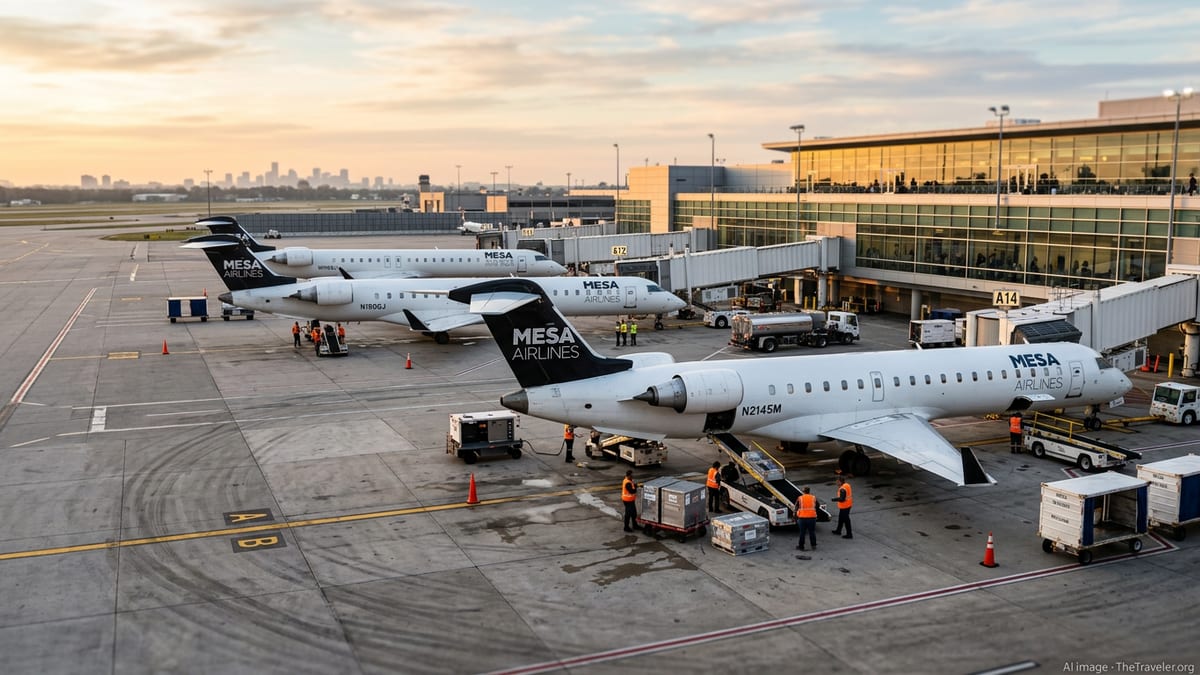
Strategic Partnership Targets CRJ Fleet and Republic Integration
Under the newly announced agreement, DASI will acquire spare parts inventories covering Mesa Airlines’ entire Bombardier CRJ700 and CRJ900 fleets. The deal is structured to support Mesa’s wider transition as it aligns its regional operations more closely with Republic Airways Holdings, a major U.S. regional carrier operating more than 300 Embraer 170 and 175 aircraft across North America and nearby international markets.
DASI, headquartered in Miami, specializes in aviation inventory acquisition and logistics, connecting airlines and maintenance providers with surplus and used serviceable material, as well as factory-new spares from original equipment manufacturers and distributors. By taking over Mesa’s CRJ component stock, DASI assumes responsibility for managing and monetizing inventories that would otherwise remain underutilized as Mesa’s fleet mix evolves.
The agreement includes coordinated inventory uplifts from several key Mesa locations in the United States, handled by DASI’s dedicated logistics teams. This is intended to minimize operational disruption while ensuring that Mesa’s maintenance operations remain supported during the transition period, even as aircraft are reallocated or phased from active service.
For Mesa, the transaction represents both an operational and financial reset around ageing regional jet assets at a time when U.S. regional carriers are reassessing fleet plans, contract structures and capacity commitments with their major airline partners.
Unlocking Capital from Surplus Parts in a Tight Market
A central objective of the partnership is to unlock capital currently trapped in Mesa’s surplus or non-core inventory. As regional fleets are consolidated, reshuffled or retired, large pools of components often sit idle on airline balance sheets, tying up working capital and adding storage and management costs.
By purchasing Mesa’s CRJ700 and CRJ900 spares, DASI converts those dormant assets into immediate liquidity for the airline. That capital can then be redirected to higher-priority uses, such as investing in operating efficiency, crew training, customer experience or future fleet commitments that better match demand patterns and partner contracts.
The timing is notable given broader supply chain pressures affecting commercial aviation. Airlines have been contending with elongated lead times for certain components and higher costs for factory-new parts. DASI’s model, aggregating inventories from multiple carriers and MROs, aims to ease those constraints by recirculating quality surplus material back into the global spares marketplace.
For Mesa’s finance and technical teams, the deal removes the complexity of actively managing an increasingly non-strategic parts pool, while still maintaining access to required components through established market channels as aircraft continue to operate through their remaining service life.
Supporting a Complex Fleet Transition Across Regional Networks
While Mesa Airlines has long been a significant provider of capacity to major U.S. carriers under capacity purchase agreements, shifts in partner strategies, pilot availability and regional demand have prompted ongoing network and fleet adjustments. Integrating certain Mesa operations into Republic Airways’ structure is one layer of that broader restructuring across the regional sector.
Republic’s network, centered on Embraer regional jets, requires a different parts and maintenance ecosystem than Mesa’s CRJ-based flying. Transitions of this kind typically generate overlapping inventories and duplicate support infrastructure, especially when fleets are redeployed or contracts are renegotiated with mainline partners such as American, Delta or United.
By carving out the CRJ inventory package and placing it with a specialist buyer, Mesa simplifies the technical side of the transition. DASI’s inventory uplift teams are tasked with extracting, cataloging and consolidating parts from multiple Mesa facilities, reducing the burden on Mesa’s in-house maintenance organization at a time when it is focused on day-to-day reliability and crew scheduling.
The agreement also illustrates how non-operating partners, from inventory specialists to lessors and financiers, have become central to how regional airlines execute fleet changes. Instead of managing every aspect internally, carriers are increasingly turning to third-party experts to handle discrete elements, from parts disposition to end-of-lease returns.
DASI Strengthens Its Position in Global Spares Marketplace
For DASI, the Mesa transaction marks another significant step in scaling its role as an intermediary between airlines with surplus stock and operators seeking cost-effective parts options. The company has expanded its portfolio of inventory acquisition programs in recent years, supporting more than 20 airlines and maintenance providers in 2025 alone through a variety of tailored structures.
The Mesa package adds a large tranche of CRJ-focused material to DASI’s already sizable holdings. Despite a gradual pivot in North American regional fleets toward newer-generation Embraer aircraft and other types, CRJ variants remain in service across multiple carriers and geographies, sustaining demand for high-quality, traceable components.
By aggregating these inventories and offering them through a centralized marketplace, DASI can deliver price and availability advantages to operators still flying the type, while providing selling airlines with cleaner balance sheets. The company has positioned itself as a neutral market facilitator, connecting end users with surplus and used serviceable material as well as factory-new stock from its manufacturing and distribution partners.
The agreement with Mesa also underscores a wider trend in asset-light strategies across aviation. Rather than holding large quantities of parts in-house, some carriers are opting to lean more heavily on external pools, trading direct control of every shelf item for improved liquidity and the flexibility to adapt quickly when network and fleet plans change.
Implications for Regional Airline Economics and Travelers
Though the DASI and Mesa deal is primarily a back-end inventory transaction, it feeds into a larger story about how regional airlines are seeking to stabilize operations and costs in a shifting marketplace. With pilot hiring pressures, evolving major-carrier partnerships and changing regional demand patterns, many operators are reassessing where and how they deploy capital.
Strategic inventory sales such as this can ease financial strain without immediately affecting route networks or schedules, but they do reflect a focus on leaner, more flexible cost structures. For travelers, the effects are indirect yet meaningful: more resilient operations, better parts availability during maintenance events and healthier counterparties behind the branded regional flights flown on behalf of larger airlines.
As fleet transitions continue across the North American regional sector, similar agreements are likely to emerge, pairing carriers looking to streamline with specialists seeking to build scale in specific aircraft families or component categories. The Mesa and DASI partnership highlights how inventory and logistics strategy has become a quiet but critical lever in reshaping the economics of short-haul flying.
For now, both companies present the agreement as a way to support day-to-day reliability while laying groundwork for longer-term operational integration. In a capital-intensive industry where every asset decision reverberates through balance sheets and flight schedules alike, that combination of immediate cash relief and future-ready flexibility is increasingly prized.