

More news on this day
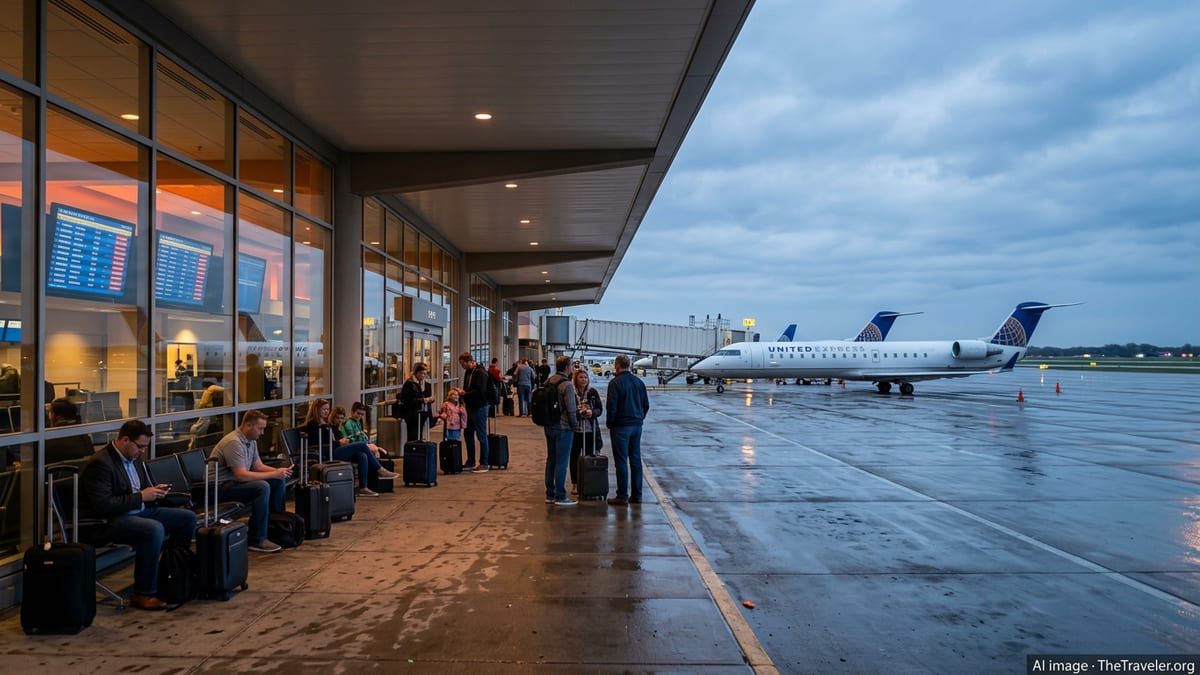
Regional carriers Mesa Airlines and SkyWest, operating as United Express, reported five flight cancellations and multiple delays at Omaha’s Eppley Airfield on Sunday, disrupting busy weekend connections between Omaha and major hubs including Houston, Atlanta, Nashville and Charlotte.
Weather and Network Strains Ripple Into Omaha
The latest disruption at Eppley Airfield comes as airlines across the United States continue to grapple with lingering effects of severe weather and tight regional airline capacity. Storm systems that moved through key hubs in recent days, including Houston and Atlanta, triggered rolling ground delays and aircraft re-positioning challenges that have continued into the weekend.
While Omaha itself saw only modest operational impacts earlier in the week, Eppley’s status as a spoke airport means it is highly sensitive to problems upstream in the network. When inbound aircraft or crews are held or rerouted at larger hubs, relatively small markets can quickly see a cascade of cancellations and late departures, even when local conditions appear calm.
Industry analysts note that regional partners such as Mesa and SkyWest operate a large share of United’s short- and medium-haul flights, feeding traffic from cities like Omaha into the carrier’s big hub airports. Any mismatch between aircraft, crews and schedules can rapidly translate into reduced options for travelers trying to make onward connections across the country or abroad.
On Sunday, that dynamic played out at Eppley as several Omaha-bound and outbound flights operated under the United Express banner were trimmed from the schedule or pushed back, with particular knock-on effects for itineraries touching Houston, Atlanta, Nashville and Charlotte.
Key Routes to Houston, Atlanta, Nashville and Charlotte Affected
Among the hardest hit were passengers booked on United and United Express services connecting Omaha with Houston’s George Bush Intercontinental Airport, a critical hub for both domestic and Latin American travel. Travelers reported that at least one round-trip pairing on the Omaha–Houston route was canceled, with remaining departures operating on delay and with tight turnarounds.
Connections through Atlanta and Nashville also felt the strain, as regional jets feeding those southeastern hubs either departed late from Omaha or were removed from the day’s schedule. Some itineraries involving a single-stop connection from Omaha to smaller southeastern cities required same-day rebooking via alternate hubs such as Chicago or Denver, adding hours to already long travel days.
Farther east, flights that would have taken Omaha-originating passengers through Charlotte for connections up and down the East Coast saw schedule adjustments and delays. With fewer seats available on remaining departures, travelers on leisure trips and those returning from early spring breaks found themselves competing for limited re-accommodation options.
Airport staff said the disruptions were felt from early morning through the afternoon departure banks, particularly at gates used by United Express operators. Terminals remained busy as passengers lined up at service desks to explore rerouting or overnight options when same-day alternatives were no longer viable.
Travelers Confront Missed Connections and Lengthy Rebookings
For many passengers, the operational issues translated into missed connections, overnight stays and last-minute itinerary changes. Those who had booked tight layovers at Houston, Atlanta, Nashville or Charlotte found that even modest initial delays from Omaha were enough to jeopardize onward flights, especially during peak departure windows.
Families traveling together described splitting across different flights just to reach their final destinations on the same day, while business travelers reported scrambling to reschedule meetings or switch to virtual attendance. With five cancellations clustered among regional operations, available seats on remaining flights quickly filled, leaving some travelers with limited options beyond accepting next-day departures.
As delays mounted, lines at customer service counters grew, and gate agents worked to rebook passengers while monitoring rolling updates from operations control centers. Some travelers turned to airline apps and call centers in parallel, attempting to secure alternate routings through Chicago, Denver or other hubs less directly affected by the latest wave of schedule disruptions.
Those opting to remain in Omaha overnight faced another layer of challenges, as nearby hotels close to Eppley Airfield reported upticks in last-minute bookings from stranded passengers. For visitors unfamiliar with the city, arranging ground transportation and accommodations added both time and expense to already disrupted journeys.
Mesa, SkyWest and United Express Under Pressure
The cancellations and delays highlighted the pressure facing regional operators that fly under major airline brands but maintain their own fleets and crews. Mesa Airlines and SkyWest, which together handle a substantial portion of United Express flying into and out of Omaha, have been juggling high demand with finite resources and tight schedules.
Industry observers point out that regional carriers often operate shorter segments with quick turn times and limited slack in their daily rotations. When a single flight is delayed or canceled at a large hub, it can trigger a series of downstream adjustments that reverberate across multiple cities, including mid-sized airports like Omaha.
At Eppley, Sunday’s irregular operations underscored just how interconnected the system has become. A weather-related hold in Houston or a staffing constraint in Atlanta can, within hours, result in cancellations on routes that technically begin and end hundreds of miles away. United and its partners have been working to refine schedules and build resilience, but spikes in disruption still expose the system’s vulnerabilities.
Travelers affected by the Omaha disruptions were encouraged to retain documentation of delays and cancellations in case they qualify for compensation or travel credits under airline policies, particularly when disruptions are not solely attributed to weather.
What Omaha Passengers Should Expect Next
Looking ahead, Eppley Airfield officials and airline partners indicated that they expect operations to gradually normalize as aircraft and crews are rebalanced across the network. However, they also cautioned that lingering effects from recent storms and tight aircraft utilization could continue to generate isolated delays, especially on busy morning and evening banks.
Passengers scheduled to travel in the coming days on United or United Express-operated flights, particularly those connecting through Houston, Atlanta, Nashville or Charlotte, are being advised to monitor their flight status closely and allow extra time for connections where possible. Those with flexible itineraries may wish to select routings that offer additional backup options through larger hubs.
For Eppley, which serves as Nebraska’s primary commercial gateway, the episode is a reminder of how broader national trends in airline staffing, fleet deployment and weather resilience can play out at the local level. As carriers continue to refine post-pandemic schedules and regional partners adjust to evolving demand, occasional pockets of disruption are likely to remain a feature of air travel, even at airports far from the eye of the storm.
Travel experts recommend that Omaha-based passengers continue to build contingency time into their plans, make use of mobile rebooking tools and consider travel insurance or flexible fares for itineraries that depend on multiple regional connections. While Sunday’s five cancellations represent a small fraction of Eppley’s daily operations, their ripple effects offered a clear snapshot of the modern air travel equation, where every link in the chain counts.