

More news on this day
Passengers moving through Omaha’s Eppley Airfield on March 8 faced a morning of uncertainty after regional operators Mesa Airlines, SkyWest and United Express recorded five flight cancellations and multiple delays, disrupting tightly scheduled connections to Houston, Atlanta, Nashville, Charlotte and other major hubs.
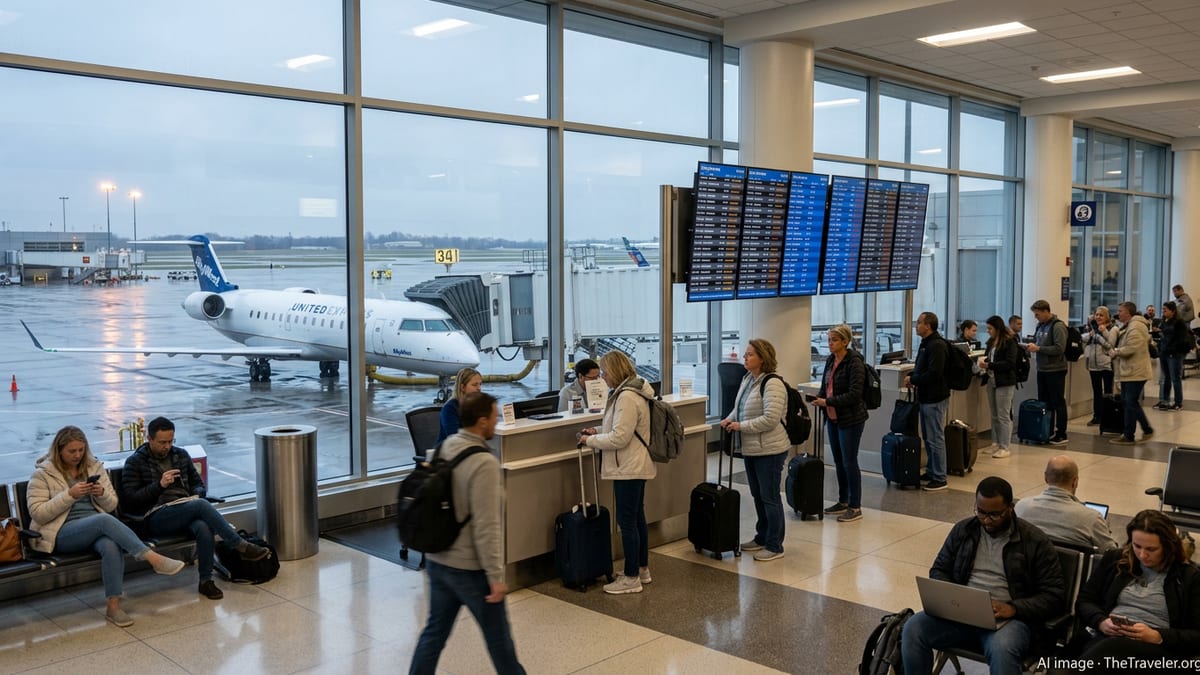
Targeted Disruptions Hit Key Regional Connectors
Operational data compiled on March 8 indicate that five regional flights operated by Mesa Airlines, SkyWest Airlines and United’s regional arm were scrubbed from the schedule at Eppley Airfield, with a further cluster of services running significantly behind time. While Omaha’s overall traffic remained relatively stable, the cancellations were heavily concentrated on high-value feeder routes connecting Nebraska travelers to southern and eastern hubs.
The affected services included United-branded regional flights normally linking Omaha with Houston and other connecting points, along with SkyWest-operated services that tie Eppley into the broader networks of United and other major carriers. Mesa, which flies as United Express on select routes, also recorded at least one cancellation in the Omaha market, compounding the disruption for passengers relying on single-day, multi-leg itineraries.
As the morning progressed, rolling delays spread across portions of the departure and arrival boards, with some regional jets held at gates awaiting new departure slots and updated crew assignments. For travelers headed to or through Houston, Atlanta, Nashville and Charlotte, even short pushes in departure time translated into missed onward flights and forced overnight stays at downline hubs.
Airport operations staff reported that most mainline services continued to operate, but the regional cancellations effectively punched holes in the schedule by removing critical “first-mile” and “last-mile” links. That imbalance left some gates quiet while others saw surges of passengers crowding customer-service desks in search of new itineraries.
Weather and Network Ripple Effects Across Multiple Hubs
The disruption at Omaha unfolded against a wider backdrop of nationwide weather-related chaos that began on March 7, when strong thunderstorms, low ceilings and pockets of snow and ice triggered extensive delays and hundreds of cancellations across major U.S. hubs. As large airports such as Chicago O’Hare, Denver and Atlanta managed ground stops and flow-control programs, regional operators like Mesa and SkyWest found themselves absorbing the knock-on effects in secondary markets a day later.
Industry analysts noted that when hubs like Houston and Atlanta slow down, the impact is often felt most sharply on thin regional routes, where even a single cancelled rotation can eliminate the only non-stop option of the day. For Omaha-based travelers bound for the Southeast or Gulf Coast, the loss of a feeder flight can mean being rerouted via a completely different hub, sometimes adding hours of extra travel time.
Carriers have also been running tight aircraft and crew schedules heading into the busy spring break travel period, leaving less buffer to recover after a day of widespread disruption. When crews and aircraft end up out of position following weather events in other parts of the country, regional flights at airports like Eppley can be among the first to be cut or delayed as airlines prioritize trunk routes with higher passenger volumes.
Operational planners at United and its regional partners are expected to continue tactical schedule adjustments over the coming days, with a focus on restoring predictability to regional markets while keeping pressure off already congested hubs. Travelers departing Omaha in the short term are being urged to check flight status frequently and allow extra time for connections at busy transfer airports.
Impact on Travelers Linking Omaha to Houston, Atlanta and the Southeast
The cancellations and delays at Eppley Airfield were especially punishing for passengers booked on itineraries that relied on smooth, short connections at southern hubs. Routes from Omaha to Houston, Atlanta, Nashville and Charlotte function as vital gateways for Nebraskans heading to the Gulf Coast, the Southeast and onward to international destinations throughout Latin America and Europe.
With several of those feeder flights cancelled outright and others delayed, travelers reported being rebooked through alternative hubs such as Chicago, Denver or Dallas, in some cases adding an additional leg to their journey. Families aiming to reach vacation spots in Florida and along the Carolina coast, as well as business travelers targeting same-day meetings in the South, faced the most acute schedule disruptions.
Airport ground staff and airline agents at Eppley spent much of the day working case by case to secure seats on remaining departures, leaning on interline agreements and later-day options when earlier connections evaporated. While some passengers were able to depart Omaha only a few hours behind schedule, others were issued hotel and meal vouchers as revised itineraries pushed their arrivals into the following day.
For travelers already in transit toward Omaha, the disruption created uncertainty on inbound legs as well. Passengers arriving from cities like Houston and Charlotte worried that they would land to find their return or onward regional segments missing from the board, prompting a rush to airline apps and customer-service lines well before touchdown.
Mesa, SkyWest and United’s Regional Role at Eppley
Although the day’s disruptions were numerically modest, they highlighted just how central Mesa, SkyWest and United’s regional operations have become to Omaha’s connectivity. Eppley Airfield relies on a mix of mainline narrowbody jets and smaller regional aircraft to maintain frequent service to major hubs, with United’s regional partners historically handling a meaningful share of its departures.
Traffic statistics from the Omaha Airport Authority show that regional affiliates such as Mesa and SkyWest have helped underpin United’s growth in the market, operating United Express-branded services that connect Omaha into the carrier’s national and international network. In recent years, those operators have ramped up or scaled back capacity in response to shifting demand, aircraft availability and broader network strategies.
SkyWest in particular has been a flexible workhorse for multiple mainline brands, adjusting flying assignments as contracts evolve. Its dual role serving several big carriers can, however, amplify the impact of any operational shock, since a single day of disruption in its fleet has the potential to touch passengers booked on United, Delta, American and other partners across the country.
Mesa’s footprint at Omaha is smaller but still strategically important, especially on routes where demand supports regional-jet capacity rather than larger mainline aircraft. The cancellations recorded on March 8 underscored how the loss of even one rotation can leave a noticeable gap in the schedule when there are limited alternative frequencies.
What Omaha Travelers Should Expect Next
In the short term, airlines serving Eppley Airfield are expected to focus on rebalancing aircraft and crews and restoring normal frequencies on regional connectors. While no extended schedule cuts have been announced, travelers over the next several days may continue to see isolated cancellations and short-notice time changes, particularly on early-morning and late-evening departures that are more vulnerable to crew and aircraft repositioning issues.
Frequent flyers and travel advisors in the Omaha market are recommending that passengers build in longer connection windows, especially when routing through weather-prone hubs like Houston and Atlanta during the spring storm season. Downloading airline mobile apps, enabling push notifications and checking flight status the night before departure have also become standard defensive tactics for those aiming to stay ahead of potential disruptions.
For Eppley Airfield itself, the incident serves as another reminder of how tightly its operations are linked to the health of larger hub airports nationwide. Even when local weather is calm and runways are clear, events hundreds of miles away can still reshape the day’s departures and arrivals in Omaha, particularly on regional routes that lack redundancy.
As airlines refine their schedules heading into the peak travel months, aviation observers will be watching closely to see whether carriers like Mesa and SkyWest add more slack into their regional operations to absorb shocks, or continue to run lean, high-utilization patterns that leave little room for error when the weather or air traffic control system turns against them.