

More news on this day
Metropolitan Touring has unveiled extended nine-day Galapagos itineraries designed to keep travelers in Ecuador longer, deepen wildlife encounters across the archipelago and inject fresh momentum into one of South America’s most closely watched ecotourism economies.
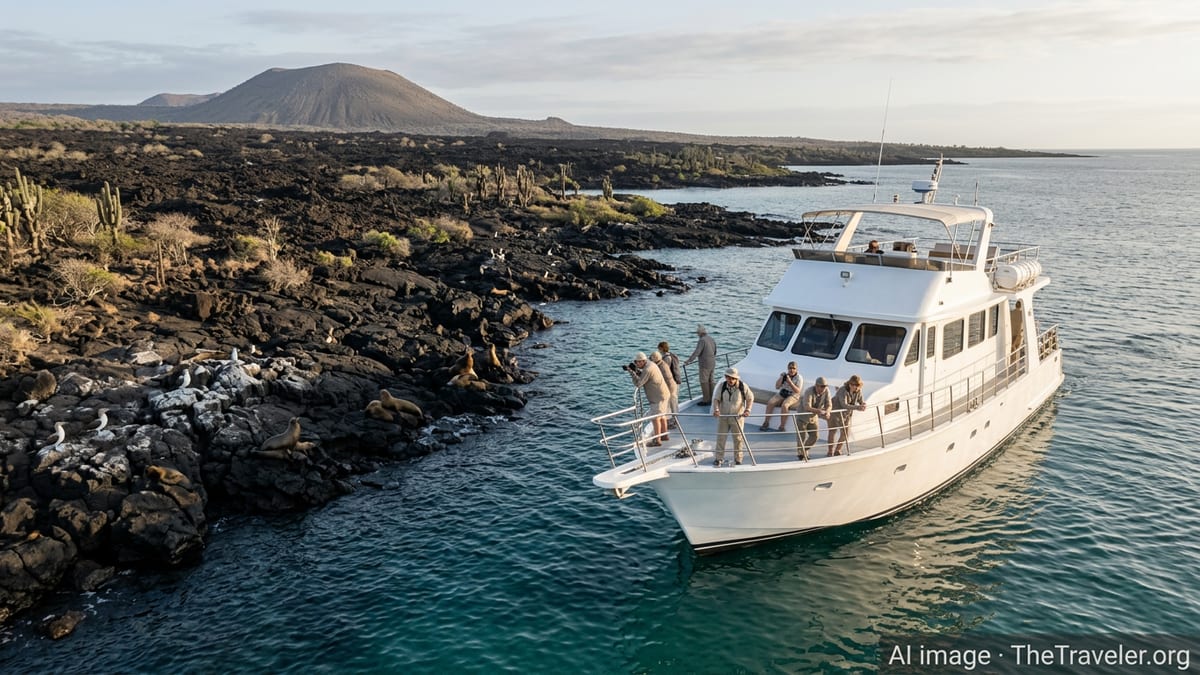
New Nine-Day Voyages Redraw the Galapagos Map
The Quito-based operator, long regarded as a pioneer of expedition cruising in the Galapagos, is expanding its lineup with two officially packaged nine-day programs sailing in 2026 and 2027. The new voyages are being marketed as stand-alone itineraries, rather than combinations of shorter loops that travelers previously had to piece together on their own.
The extended sailings, operated on the 40-guest yacht Isabella II and the 48-guest yacht La Pinta, bundle additional landings and navigational routes into a single trip. By doing so, Metropolitan Touring gives guests more time in remote sectors of the archipelago while preserving the small-ship format that is mandated by Galapagos regulations and valued by conservation groups.
Industry briefings describe the initiative as one of the most significant product updates to the company’s Galapagos program in recent years. The move comes as demand shifts toward longer, more immersive itineraries that justify the long-haul journey to Ecuador and answer traveler concerns about making the most of a once-in-a-lifetime visit.
Rather than racing between islands, the nine-day cruises are structured to slow the pace, adding overnight cruising legs and early-morning landings that increase the odds of close wildlife encounters at quieter visitor sites.
What the Extended Itineraries Actually Include
The new programs are built around classic naturalist cruising, with days shaped by guided walks, panga rides and snorkeling sessions under the supervision of certified Galapagos National Park guides. Sample routing on the nine-day sailings includes a mix of headline islands such as Santa Cruz and San Cristobal, along with less-visited landing sites in western and southern sectors where marine life and bird colonies are particularly dense.
Itineraries typically begin and end on Ecuador’s mainland, using Quito or Guayaquil as air gateways to Baltra or San Cristobal. Once aboard, guests can expect a sequence of landings that might include Fernandina’s lava fields and penguin-rich shores, Española’s waved albatross colony in season and bays frequented by sea lions, reef sharks and marine iguanas.
Metropolitan Touring has emphasized that the additional days are not about filling time at sea but about distributing visits more evenly across a wider selection of visitor sites. That approach is intended to reduce pressure on a handful of marquee locations while giving guests a more complete sense of the archipelago’s contrasting landscapes, from arid scrub and cactus forests to mangrove-lined coves and submerged volcanic rock gardens.
Onboard programming mirrors the longer duration, with expanded lecture series on evolution, oceanography and conservation science, as well as stargazing sessions and photography support aimed at helping travelers document the trip without disturbing wildlife.
Why Longer Stays Matter for Ecuador’s Tourism Strategy
The launch of extended Galapagos sailings dovetails with Ecuador’s broader effort to increase visitor length of stay and spending, particularly among international travelers flying in from North America and Europe. Tourism officials and operators have been clear that the country’s growth strategy hinges less on sheer volume and more on attracting higher-value, longer-stay visitors who engage deeply with natural and cultural attractions.
By offering nine-day cruises that plug directly into pre- and post-trip extensions on the mainland, Metropolitan Touring is positioning the Galapagos as the anchor of a wider Ecuador itinerary. The company actively promotes add-ons in Quito’s colonial center, cloud-forest reserves in the Chocó region and Andes or Amazon lodges, a pattern that keeps tourism dollars circulating beyond the islands themselves.
Extended itineraries also align with policy priorities in the Galapagos, where capacity is tightly managed and operators are encouraged to optimize existing permits rather than push for more ship berths. Keeping travelers aboard a single vessel for a longer period is seen by many analysts as a way to maintain park limits while extracting more economic benefit per visitor.
For Ecuador’s hospitality sector, the ripple effects can be significant. Longer cruise programs typically require additional hotel nights on the mainland, more domestic flights and a broader network of local suppliers, from food producers to transport providers, underpinning jobs both in the islands and on the continent.
Balancing Immersion with Conservation Rules
Any expansion in Galapagos cruising is closely scrutinized by conservation groups and the national park authority, which enforces strict rules on group size, landing hours and route planning. Metropolitan Touring has stressed that its extended itineraries operate within existing permits and do not increase the total number of visitors carried annually.
The nine-day format instead spreads guests across a wider range of approved visitor sites and relies on staggered timetables to avoid crowding at sensitive locations. Guides remain limited to small groups, and landing parties rotate through predefined trails to protect fragile nesting grounds, lava formations and marine habitats.
On the vessels themselves, the company points to long-standing sustainability measures such as waste separation, water treatment systems and policies that prioritize local provisioning where possible. Environmental briefings and strict rules on wildlife distance, flash photography and drone use are framed as part of the overall experience rather than an obligation.
The extended cruises also create more opportunity for travelers to engage with citizen science initiatives, from photographic monitoring of individual animals to data collection on reef conditions. That, proponents argue, helps convert visitors into longer-term advocates for ocean conservation in Ecuador and beyond.
How Travelers Can Choose the Right Galapagos Sailing
With the arrival of officially packaged nine-day voyages, travelers now face a more nuanced decision when selecting a Galapagos cruise. Shorter four- or five-day loops remain available and may suit visitors with limited vacation time or tighter budgets, but the new extended options are squarely aimed at those willing to invest more time and money for a deeper experience.
Travel planners advise looking first at routing and landing sites rather than ship decor or onboard amenities. Prospective guests should review sample day-by-day programs to understand how many landings are scheduled, which islands are included and how the balance between hiking, snorkeling and panga outings matches their interests and fitness levels.
Seasonality is another factor. While the Galapagos is a year-round destination, water temperatures, sea conditions and certain wildlife behaviors shift across the calendar. Longer itineraries can help hedge against the variability of weather and animal movements, increasing the odds of key sightings such as courtship displays or hatchling activity.
For first-time visitors, Metropolitan Touring’s move into longer cruises sends a clear signal: the Galapagos is best approached as a destination to linger in rather than rush through. For Ecuador, that message aligns neatly with a tourism model that prizes carefully managed growth, higher-value stays and experiences that leave both travelers and ecosystems better off in the long run.