

More news on this day
Spain has surged into the top tier of preferred destinations for Mexican travelers, joining Canada, France, Colombia, Brazil and Argentina even as U.S. vacationers continue to crowd Mexican beach hubs like Cancun, Playa del Carmen, Los Cabos and Tulum despite renewed security advisories.
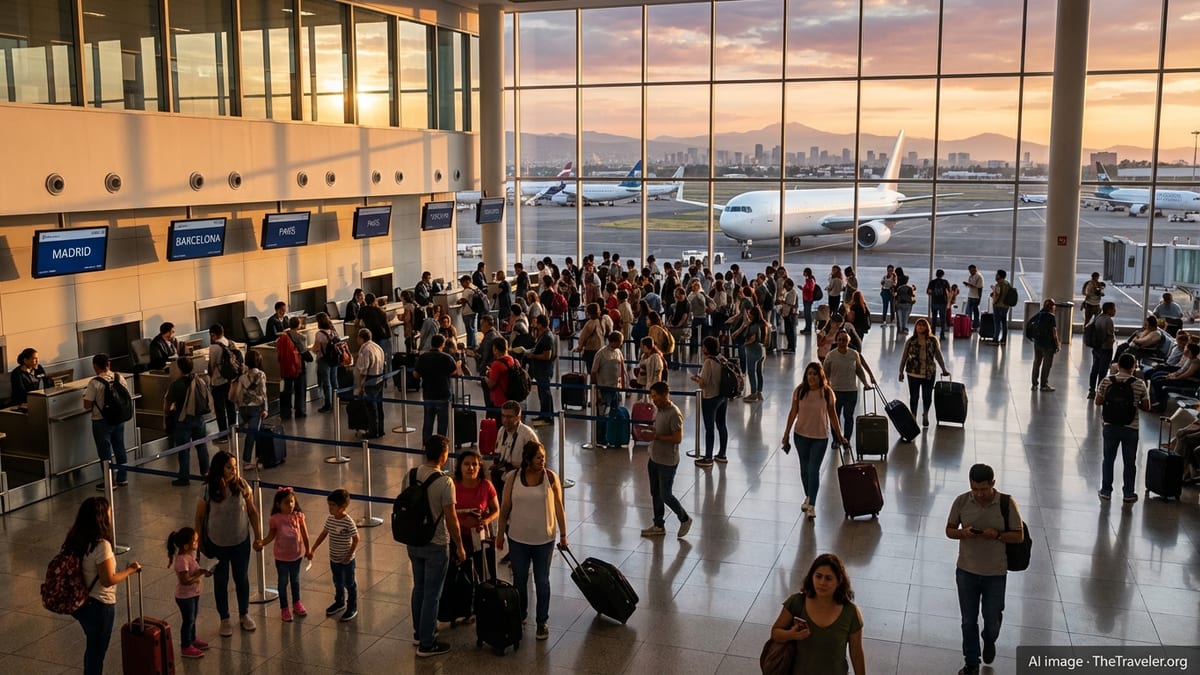
Spain’s Breakthrough Moment With Mexican Tourists
Spain has rapidly become one of the most coveted long-haul destinations for Mexicans, capping several years of post-pandemic growth with record-setting visitor numbers. In 2024 more than 1 million Mexican travelers visited Spain for the first time, cementing Mexico’s position as one of the country’s largest non-European source markets. Travel analysts say the flow shows no sign of slowing in 2025, as pent-up demand, additional flight capacity and cultural affinity draw more Mexicans across the Atlantic.
Tourism officials in Madrid describe the Mexican market as both high-spending and increasingly sophisticated. Recent data from Spain’s tourism promotion agency indicates Mexican visitors spent nearly 3 billion euros in 2024, a jump of more than 40 percent on the previous year and more than double pre-pandemic levels. That growth is arriving on top of Spain’s broader tourism boom; the country welcomed a record 96.8 million foreign visitors in 2025, underscoring its status as one of the world’s most-visited destinations.
Behind the headline figures is a deeper shift in Mexican travel patterns. Instead of focusing primarily on the United States or regional beaches, a growing share of Mexican travelers are designing multi-stop itineraries around Madrid, Barcelona, Andalusia and the Balearic Islands. Travel agents report that city culture, gastronomy and heritage tourism are now central motivations, particularly among younger and more affluent Mexicans.
Flights, Visas and a New Transatlantic Corridor
The rapid expansion of air links between Mexico and Spain has been a decisive factor in this shift. Airlines including Aeromexico and Iberia have steadily increased capacity, adding new routes from cities such as Guadalajara and Monterrey to Madrid and boosting frequencies on the core Mexico City connection. Industry data show that available two-way seats on Mexico Spain routes climbed sharply in 2024 compared with 2019, effectively creating a much broader transatlantic corridor for leisure travelers.
These added seats have helped keep fares more competitive and given tour operators the confidence to package Spain more aggressively to the Mexican market. Travel agencies say nonstop services are particularly attractive to first-time transatlantic travelers, who often build their itineraries around the flight schedule to Madrid and then connect to other European hubs.
Visa policy is also favorable for Mexican travelers. Mexico has enjoyed visa-free access to the Schengen area for short stays for years, removing a key barrier that still affects citizens from some other Latin American countries. While the European Commission has not expanded the list of exempt nations recently, Mexico remains firmly among those whose citizens can enter Spain and most of Europe with relatively light administrative requirements, a clear advantage when planning last-minute or multi-country trips.
Outbound Mexico: Looking Beyond the United States
The pivot toward Spain is part of a broader record-setting wave of outbound travel from Mexico. Recent industry reports show that the number of Mexicans traveling abroad has climbed to historic highs, even as growth in foreign arrivals to Mexico itself has slowed slightly. Between January and August 2025 international air arrivals into Mexico fell by a few percentage points, while the number of Mexicans leaving the country rose by more than 8 percent year on year.
The United States still accounts for the lion’s share of Mexican trips abroad, but Spain and Canada have reinforced their positions as leading alternatives. Long-standing favorites in Latin America, including Colombia, Brazil and Argentina, continue to attract Mexican tourists for cultural, business and family reasons, even as some face shifting visa regimes or economic headwinds. For many travelers, these destinations offer a mix of language familiarity and distinct regional identities that feel comfortably foreign without being overwhelming.
Analysts say a growing Mexican middle class, combined with more accessible credit and aggressive airline pricing, is enabling more people to consider once aspirational trips. The rise of social media inspiration and the increasing visibility of Mexican influencers posting from Barcelona’s Gothic Quarter or the streets of Paris and Montreal has further accelerated demand. In that context, Spain’s recent surge looks less like an anomaly and more like the leading edge of a structural change in how and where Mexicans choose to vacation.
Spain Competes With Canada, France and Latin America
Spain’s new prominence comes as part of a competitive field of destinations courting Mexican visitors. Canada has consolidated its status as a year-round favorite, boosted by direct connections from multiple Mexican cities, strong family ties and interest in urban centers such as Toronto, Montreal and Vancouver. Seasonal demand spikes around winter sports and summer language programs, and Canadian tourism boards have stepped up Spanish-language marketing across Mexico.
France remains a dream destination for many Mexicans, who frequently combine Paris with side trips to other European cities. However, Spain is often perceived as more approachable and better value, especially for families and groups seeking a mix of beach, culture and nightlife. Travel advisors note that Spain’s extensive network of low-cost intra-European flights also makes it an attractive base for multi-country itineraries that may include France, Italy or Portugal.
In Latin America, Colombia, Brazil and Argentina continue to attract Mexican travelers with their own strong cultural pull. Bogotá and Medellín are popular for short city breaks, while Rio de Janeiro, São Paulo and Buenos Aires appeal to those interested in gastronomy, music and sport. Yet distance, economic volatility and in some cases security perceptions can weigh on travel decisions. Spain’s combination of relative stability, high service standards and shared language gives it a competitive edge when Mexicans are choosing where to spend increasingly precious vacation budgets.
Americans Still Flock to Mexican Beaches
While Mexicans are heading to Spain and other overseas destinations in record numbers, U.S. travelers remain firmly committed to Mexico’s resort belt. From Cancun and Playa del Carmen on the Caribbean coast to Los Cabos and the increasingly talked-about Tulum, American visitors continue to arrive in such volume that hotel occupancy and airlift to many of these hubs remain near or above pre-pandemic levels.
Industry data show the United States is still by far Mexico’s largest source market by air, accounting for well over 40 percent of all outbound seats and arrivals. Airlines serving routes from U.S. gateways to Cancun and Los Cabos have added frequencies or maintained robust schedules to keep up with demand, particularly around holiday periods and school breaks. In many American cities, nonstop flights to Mexico’s beach destinations now rival or exceed those to domestic leisure spots.
For U.S. travelers, the appeal is clear. The combination of relative proximity, favorable exchange rates, all-inclusive resorts and warm weather throughout much of the year continues to position Mexico as an accessible tropical escape. Travel advisors say that even when clients ask about Caribbean islands or Central American alternatives, they frequently end up returning to familiar Mexican destinations because of ease of access and perceived value.
Travel Warnings Collide With On-the-Ground Demand
The persistent popularity of Mexico’s coastal hotspots comes despite repeated security advisories from U.S. authorities. The State Department currently assigns a patchwork of advisory levels across Mexican states, including heightened warnings for parts of Baja California and Jalisco and “exercise increased caution” guidance for some major resort areas. Recent bulletins have urged travelers to reconsider trips to specific cities due to crime and kidnapping risks and to avoid travel between cities at night.
Yet tour operators and hotel groups report only limited impact on bookings to marquee beach destinations when new advisories are issued. Instead, many American travelers treat the warnings as background information rather than a decisive factor, adjusting behavior on the ground rather than changing destinations entirely. Industry insiders say that unless a destination reaches a “do not travel” designation, demand tends to remain resilient for established resort corridors where large-scale tourism infrastructure and private security are in place.
Travel professionals do note shifts in how Americans travel within Mexico. There is growing reliance on airport transfers arranged through resorts or trusted providers, greater use of app-based ride services where available and more emphasis on staying within well-known tourist zones, particularly at night. Insurance purchases have also risen, with more travelers seeking policies that include coverage for medical evacuation and trip interruption.
Safety Perceptions and Diverging Risk Calculations
The contrasting behavior of Mexican and U.S. travelers illustrates how different markets process risk. For many Mexicans, concerns about domestic security and a desire for political and economic stability are among the factors driving outbound travel to destinations such as Spain, Canada and parts of Europe. The chance to experience historic cities, efficient public transport and lower levels of street crime is part of the appeal, particularly for families and solo travelers.
American visitors to Mexico, by contrast, often balance awareness of risk against familiarity with resort environments and the strong pull of sun-and-sand vacations within a few hours’ flight. Surveys conducted by travel agencies show that many U.S. tourists view resort corridors as bubbles of relative safety, separated from the broader security challenges affecting parts of the country. As a result, they may be more willing to accept State Department cautions as manageable rather than prohibitive.
Experts point out that both perspectives contain elements of reality and blind spots. While Spain and other European destinations enjoy lower violent crime rates than many parts of Latin America, they face their own challenges, including petty theft in tourist centers and pressure from overtourism on urban residents. Mexico’s resorts, for their part, have invested heavily in safety and monitoring, but cannot always insulate visitors from wider regional dynamics. Travel advisors increasingly frame their role as helping clients make informed choices rather than offering blanket assurances about any one destination.
Tourism Industry Adapts to a Two-Way Surge
The parallel rise of Mexican tourists in Spain and sustained American demand for Mexican beaches is reshaping strategies on both sides of the Atlantic. Spanish tourism authorities are tailoring campaigns to the Mexican market with more Spanish-language digital content, targeted promotions around festivals and gastronomy and partnerships with airlines to highlight new nonstop routes. Hoteliers in Madrid, Barcelona and Seville are training staff to better understand Mexican travel habits and expectations, from breakfast preferences to multi-generational family travel.
In Mexico, resort operators are doubling down on the U.S. market while also diversifying. Properties in Cancun and Los Cabos have expanded loyalty programs, upgraded security protocols and enhanced wellness, culinary and entertainment offerings to keep American guests returning. At the same time, tourism boards are working to attract more visitors from Europe and South America to offset any potential softening from the United States if economic or political factors shift.
For both Spain and Mexico, the latest figures underline how deeply tourism is woven into their economic outlooks. Spain’s record 96.8 million foreign visitors in 2025 helped lift national growth, while Mexico’s mix of inbound and outbound travel flows remains a critical source of jobs and foreign exchange. As Mexican travelers explore more global destinations and Americans continue to embrace Mexico’s coasts despite official caution, governments and industry players on both continents face a shared challenge: how to manage booming demand while keeping residents, visitors and local communities in balance.