

More news on this day
Mexico is contending with another round of air travel disruptions after more than 20 flights were canceled on routes linking Cancun, Mexico City, and other destinations with major cities in the United States and Canada, affecting operations by VivaAerobus, Delta Air Lines, WestJet, and additional carriers.
Get the latest news straight to your inbox!
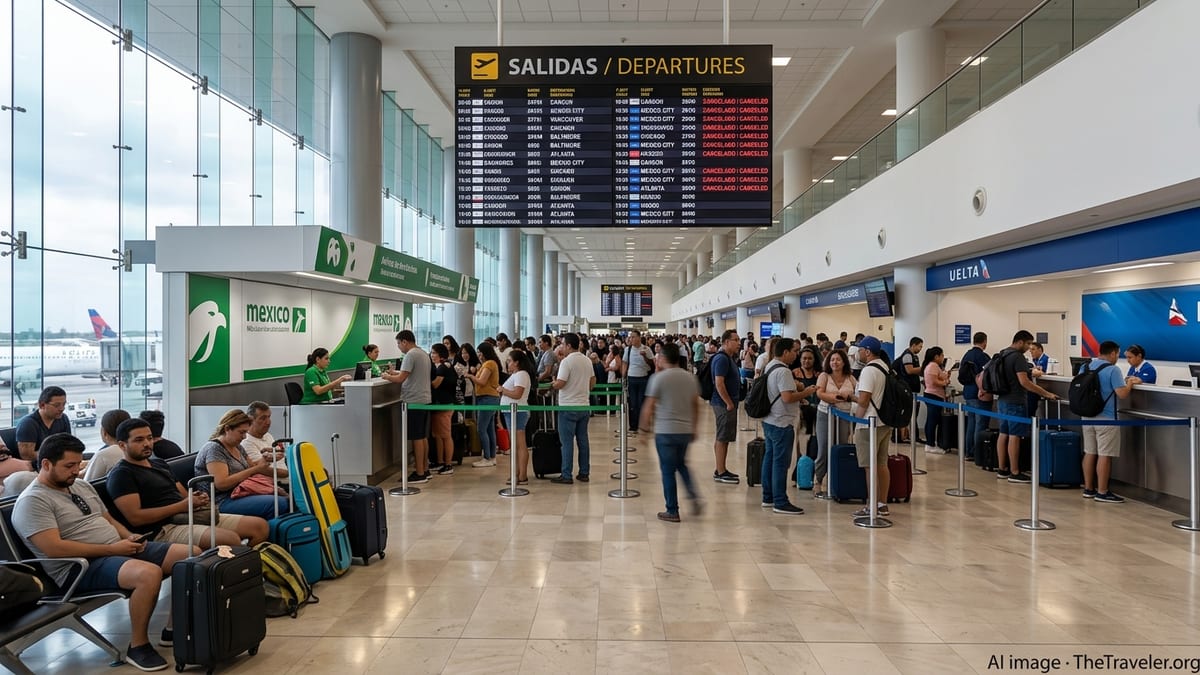
Routes Linking Mexico, the United States, and Canada Disrupted
Published coverage from airline trackers and regional media indicates that the latest wave of cancellations touched a cross-border network of routes that are crucial to both tourism and business travel. Services involving Cancun and Mexico City, Mexico’s busiest leisure and business gateways, were among those affected, along with flights connected to Vancouver, Chicago, Baltimore, Atlanta, and other high-traffic North American hubs.
Initial counts suggest that more than 20 flights were scrubbed across several airlines, including Mexico’s low cost carrier VivaAerobus and large North American operators such as Delta and WestJet. The disruptions were concentrated on short and medium haul routes that typically move holidaymakers to Caribbean beaches and urban travelers between Mexico and major US and Canadian cities.
While the total number of passengers affected has not yet been detailed in public reporting, the cancellations come during a period when Mexico’s airports handle heavy traffic from North America. Cancun and Mexico City routinely rank among the most frequented international gateways for US and Canadian travelers, so even a modest number of cancellations can cause rolling impacts across connecting itineraries.
Reports indicate that many of the affected flights were part of complex itineraries combining domestic Mexican legs with long haul segments to or from North America. As schedules were adjusted or dropped from departure boards, some travelers were left seeking overnight accommodation, rebooked routes through alternate hubs, or refunds where onward travel was no longer viable.
Multiple Carriers Face Operational Strain
VivaAerobus, which has significantly expanded its cross border footprint in recent years, featured prominently in reports of cancellations. Travelers using public forums and social platforms described last minute changes, difficulty accessing digital boarding passes, and challenges obtaining clear rebooking options when Mexico bound or Mexico originating segments were removed from the schedule.
Delta Air Lines was also listed among the affected carriers. The airline already operates one of the largest networks into Mexico from the United States, particularly through Atlanta and other major hubs. Any cancellations from such a large operator can quickly ripple through the broader system, especially when seats on alternative flights are limited due to strong seasonal demand.
WestJet, which has traditionally leveraged Vancouver and other Canadian gateways to funnel travelers south to leisure destinations such as Cancun and Mexico City, was reported to have cancellations within this same window. The airline has recently faced regulatory scrutiny in Canada over its handling of past disruptions, and renewed operational challenges involving popular Mexico routes may attract additional attention from both passengers and consumer advocates.
Other North American carriers with shared codes or interline agreements on Mexico routes may also be indirectly affected when partner flights are removed from schedules. In such cases, passengers can find that sections of their itinerary remain intact while critical connecting legs are canceled, forcing a complete rework of travel plans.
Weather, Security, and Congestion Behind Recent Instability
The latest cancellations do not appear to stem from a single isolated incident, but rather from a mix of external and operational pressures that have been building across the region. Recent severe winter weather systems in North America led to thousands of cancellations in January and March, putting sustained pressure on aircraft rotations, crew availability, and airport capacity at large hubs such as Chicago and Atlanta.
At the same time, separate security related events in western Mexico earlier in the year prompted a combination of travel waivers, ground transportation shutdowns, and targeted airport access challenges. While many flights into major hubs like Guadalajara and Puerto Vallarta have continued, ongoing caution in some regions can still lead airlines to thin schedules or consolidate departures at short notice.
Congestion at major airports such as Mexico City continues to be a structural factor behind schedule adjustments. The capital’s main international airport routinely operates near capacity, and published analyses of global air travel trends show that even minor disruptions can trigger larger waves of delays and cancellations when there is limited slack in the system. Carriers flying tight turnarounds between Mexico, the United States, and Canada face particular vulnerability when a storm, technical issue, or air traffic control restriction slows the operation.
Industry wide staffing constraints across pilots, cabin crew, and ground handling teams remain another important backdrop. Airlines that ramped up schedules quickly to meet post pandemic demand are still managing the knock on effects of training pipelines, labor negotiations, and competition for skilled workers, all of which can manifest in sporadic cancellations when the system comes under stress.
Impact on Travelers Bound for Cancun, Mexico City, and Beyond
The immediate impact of the latest cancellations has been felt most strongly by leisure travelers heading to or returning from beach destinations in Quintana Roo and by business and family travelers reliant on Mexico City’s extensive international and domestic links. Cancun’s role as a major resort gateway means that a canceled flight often translates into missed hotel nights, forfeited tours, and rescheduled airport transfers, with costs that may not be fully recoverable.
Mexico City, by contrast, functions as a critical connecting hub for both domestic and international routes. When flights to and from cities such as Vancouver, Chicago, Baltimore, or Atlanta are withdrawn, passengers may lose their onward connections to smaller Mexican cities or secondary US and Canadian destinations. In many cases, replacement options involve longer routings, additional stopovers, or overnight stays at intermediate airports.
Travelers have turned to social media, airline apps, and customer service channels to secure alternatives, but response times and available options can vary widely between carriers. Publicly available advice from travel advocates emphasizes the importance of checking flight status repeatedly in the 24 hours before departure, ensuring contact details are up to date in airline profiles, and considering earlier departures when tight connections pass through congestion prone hubs.
Travel insurance policies with trip interruption coverage and flexible fare classes can soften the financial impact for some passengers, though policy terms often differ on what constitutes a covered event. Observers note that low cost carriers serving Mexico, including VivaAerobus, typically offer lower base fares paired with more restrictive change conditions, which can leave travelers with fewer no cost rebooking paths when disruptions occur.
What Airlines and Passengers Are Doing Next
Recent statements and public updates from airlines operating in the Mexico, US, and Canada corridor suggest that carriers are focusing on restoring regular schedules and repositioning aircraft and crews to stabilize operations following the latest round of cancellations. Some airlines have extended flexible travel policies or fee waivers for affected routes, allowing customers to shift to later dates or different flights without standard penalties within a defined period.
Airport operators in Mexico are likewise emphasizing standard guidance for disrupted passengers, encouraging travelers to arrive early, monitor departure boards and airline apps closely, and follow instructions within terminals when gate changes or boarding delays arise. Ground handling teams are working to clear backlogs of baggage and manage tight turnaround windows as aircraft return to service after cancellations.
For travelers planning imminent trips to Cancun, Mexico City, or other Mexican destinations via Vancouver, Chicago, Baltimore, Atlanta, and similar hubs, analysts recommend building additional margin into itineraries. This can include opting for longer layovers on connecting journeys, flying early in the day when schedules are often more resilient, and avoiding last flight of the night options on critical legs when possible.
As Mexico continues to attract strong demand from North American travelers, industry observers expect occasional clusters of cancellations to remain a reality whenever severe weather, regional security issues, or operational strains converge. The latest disruptions involving VivaAerobus, Delta, WestJet, and other carriers serve as a reminder that even well traveled routes can experience sudden instability, and that strategic planning and flexible booking choices remain key tools for minimizing the impact of unexpected schedule changes.