

More news on this day
Thousands of travellers across Mexico remain stranded or facing severe disruption today as more than 240 flights have been cancelled in recent days at Cancún International, Mexico City’s Lic. Benito Juárez International and Guadalajara’s Don Miguel Hidalgo y Costilla International airports, compounding weeks of rolling delays and fuelling fresh concern about flying into the country’s busiest hubs.
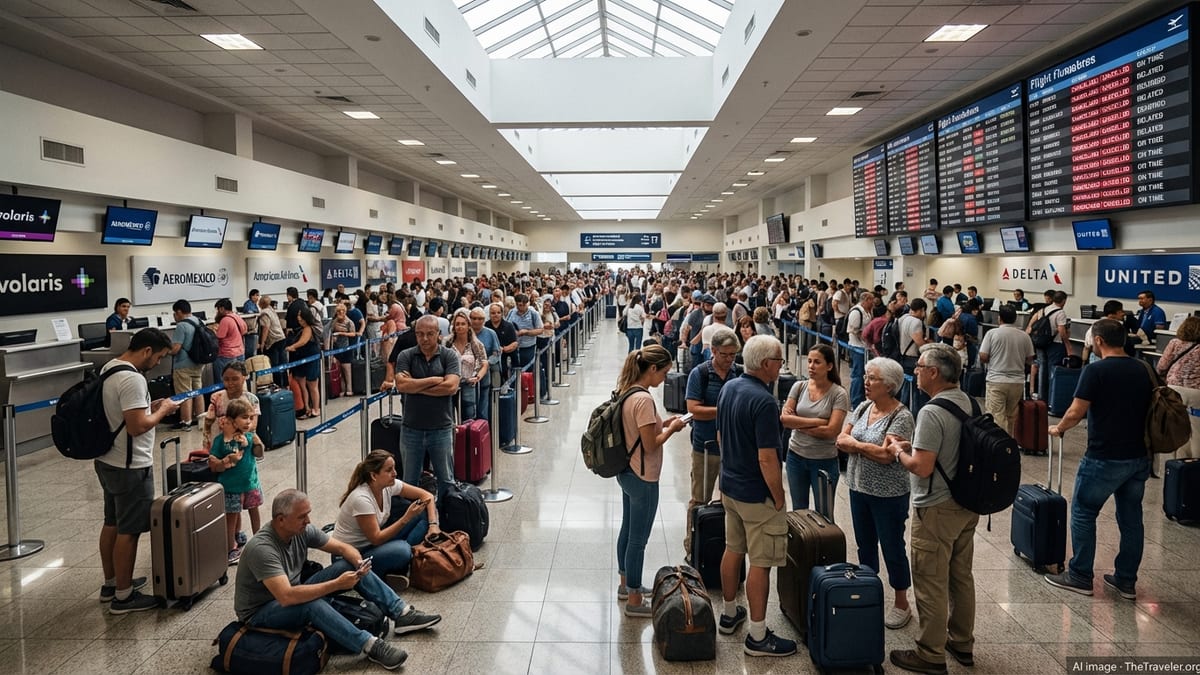
Wave of Cancellations Ripples Across Mexico’s Busiest Airports
The latest bout of turmoil has concentrated on three of Mexico’s most important aviation gateways: Cancún International (CUN), Lic. Benito Juárez International in Mexico City (MEX) and Don Miguel Hidalgo y Costilla International in Guadalajara (GDL). Data compiled from airport reports, airline advisories and flight-tracking services over the past several weeks indicate that together they have now seen well over 240 cancellations, alongside hundreds more delays, as weather, capacity constraints and a sharp spike in security-related disruptions converge.
As of the weekend of February 22 to 23, Cancún and Mexico City in particular were again under pressure. Recent tallies reported dozens of cancellations and scores of delays in a single day across the two airports, with Cancún bearing the brunt as at least 23 flights were cancelled and 40 delayed during one busy 24-hour period. At Benito Juárez, eight cancellations and more than 30 delays were recorded on another recent day, underscoring how fragile operations remain.
Guadalajara’s Don Miguel Hidalgo y Costilla airport has not seen the same volume of outright cancellations linked directly to the current wave of violence, but it has been drawn into the turbulence through cascading schedule changes, diversions and suspended services to nearby Puerto Vallarta. Airlines including Aeroméxico, Volaris, Viva Aerobus and major North American carriers have repeatedly adjusted their operations at GDL, turning what should be a reliable domestic and regional hub into yet another pressure point for passengers.
For many travellers, the headline figure of more than 240 cancelled flights tells only part of the story. Each scrapped departure or arrival strands passengers along entire routes, disrupting connections throughout Mexico, the United States and Canada, and leaving airport terminals overwhelmed by lines at ticket counters and customer-service desks.
Security Unrest After Cartel Leader’s Killing Adds New Uncertainty
The latest surge of disruption has been driven in part by a fast-moving security crisis. On February 22, Mexican security forces killed Nemesio Oseguera, the powerful leader of the Jalisco New Generation Cartel widely known as “El Mencho.” His death set off a wave of retaliatory violence across Jalisco state and beyond, including road blockades, vehicle burnings and sporadic gunfire in and around key tourist destinations.
Puerto Vallarta’s airport quickly became a focal point for airlines and authorities, even though the terminal itself remained secure. Airport operator statements and airline updates describe a near-total shutdown of international operations there as carriers cited uncertainty over ground access and the safety of passengers and crew. While Puerto Vallarta is outside the trio of airports facing the heaviest ongoing cancellations, the knock-on effects of those suspended flights have shifted traffic and stress toward Cancún, Mexico City and Guadalajara.
Major North American and Mexican airlines including American Airlines, United, Southwest, WestJet, Air Canada, Aeroméxico, Volaris and Viva Aerobus have all cancelled services in and out of western Mexico in recent days. Several have issued rare “do not travel to the airport” advisories for passengers already in affected areas, asking them to shelter in place and await rebooking options instead of attempting to reach terminals through potentially dangerous road corridors.
The widening security cordon around parts of Jalisco has also complicated travel for passengers who had counted on domestic connections through Guadalajara to reach Cancún or Mexico City. With portions of the regional bus and rail network temporarily halted, travellers have been left scrambling to find safe overland alternatives or last-minute seats on remaining flights that are still operating.
Stranded Passengers Confront Long Lines, Limited Information
Inside terminal buildings from Cancún’s beach-bound concourses to Mexico City’s cramped international departures hall, the human cost of the turmoil has been increasingly visible. Travellers have reported crowds of confused passengers queuing for hours at airline counters, sleeping on the floor near departure gates and clustering around screens and loudspeakers in search of the latest updates on their flights.
Recent media reports from Cancún describe hundreds of visitors, many of them international tourists heading to or from resorts along the Riviera Maya, suddenly finding their flights cancelled or severely delayed with little advance notice. Video footage and eyewitness accounts show long lines snaking through check-in halls, with some passengers clutching printed itineraries as airline staff work to process vouchers and rebookings as quickly as limited seat availability allows.
At Mexico City’s Benito Juárez airport, travellers have faced similar scenes. On days when the airport has logged several dozen delays and multiple cancellations, domestic passengers connecting to cities such as Monterrey, Oaxaca, Tijuana and Guadalajara have found their onward journeys unexpectedly interrupted. International passengers in transit between North and South America through MEX have also been caught up in cascading missed connections, further crowding customer-service desks.
Guadalajara, typically a less tourist-heavy but strategically important hub, has seen airport benches and food courts turn into makeshift waiting areas as passengers cope with extended layovers and overnight delays. Airline agents there have been juggling a complex mix of schedule changes stemming from both local conditions and the widespread cancellations at Puerto Vallarta and other western Mexico airports.
Airlines Juggle Security, Weather and Capacity Constraints
For carriers operating across Mexico, the current chaos represents a difficult convergence of threats. While the unrest triggered by the killing of El Mencho has dominated recent headlines, airlines have also been wrestling with earlier weather-driven disruptions and enduring capacity constraints that leave little room to absorb shocks. In late January and early February, a major winter storm system over North America forced airlines to cancel hundreds of flights, including services linking Mexican airports with cities in the United States and Canada.
Those weather-related cancellations created a backlog of passengers seeking rebookings into already busy midwinter schedules, particularly on leisure-heavy routes into Cancún and other resort destinations. As airlines attempted to clear that backlog, the sudden security crisis in western Mexico forced them to pull additional flights from the schedule, particularly to and from Puerto Vallarta and, for some carriers, Guadalajara as well.
On top of these factors, Mexican airlines continue to operate in an environment of tight fleet and crew availability, leaving them with limited spare aircraft and personnel to redeploy when routes are disrupted. Industry analysts note that ultra-low-cost carriers, which operate dense schedules with quick turnarounds, are especially vulnerable because a disruption in one city can rapidly cascade across their entire domestic network.
International airlines have responded by issuing broad travel waivers for affected routes, allowing passengers to change dates or destinations without fees, subject to seat availability. However, with peak-season demand and constrained capacity, many travellers are finding that the most desirable alternative flights are already fully booked, forcing them to extend their stays in Mexico or reroute through less direct paths.
Impact on Tourism and Local Economies
The timing of the disruption could hardly be worse for Mexico’s tourism industry. February is a high season for sun-seeking visitors from North America and Europe, many of whom flock to Cancún and the Riviera Maya, as well as to Pacific coast resorts such as Puerto Vallarta and Nuevo Vallarta. The combination of security alerts, mass cancellations and widely shared images of stranded travellers risks denting confidence among would-be visitors weighing where to spend their holiday budgets.
In Cancún, hotel operators are already reporting guests extending their stays because they cannot secure timely flights home, a mixed blessing for local businesses. While additional nights can boost occupancy and restaurant spending in the short term, prolonged uncertainty and fear of being stranded could discourage repeat bookings or lead travellers to look elsewhere in the Caribbean or Central America for future trips.
Mexico City and Guadalajara, though less dependent on international resort tourism, are major business and cultural destinations whose connectivity underpins broader economic activity. Frequent cancellations and delays at Benito Juárez and Don Miguel Hidalgo y Costilla can disrupt corporate travel, trade missions and cultural events, with ripple effects reaching everything from conference organisers to small vendors who rely on passenger foot traffic.
Local authorities and tourism boards have been quick to stress that airport terminals remain secure and that many flights are still operating. However, until airlines restore stable schedules and security tensions in western Mexico ease, travel planners expect elevated disruption to remain a feature of the market, particularly for itineraries that involve tight connections or multi-city tours.
What Travellers Need to Know Right Now
For passengers currently in Mexico or scheduled to fly into Cancún, Mexico City or Guadalajara in the coming days, travel experts are advising a cautious and flexible approach. The most consistent message from airlines is to avoid heading to the airport without a confirmed flight status and, in security-affected areas, to follow official advice from local authorities and diplomatic missions about movement restrictions and shelter-in-place recommendations.
Airlines are urging customers to rely on official apps, text alerts and email notifications for real-time information rather than third-party travel sites, which may not update as quickly. Many carriers have expanded their call-centre capacity and social media teams, but high call volumes and backlogs mean that self-service rebooking tools are often the fastest way to secure an alternative flight where seats are available.
Travel advisors also recommend building additional buffer time into onward journeys. Passengers planning to connect through Mexico City or Guadalajara to other domestic or international destinations may want to allow for longer layovers than usual, in case of last-minute schedule changes. Those with non-essential travel may wish to consider postponing or rerouting trips that require transit through western Mexico while the security situation remains fluid.
For holidaymakers already in resort areas, communication with hotels and tour operators is key. Many larger properties have on-site travel desks that can help guests track flight changes, arrange ground transfers at short notice or coordinate with airlines for documentation of delays and cancellations that may be needed for insurance claims.
Search for Stability as Authorities and Airlines Respond
Behind the scenes, Mexican aviation authorities, airport operators and airlines are working to restore a sense of normality. Security forces have been deployed to protect key aviation infrastructure, including runways, terminals and access roads, particularly in regions where cartel violence has flared. Official statements emphasise that there have been no reported attacks inside the major airports and that passenger screening and boarding processes are continuing, albeit with intermittent disruption.
Airport operators in Cancún, Mexico City and Guadalajara are coordinating closely with airlines to adjust gate assignments, manage peak-hour congestion and ensure that stranded passengers have access to basic services such as food, water and shelter. Some airlines have brought in additional ground staff or reassigned crews from less-affected routes to help process rebookings and reduce lines at customer-service desks.
Even with these efforts, industry observers caution that volatility is likely to persist in the short term. Security incidents, road closures or sudden airline schedule changes in one part of the country can still reverberate quickly through the tightly interlinked network of Mexican and North American air routes. Travellers planning to pass through Cancún, Benito Juárez or Don Miguel Hidalgo y Costilla in the coming days are being advised to brace for the possibility of last-minute disruptions and to keep contingency plans close at hand.
For now, Mexico’s key international gateways remain open but fragile, serving passengers under the shadow of both security unrest and operational strain. How quickly airlines and authorities can stabilise conditions at these airports will shape not only the remainder of the winter travel season, but also the confidence of millions of travellers with plans to visit Mexico in the months ahead.