

More news on this day
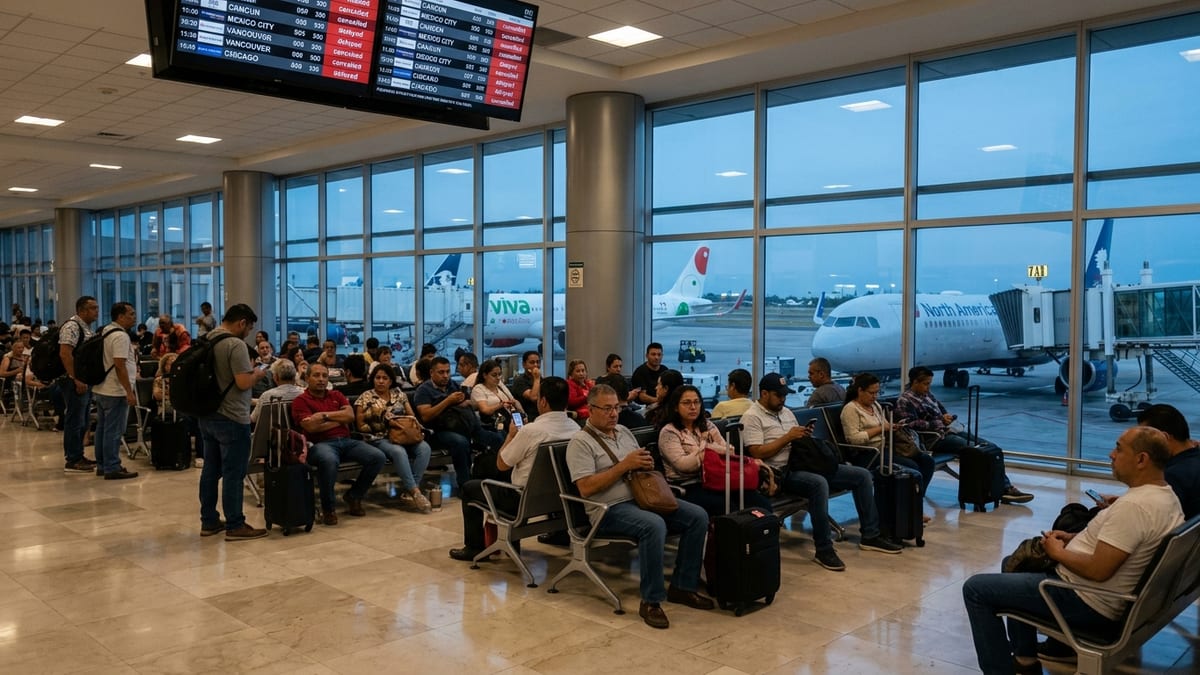
Mexico is facing a fresh wave of air travel disruption as more than 20 flights operated by carriers including VivaAerobus, Delta Air Lines, WestJet and others are cancelled, affecting busy routes linking Cancun, Mexico City and several major North American cities such as Vancouver, Chicago, Baltimore and Atlanta.
Get the latest news straight to your inbox!
Fresh Cancellations Add Strain to Mexico’s Air Network
Published information from airline trackers and airport status boards indicates that a new round of cancellations has swept across Mexico-related routes, compounding a difficult start to 2026 for the country’s aviation sector. The latest disruptions involve more than 20 flights, primarily on cross-border and domestic corridors that connect Mexico’s tourist hubs and its capital to key cities in Canada and the United States.
The cancellations are concentrated on services into and out of Cancun and Mexico City, two of Mexico’s busiest airports for international traffic. Routes touching Vancouver, Chicago, Baltimore and Atlanta are among those affected, with schedules showing scrubbed departures and arrivals on both low cost and full service carriers. For many travelers, the changes are occurring with little advance notice, forcing rapid reshuffling of holiday and business plans.
While full operational data continues to be updated in real time, publicly available coverage shows that the new wave of cancellations is arriving on top of an already disrupted season. Earlier in the year, significant unrest and security incidents in parts of western Mexico and major winter storms across North America triggered thousands of cancellations over several days, creating lingering backlogs that have yet to be entirely resolved.
Industry analysts note that the latest cuts may not rival those multi-day crises in sheer volume, but they land at a sensitive moment when demand for Mexico remains robust and many flights are already operating near capacity. That combination reduces the number of available seats for rebooking, intensifying the impact on passengers whose trips are suddenly interrupted.
Airlines Involved: From Low Cost to Legacy Carriers
Low cost operator VivaAerobus is among the carriers most visibly affected in the latest round, with its dense network of domestic and leisure-oriented international services leaving it exposed to turbulence in both demand and operations. Publicly available flight-status feeds show multiple VivaAerobus departures linking Mexico City and beach destinations removed from schedules, with knock-on effects for connecting passengers headed onward to North American cities.
Delta Air Lines and WestJet are also listed among the airlines cancelling Mexico-related flights, reflecting how intertwined the country’s aviation market is with the broader North American system. Delta’s network plays a central role in funneling passengers through U.S. hubs such as Atlanta and Chicago, while WestJet links Canadian gateways including Vancouver with sun destinations in Mexico. Even a modest number of cancellations in these networks can reverberate across multiple connections.
Other carriers operating in and out of Mexico are monitoring conditions closely and adjusting capacity where needed, according to published airline advisories and travel waiver notices. In some cases, aircraft and crew originally scheduled on disrupted Mexico rotations are being reassigned to other routes, allowing airlines to shore up operations elsewhere while reducing near term frequencies into affected markets.
The pattern illustrates how a relatively contained cluster of cancellations can quickly take on a wider dimension. When a Mexico-bound flight from Vancouver or Baltimore is cancelled, for example, it can strand travelers not only at the point of departure but also at intermediate hubs, complicating onward journeys and increasing pressure on customer service channels.
Security Concerns and Weather Disruptions Set the Backdrop
The new cancellations do not exist in a vacuum. Over recent weeks, Mexico’s aviation system has been shaped by overlapping pressures that include regional security concerns, infrastructure constraints and severe weather patterns across North America. Reports on earlier incidents in states such as Jalisco described airport access roads blocked by criminal activity and widespread route suspensions affecting multiple airlines, including WestJet and several U.S. and Canadian carriers.
At the same time, winter storms across the United States and Canada have generated large numbers of weather-related cancellations, stretching airline resources and complicating fleet planning for Mexico-bound operations. When major hubs experience storms that ground or delay aircraft, ripples can be felt for days on cross-border routes, particularly those operating with limited daily frequencies.
These broader events have prompted many airlines to introduce temporary travel waivers for parts of Mexico, allowing affected customers to change or postpone journeys without standard fees. While such policies provide flexibility, they also underscore the volatility surrounding travel to the region. For travelers headed to Cancun, Mexico City or other popular destinations, the combination of weather risk, operational strain and security-related adjustments has made schedules less predictable than usual.
Aviation observers note that the wider context helps explain why relatively small numbers of new cancellations can have outsized visibility. After weeks in which Mexico-related routes have featured prominently in delay and disruption statistics, even incremental schedule changes draw attention from would-be visitors and travel advisors trying to gauge the stability of future trips.
Key Routes Feeling the Impact
Among the routes most affected in the latest wave are services linking Cancun and Mexico City with major North American hubs. Flight-status snapshots show cancellations on corridors between Cancun and cities such as Chicago and Baltimore, as well as Mexico City links to Vancouver and Atlanta. These routes are important not only for point-to-point tourism but also for feeding passengers into wider domestic and international networks.
Vancouver traffic is particularly significant for Mexico’s west coast and Caribbean resorts, with Canadian travelers forming a large share of winter and early spring demand. Any disruption to west coast Canada services can quickly translate into crowded rebooking queues and scarcity of alternative flights, especially when other Canadian carriers are already operating near capacity to Mexico.
Chicago, Baltimore and Atlanta play similarly important roles on the U.S. side, acting as gateways for travelers from the Midwest, East Coast and Southeast. Disruptions on these links can make it difficult for passengers from smaller regional airports to complete same-day connections, sometimes forcing overnight stays or full itinerary changes. For travelers heading to weddings, cruises or time-sensitive business events in Mexico, these delays can have significant knock-on effects.
Domestic routes within Mexico are also feeling strain, as cancellations on trunk sectors radiate across the network. When flights between Mexico City and resort cities such as Cancun or secondary hubs are pulled, passengers who expected to connect from international arrivals to domestic legs may find themselves rebooked on later departures or routed through alternative airports, adding hours to journey times.
What Travelers Can Do Right Now
Travel experts and consumer advocates suggest that passengers with upcoming trips to Mexico take a more proactive approach than usual. Publicly available guidance from airlines and airports consistently highlights the importance of monitoring flight status frequently in the 24 to 48 hours before departure, using official airline channels and airport information boards to track any late changes.
For those whose flights are cancelled, options will depend on the specific carrier and fare type. Many airlines are offering no fee changes or travel credits on affected Mexico routes, particularly when disruptions are tied to widely reported security events or major weather phenomena. Passengers are encouraged by travel advisors to review the latest rebooking and refund policies on their airline’s website before contacting customer service, as call centers can experience heavy demand during disruption events.
Travel insurance may offer an additional layer of protection, although coverage varies widely. Policies that include trip interruption benefits can sometimes help recover costs for additional accommodation, alternative flights or lost portions of prepaid itineraries when cancellations or significant delays occur. Travelers are urged to read the fine print closely, especially regarding exclusions for civil unrest or weather.
For future bookings, some specialists recommend prioritizing itineraries with flexible change conditions, choosing airlines with multiple daily frequencies on key routes when possible, and allowing longer connection times through major hubs. While no strategy can eliminate the risk of disruption, these steps can improve the odds of finding workable alternatives when cancellations like those currently affecting Cancun, Mexico City, Vancouver, Chicago, Baltimore and Atlanta occur.