

More news on this day
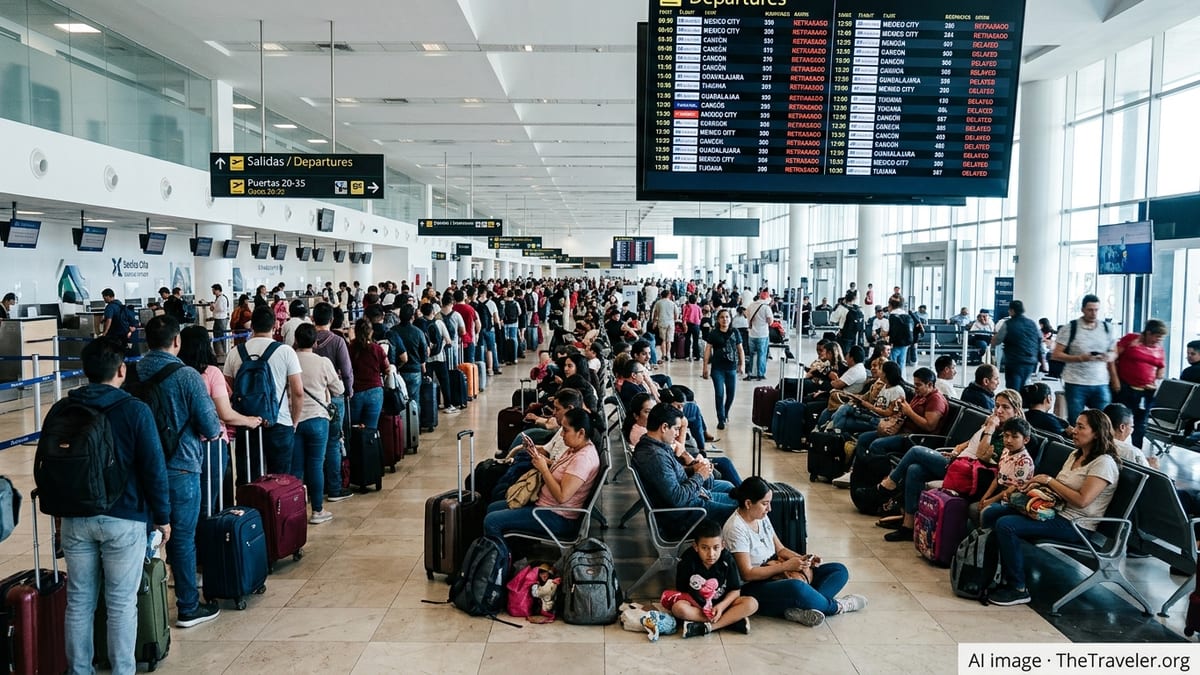
Travelers moving through Mexico’s busiest air hubs faced widespread disruption today as hundreds of flights were delayed and more than a dozen cancelled across Mexico City, Cancún, Guadalajara, and Tijuana, affecting operations for both Mexican low cost carriers and major U.S. airlines.
Get the latest news straight to your inbox!
Delays Mount Across Mexico’s Busiest Airports
Publicly available flight-tracking data for Saturday, March 28, 2026, indicates that Mexico’s main gateway airports collectively reported 351 delayed flights and 13 cancellations, creating knock-on effects for passengers across the domestic and international network. Mexico City International Airport, the country’s largest hub, recorded a significant share of the delays as tight runway capacity and heavy traffic pushed turnaround times well beyond schedule.
In Cancún, one of Latin America’s busiest leisure airports, late departures accumulated throughout the day as morning operational issues rippled into afternoon schedules. Passengers heading to beach resorts and connecting onward to North America and Europe encountered lengthening queues and later-than-planned boarding.
Guadalajara and Tijuana, both key secondary hubs for low cost and transborder traffic, also saw elevated numbers of delayed services. These airports play an important role in connecting regional Mexican cities with U.S. gateways, which meant that even short domestic delays often translated into missed or rushed international connections for travelers.
Multiple Airlines Feel the Impact
The disruption cut across a broad mix of carriers serving Mexico’s largest markets. Mexican low cost operators VivaAerobus and Volaris, which run dense point to point networks through Mexico City, Cancún, Guadalajara, and Tijuana, experienced schedule pressures as short ground times left little margin to recover from earlier delays.
AeroMéxico, the country’s primary full service airline and a key connector between Mexico and North America, South America, and Europe, also saw disruptions building through its hubs. Because AeroMéxico concentrates many of its banked connections in Mexico City, even modest operational slowdowns can affect a wide range of onward itineraries.
Major U.S. carriers including American Airlines, United Airlines, and Southwest Airlines, which operate numerous routes into Mexico’s main tourist and business centers, were likewise affected as Mexico based delays cascaded into their broader U.S. networks. For some travelers, late departures from Mexican airports translated into missed connections at U.S. hubs and the need for last minute rebooking.
Operational Strain and Broader Context
The high number of delayed flights reflects broader structural challenges in Mexico’s aviation system. Mexico City International Airport in particular has long operated near its capacity limits, and recurrent reports describe late gate assignments, congested taxiways, and tight slot management that can complicate on time performance on busy days.
Regional hubs such as Guadalajara and Tijuana have also taken on increased importance as airlines expand point to point service and add more international frequencies. While these airports have continued to grow, they can be vulnerable to bottlenecks when traffic spikes, weather deteriorates, or security conditions affect ground access routes, all of which can add minutes or hours to standard operations.
Recent months have also seen periods of civil unrest and security operations in parts of Mexico that prompted travel waivers and selective schedule adjustments from some carriers. Although today’s disruption is primarily reflected in delay statistics rather than widespread cancellations, the cumulative effect is a system that can quickly become strained when several factors converge.
Knock-on Effects for Passengers
For travelers, the operational challenges translated into extended airport waits, missed connections, and the need to rearrange hotel and ground transport plans at short notice. Domestic passengers traveling for family visits or weekend breaks often found themselves arriving late into the evening instead of the afternoon times originally shown on their tickets.
International passengers, particularly those connecting through Mexico City and Guadalajara to and from the United States and Canada, faced a higher risk of misaligned itineraries. Once a first leg was delayed leaving Mexico, onward flights operated by U.S. carriers such as American Airlines, United, and Southwest could be missed, forcing same day rebookings or overnight stays.
Travel insurance providers typically treat significant delays and missed connections as potential claims, but compensation depends on policy terms and the cause of disruption. In practice, many travelers relied on airline apps and airport screens to track rapidly changing departure times and to secure alternative options when connections became unworkable.
What Travelers Can Expect Next
Published airline schedules and airport operations updates suggest that carriers will attempt to recover their networks over the coming 24 hours by turning aircraft quickly at outstations and, where possible, adding capacity on heavily affected routes. However, with 351 delayed flights recorded today, residual delays are likely to persist into the late evening and early morning periods.
Observers of Mexico’s aviation sector note that the current episode of disruption underlines the sensitivity of the country’s busiest airports to operational shocks, whether stemming from congestion, weather, or external events. As traffic volumes continue to grow, maintaining punctuality across hubs such as Mexico City, Cancún, Guadalajara, and Tijuana may remain a challenge, particularly for low cost carriers whose business models depend on rapid aircraft utilization.
For travelers planning upcoming trips through Mexico, public guidance typically emphasizes checking flight status frequently, building additional buffer time into connections, and remaining flexible about routing when possible, especially during periods when airport congestion or regional security developments are in the news.