

More news on this day
Flights to Puerto Vallarta and Guadalajara are gradually resuming after a weekend of cartel-linked violence in western Mexico, as federal security forces move to reassert control and governments update travel alerts for one of the country’s most visited coastal regions.
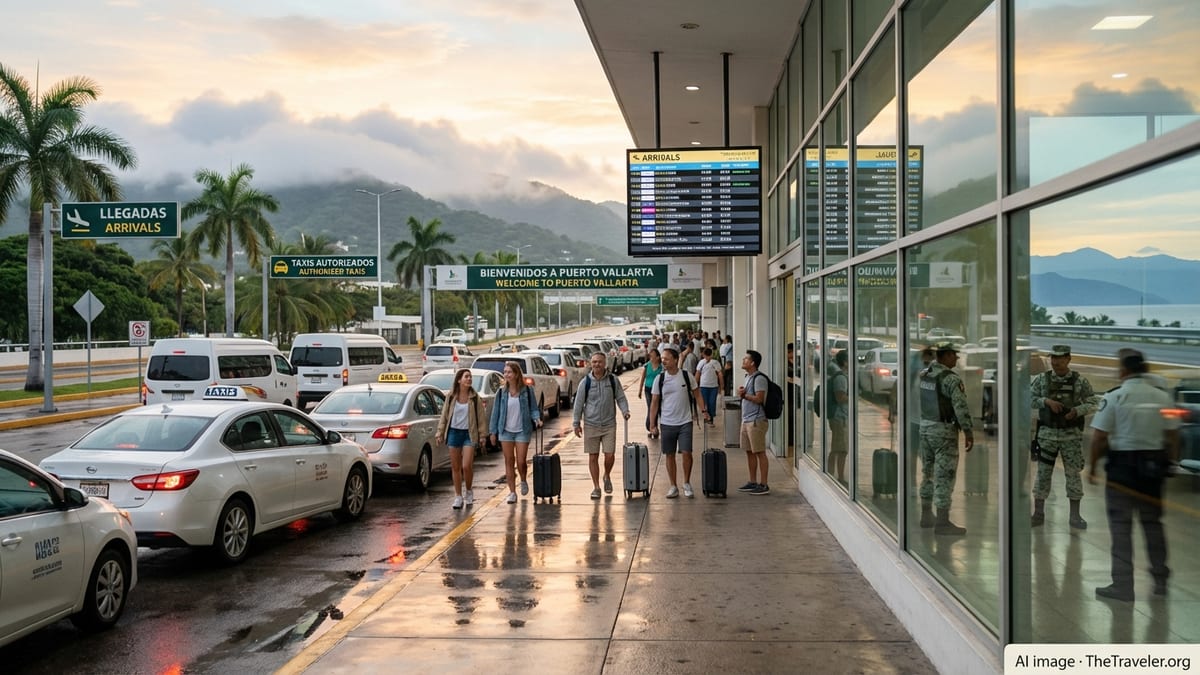
Security Operations Bring Relative Calm After Sudden Unrest
The resumption of air links to Puerto Vallarta and Guadalajara follows an intense security crisis triggered by a major operation against the Jalisco New Generation Cartel over the weekend. The killing of cartel leader Nemesio Rubén Oseguera Cervantes, widely known as El Mencho, set off a wave of retaliatory violence across Jalisco and neighboring states, with burned vehicles, roadblocks and reports of gunfire causing alarm among residents and tourists.
By Monday, February 23, Mexican authorities in Jalisco reported that the situation had stabilized in key tourism corridors, including Puerto Vallarta’s hotel zone and the main approach roads to Guadalajara and Puerto Vallarta airports. State and municipal authorities announced the removal of burned-out vehicles from highways and city streets and said public transportation would resume on a normal schedule, although schools in Jalisco and nearby Nayarit remain closed as a precaution.
Officials have also moved to counter misinformation circulating on social media about alleged attacks inside terminals. Local authorities and airport operators stressed that widely shared images purporting to show shootouts or fires within Guadalajara and Puerto Vallarta airports were either old, unrelated or artificially generated, adding that no direct assaults on airport facilities had been confirmed.
Security forces from the army, National Guard and state police continue to patrol roads leading to both airports and popular resort zones. While the risk of isolated incidents has not disappeared, authorities say a combination of visible patrols, road clearing and targeted operations in cartel strongholds has reduced the immediate threat to travelers using air and ground transport.
Airlines Start Restoring Service After Wave of Cancellations
Air travel to western Mexico was heavily disrupted on Sunday, February 22, when major North American airlines canceled or curtailed operations to Puerto Vallarta and Guadalajara amid reports of roadblocks and gunfire in Jalisco. Flights were scrubbed out of caution even as airport operators insisted that runway and terminal areas remained secure and that many disruptions were caused by access roads rather than events inside the facilities.
United, American, Southwest, Delta and Air Canada were among the carriers that halted or limited flights into Puerto Vallarta’s Licenciado Gustavo Díaz Ordaz International Airport and Guadalajara’s Miguel Hidalgo y Costilla International Airport. Many airlines issued flexible rebooking policies, allowing travelers to change itineraries without fees for trips scheduled over the coming days, while some carriers temporarily suspended all operations into Puerto Vallarta on Sunday.
By Monday, airlines and airport authorities signaled that operations were moving toward a controlled normalization. Guadalajara airport said that it continued to operate with reinforced security and that most scheduled flights were running, though some carriers maintained limited schedules or last-minute changes. Puerto Vallarta airport, under the protection of National Guard and Defense Ministry personnel, began receiving a growing number of domestic and international arrivals as airlines reinstated flights market by market.
Delta, for example, has maintained a formal travel waiver for passengers traveling to, from or through Puerto Vallarta and Guadalajara between February 22 and 26, allowing customers to rebook without fare differences if they travel by early March. Other carriers have adopted similar measures, advising travelers to verify the status of each specific flight before heading to the airport and to expect longer lines at check-in and security as operations ramp back up.
What the Updated Travel Alerts Mean for Tourists
As flights resume, international travelers must still navigate a complex landscape of travel advisories. The United States has issued updated guidance covering Jalisco and several other Mexican states, advising its citizens to exercise increased caution and, in some areas, to shelter in place until authorities are confident that roadblocks and violent reprisals have fully subsided. Canada and several European governments have echoed those warnings, calling on their nationals to closely monitor local news and official channels.
For visitors planning to travel specifically to Puerto Vallarta or Guadalajara in the coming days, the practical effect of these alerts is not an outright ban on travel but a strong recommendation to remain vigilant. Travelers are urged to avoid demonstrations, steer clear of military and police operations, and limit unnecessary movement at night, particularly outside established tourist zones and well-trafficked urban areas.
Consular officials are reinforcing standard safety guidance for Mexico travel: arrange airport transfers with reputable providers, confirm that your hotel or resort is fully operational, keep family or friends informed of your movements, and maintain a low profile in public spaces. Visitors already in Puerto Vallarta’s resort strip have been advised to stay within hotel grounds or established tourist districts when possible while the security situation is monitored.
Travel alerts can also affect travel insurance coverage. Some policies may treat the current situation as a known event, which can limit new coverage for trip cancellations linked to civil unrest. Travelers are being urged to read policy terms carefully and, when in doubt, consult their insurers before making last-minute changes or booking new trips to the region.
Current Situation at Puerto Vallarta and Guadalajara Airports
On the ground, both Puerto Vallarta and Guadalajara airports are working to reassure travelers that security inside the terminals is under control. Officials at Guadalajara’s international airport have emphasized that no incidents have been reported within the facility itself, noting that images depicting panic and apparent chaos largely reflect anxiety among passengers reacting to news from outside, rather than direct attacks on airport infrastructure.
In Puerto Vallarta, where all international flights were canceled on Sunday, airport authorities have pointed to a clear separation between street-level violence in certain parts of the state and day-to-day operations at the seaside terminal. The airport remains under a heightened security posture, with military and National Guard personnel visible in and around passenger areas, but staff insist that check-in, security screening and boarding are proceeding in an orderly fashion as flights return to the schedule.
Travelers, however, may still experience indirect effects of the recent unrest. Roadblocks and burned vehicles have periodically limited access to certain highways and secondary roads, which can translate into longer transfer times between resorts, city centers and the airports. Taxi and ride-hailing services in Puerto Vallarta also saw partial suspensions at the height of the violence and may continue operating on reduced schedules or with restricted routes while drivers gauge the security environment.
Airport operators and local tourism officials are advising passengers to arrive earlier than usual for both departures and arrivals, to build in additional time for security checkpoints and possible traffic delays. They also recommend traveling with digital copies of bookings and identification, in case brief interruptions to connectivity or crowding at counters complicate check-in procedures.
Impact on Resorts, Cruises and Local Tourism
The sudden wave of violence struck during the peak winter travel season, when Puerto Vallarta’s beaches and all-inclusive resorts are typically at or near capacity with tourists escaping colder climates. Many hotels reported that guests remained on property throughout the weekend as a precaution, taking advantage of on-site amenities while monitoring news of security operations and flight disruptions.
In addition to air travel, the cruise industry has also adjusted operations. At least one major cruise line canceled a scheduled call at Puerto Vallarta as the situation unfolded, opting to reroute rather than risk disembarking passengers in a city under a shelter-in-place advisory. Cruise operators are reviewing itineraries in the coming weeks and signaling that further port changes are possible if security conditions deteriorate again.
Local business owners in Puerto Vallarta’s historic center and beachfront retail zones have described a sharp drop in foot traffic since the unrest began, with some shops and restaurants choosing to close early or suspend operations temporarily. Tourism authorities worry that images of burning vehicles and roadblocks, even when far from the city’s main hotel strip, could put renewed pressure on the region’s post-pandemic recovery and its vital hospitality sector.
In Guadalajara, the impact has been more uneven. The city remains a major business and cultural hub and is slated to host high-profile sporting events later this year. Hoteliers and event organizers are closely watching how quickly security perceptions improve and whether international teams and fans will need additional assurances before finalizing travel plans.
How to Plan or Adjust Your Trip in the Coming Days
For travelers who already have tickets to Puerto Vallarta or Guadalajara over the next week, the main message from airlines and authorities is to stay flexible. Many carriers are continuing to waive change fees for itineraries to the affected airports, allowing passengers to push travel back by days or, in some cases, weeks without significant penalties. Contacting the airline directly or checking your reservation online remains the fastest way to see whether your specific flight is operating.
Travel experts suggest that those with nonessential trips scheduled in the next few days consider postponing until the situation has more fully stabilized, especially if plans involve independent road travel into rural areas or small towns outside the main tourist zones. Visitors determined to go ahead with beach holidays in Puerto Vallarta or city stays in Guadalajara are advised to book transfers in advance, stick to well-known neighborhoods, and remain alert to any new advisories from local authorities or their home governments.
When adjusting itineraries, travelers should also factor in the possibility of cascading disruptions. Even if their outbound flight operates on time, return journeys could be affected by changing security assessments or airline staffing decisions. Those relying on connecting flights through hubs in the United States or Canada should allow generous layover times or look for routes with more than one daily frequency to and from their destination.
For new bookings, agents recommend paying close attention to fare rules and considering flexible or refundable options where budgets allow. Some hotels in the region are again promoting flexible cancellation windows to reassure guests, but policies can vary widely, making it important to confirm terms at the time of reservation.
Staying Safe and Informed on the Ground
As flights resume and tourist numbers remain high, staying informed is key for anyone in or traveling to Jalisco. Visitors are being encouraged to follow official communications from local authorities, transportation agencies and their own consulates, rather than relying solely on social media posts, which have already been shown to amplify misleading or fabricated images of the unrest.
Basic precautions that are often recommended for travel in Mexico take on greater importance in the current environment. These include avoiding high-crime neighborhoods, limiting nightlife to reputable venues, traveling in groups when possible, and using secure transportation arranged through hotels or established operators. Tourists are also urged to keep valuables out of sight and to avoid confrontations if they encounter checkpoints or police operations.
Those already in Puerto Vallarta or Guadalajara should keep their hotels informed of their movements, particularly if they plan excursions outside the immediate tourist areas. Many large resorts maintain direct lines to local authorities and security services and can advise guests on which areas are best avoided on a given day. Some properties have also increased on-site security staffing and added additional briefings for guests about local conditions.
For now, the return of scheduled flights and the reopening of public transport point to a tentative normalization in two of western Mexico’s most important gateways. Yet with travel alerts still in place and memories of the weekend’s violence fresh, airlines, tourism officials and visitors alike will be watching closely to ensure that the renewed flow of travelers is matched by a sustained improvement in security on the ground.