

Evaluating healthcare risk is a central component of any relocation decision to Mexico. While the country combines modern private hospitals with a resource-constrained public system, the balance of strengths and vulnerabilities can look very different from an expatriate’s perspective than from national averages. Understanding how infrastructure, financing, access, and cost exposures interact is essential to building a realistic healthcare risk score and planning appropriate mitigation measures before moving.
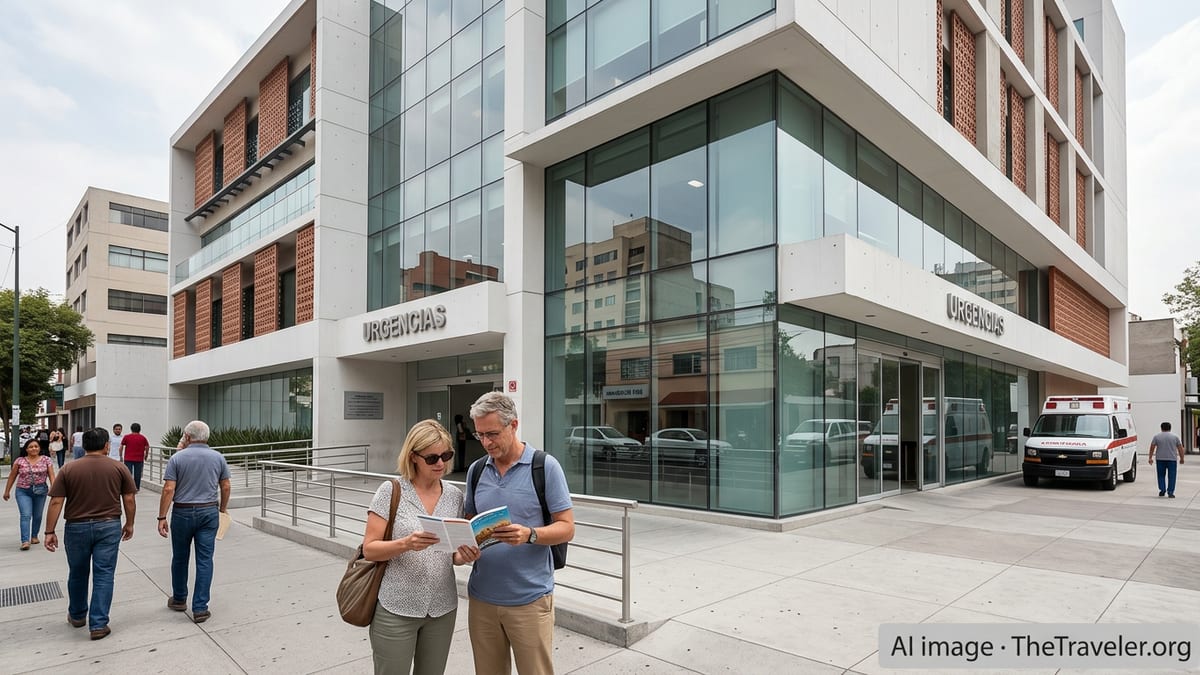
How to Interpret a Healthcare Risk Score for Mexico
A healthcare risk score for Mexico assesses the likelihood that an expatriate will face barriers to timely, affordable, and adequate medical care once resident in the country. It does not evaluate clinical excellence at top facilities, which can be high, but rather systemic exposure to gaps in access, capacity, and financial protection across a full relocation lifecycle.
From an expat-focused standpoint, a comprehensive score typically aggregates several dimensions: public system resilience, private sector reliability, regional disparities, financial exposure, language and administrative frictions, and emergency/critical care robustness. Each factor can carry different weight depending on the age, health status, and risk tolerance of the relocating individual or family.
For Mexico, the risk profile is characterized by significant divergence between high-quality care in major urban private hospitals and structurally weaker public services with limited capacity and high out-of-pocket spending. This split system means that an expat’s practical risk score is heavily determined by which segment they rely on, which city they live in, and how well they are insured.
Relocation professionals typically consider Mexico to be moderate-to-elevated healthcare risk for long-term residence when compared with Western Europe or high-spending OECD countries. The score is mitigated when expatriates secure robust private insurance, base themselves in regions with strong private hospital networks, and plan carefully for chronic and high-cost conditions.
System Structure and Its Implications for Expat Risk
Mexico’s healthcare system is mixed, with public institutions providing constitutionally guaranteed services and a large private sector delivering care to insured and self-paying patients. Public care is mainly delivered via the Mexican Social Security Institute (IMSS) and programs such as IMSS-Bienestar, while employees in the public sector are served by a separate social security institute. The private sector comprises around two-thirds of all hospitals in the country, though many are small facilities with limited specialty services.
For expatriates, the structural risk stems from the reality that entitlement in law does not always equate to practical access. Public facilities in many regions face shortages of personnel, beds, and equipment, which in turn drive long wait times and uneven service quality. System reforms and institutional changes over recent years have also created administrative uncertainty, particularly for those attempting to rely solely on public coverage.
In contrast, large private hospitals in major cities often provide modern infrastructure, international-level clinical practice in selected specialties, and English-speaking staff. However, this higher-quality tier is capacity-limited at national scale and typically requires either comprehensive private insurance or the ability to pay large sums out of pocket. Expatriates effectively operate within a segmented system where their risk exposure depends on their ability to remain in the private track for serious conditions.
The coexistence of underfunded public services and commercially priced private care results in a polarized risk structure: Mexico offers both opportunity for good healthcare at competitive prices in some situations, and elevated risk of delays or financial shock if expats misjudge their reliance on the public system or face major events without adequate coverage.
Capacity, Quality, and Geographic Variation
National indicators highlight structural capacity constraints that shape risk for residents and expatriates alike. Recent international comparisons show Mexico spending roughly 6 percent of gross domestic product on health, below the average among high-income countries. Per capita health expenditure is around one quarter or less of leading OECD systems, which is reflected in infrastructure and workforce indicators such as hospital beds and diagnostic equipment per capita.([oecd.org](https://www.oecd.org/en/publications/2025/11/health-at-a-glance-2025-country-notes_2f94481e/mexico_0c55bf71.html?utm_source=openai))
Hospital bed density in Mexico is approximately 1 bed per 1,000 population, significantly below the OECD average of more than 4 beds per 1,000. Likewise, the country has markedly fewer advanced diagnostic units such as CT and MRI scanners per million inhabitants than the high-income benchmark. These constraints may translate into longer waits for elective procedures, limited surge capacity during seasonal peaks, and crowding in emergency departments in many public facilities.([oecd.org](https://www.oecd.org/en/publications/2025/11/health-at-a-glance-2025-country-notes_2f94481e/mexico_0c55bf71.html?utm_source=openai))
Quality and access, however, are highly uneven across regions. Metropolitan areas such as Mexico City, Guadalajara, and Monterrey host large tertiary private hospitals, with extensive specialty services and international accreditations, as well as selected regional hubs oriented to medical tourism. Border cities and some coastal destinations have developed private facilities serving foreign patients, especially for dental work, bariatric surgery, and orthopedics. This clustering offers expatriates in those locales relatively strong options, but leaves smaller cities and rural regions with thinner specialist coverage and more limited intensive care capacity.([internationalinsurance.com](https://www.internationalinsurance.com/health/systems/mexico.php?utm_source=openai))
From a risk-scoring standpoint, expatriates basing themselves in or near major urban centers with robust private networks face considerably lower clinical access risk than those relocating to secondary cities or rural areas. For the latter, emergency stabilization may occur in public hospitals, and medical evacuation to larger centers may be advisable for complex conditions, adding logistical and financial layers to the overall healthcare risk profile.
Financing, Out-of-Pocket Exposure, and Insurance Challenges
Mexico’s health financing structure is a central driver of healthcare risk for both citizens and expatriates. Public expenditure accounts for around 3 to 3.5 percent of GDP, below regional recommendations, and households shoulder a relatively high share of costs directly at the point of service. Recent estimates place out-of-pocket spending at close to 40 percent of total current health expenditure, which is high by international standards and signals limited financial protection in the system.([hia.paho.org](https://hia.paho.org/en/country-profiles/mexico?utm_source=openai))
For expatriates, this means that serious illness or trauma without sufficient insurance can quickly translate into large, immediate bills, particularly at private hospitals. Intensive care or major surgery in high-end facilities can rapidly climb into tens of thousands of US dollars or more, and admission is often contingent on proof of insurance or an upfront deposit. Reports from practitioners and patient experiences underline that some private institutions are unapologetically commercial, with strict payment policies that can surprise newcomers who assume “low-cost” care based on general reputation rather than current pricing realities.([internationalinsurance.com](https://www.internationalinsurance.com/health/systems/mexico.php?utm_source=openai))
Private health insurance take-up within Mexico is relatively limited, with roughly one tenth of the population holding major medical policies. Premiums have been rising due to medical inflation and tax changes, with recent reports indicating increases of around 20 to 40 percent in 2026 renewal cycles. Lower-cost policies often carry high deductibles and substantial coinsurance, meaning that insured expatriates can still face significant out-of-pocket expenses for serious events. Insurers may also apply age caps, exclusions for preexisting conditions, and geographic limitations that are critical for older or medically complex expats to understand before relying on local coverage.([mexiconewsdaily.com](https://mexiconewsdaily.com/news/health-insurance-premiums-mexico/?utm_source=openai))
Public insurance access for expatriates, primarily through voluntary enrollment in IMSS, can reduce cost exposure but does not eliminate it. Public formularies, availability of medicines, and wait times may lead many insured expats to continue using private doctors and pharmacies on a self-pay basis for routine care. As a result, even well-insured expatriates in Mexico should factor an out-of-pocket component into their personal healthcare risk score and budget planning.
Public System Stability and Reform Risk
Another structural element of Mexico’s healthcare risk score is the policy and institutional volatility that has marked the public system over the last decade. Successive reforms have replaced and reconfigured coverage schemes for the uninsured population, including the phase-out of former popular insurance programs and the later discontinuation or absorption of newer institutions into IMSS-Bienestar. These shifts have generated periods of uncertainty and transition in funding flows, coverage definitions, and administrative processes.([en.wikipedia.org](https://en.wikipedia.org/wiki/Healthcare_in_Mexico?utm_source=openai))
For expatriates relying on public coverage, such reforms introduce risks beyond clinical quality: they can affect eligibility rules, enrollment procedures, and effective benefit packages within the span of a long-term assignment or retirement plan. While core social security institutions like IMSS are longstanding, the surrounding architecture for those outside formal employment has been in flux, and the possibility of future adjustments remains material given debates about underfunding and efficiency.
Reform-related instability also has indirect impacts on expats who mainly use private care. Tight public budgets and institutional changes can exacerbate shortages of staff and supplies in public hospitals, pushing more middle-income Mexicans toward private providers. This added demand can strain private capacity in some areas, potentially affecting wait times and pricing in parts of the market that expatriates rely on.
From a risk-scoring perspective, Mexico’s ongoing public system evolution implies a moderate policy risk: expats should not assume that today’s enrollment routes, service levels, or wait times will remain static throughout a multi-year relocation. Building flexibility into coverage strategies, including the option to supplement local arrangements with international health insurance, is a prudent mitigation measure.
Everyday Access, Language Risk, and Emergency Care
On a day-to-day basis, many expatriates in Mexico successfully access routine and specialist care through private clinics with relatively short waits, especially in larger cities. Consultation costs can be lower than in high-income countries, and providers in areas with significant foreign populations may offer services in English. These features can give an impression of low practical risk for common health needs, particularly for younger and healthier expats.
However, this relatively smooth experience can mask important residual risks. Outside major expat hubs, English-speaking providers are less common, and navigation of public facilities, prescriptions, and referrals occurs primarily in Spanish. Administrative interactions with social security institutions, insurance companies, and pharmacies also largely take place in Spanish, which can create barriers in emergencies or when resolving disputes about coverage and billing. Language and bureaucratic complexity therefore contribute to a qualitative, but meaningful, component of the overall healthcare risk score.
Emergency and critical care pose a different risk profile. In major urban centers, private hospitals may provide competent emergency departments and intensive care units, but ambulance routing and triage practices can send patients initially to public facilities, especially if insurance status is unclear. Some private hospitals require proof of coverage or deposits before admission to intensive care, and anecdotal evidence highlights cases where patients are transferred from private to public hospitals once financial limits are reached.([reddit.com](https://www.reddit.com/r/IntoMexicoWeGo/comments/1rh6bie/living_healthcare_practical_use/?utm_source=openai))
Relocation planners should factor these dynamics into an expat healthcare risk assessment by considering proximity to reputable emergency-capable hospitals, clarity of local emergency numbers and protocols, language readiness, and insurance arrangements that guarantee direct payment to hospitals. These measures can significantly reduce the operational risk inherent in medical emergencies in a segmented system like Mexico’s.
Risk Mitigation Strategies for Different Expat Profiles
Although Mexico’s systemic health indicators point to elevated structural risk compared with better-resourced OECD systems, expatriate-specific strategies can meaningfully shift the practical risk score. The most impactful lever is usually comprehensive medical insurance that provides access to top-tier private hospitals, covers high-cost events, and ideally offers direct settlement rather than reimbursement-only models.
For working-age professionals with employer-sponsored coverage, the key is to verify that plans explicitly include Mexico, specify which networks and hospitals are covered, and clarify limits for chronic conditions, maternity, and evacuation. Where corporate plans are locally underwritten, due diligence on the insurer’s network and claims practices within Mexico is important to avoid surprises during major episodes of care.
Retirees and long-stay independent expats face more complex trade-offs. Age limitations, preexisting condition exclusions, and rising premiums can make local private insurance challenging to obtain or maintain. In such cases, combining voluntary enrollment in IMSS for baseline protection with international medical insurance focused on catastrophic events and evacuation is a common strategy, albeit one that still leaves some out-of-pocket exposure for routine private care. Location choice also becomes a more important mitigation tool, prioritizing regions with strong hospital networks and subspecialists relevant to known conditions.([internationalinsurance.com](https://www.internationalinsurance.com/health/systems/mexico.php?utm_source=openai))
Across profiles, proactive planning for language and logistics can reduce non-financial risks. This includes identifying preferred hospitals and clinics in advance, maintaining up-to-date medical records in Spanish, understanding local emergency procedures, and budgeting realistically for copayments, deductibles, and uncovered services. When these mitigation steps are implemented, the effective healthcare risk score for many expatriates in Mexico can move from high to moderate, even though underlying national constraints remain.
The Takeaway
Mexico’s healthcare risk score for expatriates reflects a dual reality. On one hand, the country offers pockets of high-quality, relatively affordable private care in major cities and tourist-oriented hubs, underpinned by experienced clinicians and modern facilities. On the other hand, national underinvestment, limited infrastructure, high out-of-pocket spending, and ongoing public system reforms create structural vulnerabilities that can significantly affect expats who rely on public services or enter the system without adequate insurance.
Decision-grade assessment requires going beyond generic impressions of “good and inexpensive” healthcare to examine the specifics of location, insurance, age, health status, and risk tolerance. The public system’s constraints, the financial exposure inherent in private care, and the complexity of emergency pathways all warrant explicit consideration in relocation planning.
For many expatriates, especially those with comprehensive private or international insurance and a base in metropolitan areas with strong hospital networks, Mexico can offer an acceptable, manageable healthcare risk profile. For retirees with preexisting conditions or those relocating to regions with limited private capacity, the risk score trends higher and demands more robust contingency planning, including evacuation options.
Ultimately, the practicality of relocating to Mexico from a healthcare perspective depends less on national averages and more on the alignment between an individual’s risk factors and a carefully constructed mitigation strategy. A clear-eyed appraisal of the country’s systemic constraints, combined with appropriate insurance and location choices, is essential to ensuring that healthcare risks remain within tolerable bounds over the course of a long-term stay.
FAQ
Q1. Is Mexico’s healthcare system considered high risk for expats overall?
Mexico presents a moderate-to-elevated healthcare risk for expats compared with high-spending OECD countries. Risk is significantly lower for those living in major cities, using reputable private hospitals, and holding robust insurance, and higher for those relying mainly on the public system or living in regions with limited medical infrastructure.
Q2. How does Mexico’s health spending level affect expat healthcare risk?
Mexico spends a smaller share of GDP and less per person on health than many high-income countries, resulting in fewer hospital beds, limited advanced equipment, and pressure on public facilities. For expats, this translates into potential wait times and capacity constraints, especially in public hospitals and in smaller cities.
Q3. Are private hospitals in Mexico generally high quality for expatriates?
Many large private hospitals in Mexico City, Guadalajara, Monterrey, and key tourist or border cities offer modern facilities, experienced clinicians, and a wide range of specialties. For expats who can access and afford these providers, clinical quality for many procedures is competitive, though capacity is not uniform nationwide.
Q4. How significant is out-of-pocket spending risk in Mexico?
Out-of-pocket spending accounts for roughly two-fifths of total health expenditure in Mexico, indicating limited financial protection. For expats, this means that serious illness or accidents without strong insurance can result in substantial immediate costs, especially in private hospitals that require deposits or proof of coverage before admission.
Q5. Can expatriates rely solely on the public IMSS system to reduce risk?
Voluntary enrollment in IMSS can provide structured access to public services and reduce exposure to catastrophic costs, but does not fully eliminate risk. Public hospitals face capacity and supply constraints, and many expats still choose private providers for faster or more comfortable care, accepting some out-of-pocket expense.
Q6. How do regional differences within Mexico affect healthcare risk?
Healthcare capacity and quality vary widely by location. Major urban centers and established medical tourism hubs have stronger private hospital networks, while smaller cities and rural areas may offer limited specialist and intensive care. Expat risk is lower in regions with multiple reputable hospitals and higher where referral or evacuation is needed for complex cases.
Q7. What role does private health insurance play in an expat’s risk score?
Private or international health insurance is a primary risk-mitigation tool in Mexico. Comprehensive policies that include direct payment to hospitals, high coverage limits, and broad provider networks can substantially reduce financial and access risk, particularly for emergency and high-cost events.
Q8. Are there special risks for older expats or those with preexisting conditions?
Older expats and those with chronic illnesses face higher risk due to possible insurance age caps, exclusions for preexisting conditions, and greater likelihood of needing specialist or hospital care. For these groups, the combination of limited public capacity and rising private insurance costs can make risk management more complex and relocation decisions more sensitive to local healthcare conditions.
Q9. How important is language in managing healthcare risk in Mexico?
Language is an important operational factor. While many private providers in major expat areas speak some English, public facilities and administrative processes operate mainly in Spanish. In emergencies or complex treatments, limited language skills can create misunderstandings and delays, so planning for interpretation or Spanish proficiency reduces practical risk.
Q10. What practical steps can expats take to lower their healthcare risk in Mexico?
Key steps include securing comprehensive medical insurance that works in Mexico, understanding policy limits and hospital networks, enrolling in public coverage where appropriate, choosing a residence near reputable hospitals, preparing Spanish-language medical records, and learning local emergency procedures. These measures can significantly lower an expat’s effective healthcare risk score despite the country’s systemic constraints.