

Foreign nationals considering relocation to Mexico must navigate a structured but sometimes fragmented immigration system that involves both Mexican consulates abroad and the National Migration Institute inside Mexico. Understanding how the process works in practice, from initial visa appointments to the issuance and maintenance of resident cards, is critical for evaluating whether a move is realistic in terms of timing, documentation burden and compliance risk.
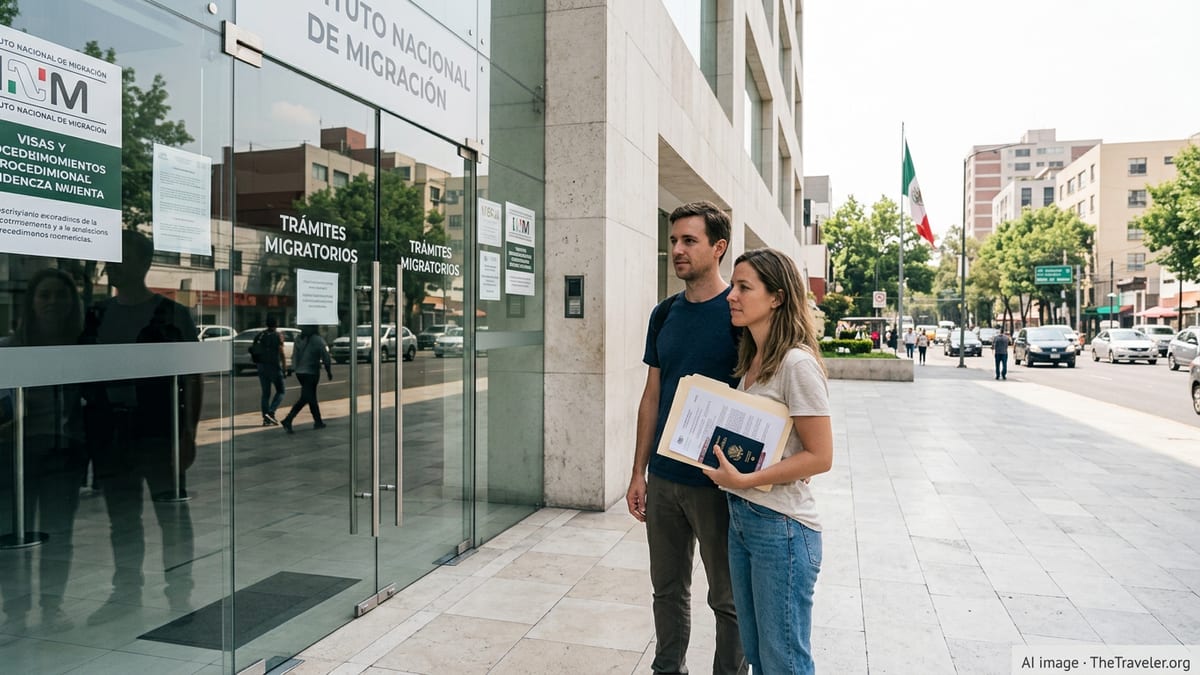
Overview of Mexico’s Immigration Framework for Expats
Mexico’s immigration framework for long-stay expats operates in two stages: consular pre-approval abroad, and in-country processing with the National Migration Institute (Instituto Nacional de Migración, INM). In most cases, applicants first obtain a resident visa sticker in their passport from a Mexican consulate, then enter Mexico and exchange that visa for a plastic residence card within a defined time window. This two-step structure means expats must coordinate appointments and travel dates carefully.
Immigration categories relevant to expats fall broadly into three groups: short-term visitors using a Multiple Immigration Form (FMM), temporary residents for stays over 180 days and up to four years, and permanent residents with no fixed end date. Within these groups, there are sub-pathways based on economic solvency, family unity, job offers or investment, each with specific documentary evidence and fees.
The system is rules-based but implementation varies by consulate and by local INM office. Processing times, appointment availability and the exact financial thresholds used to test economic solvency differ across locations and change periodically. As a result, expats evaluating relocation should treat the process not as a single national standard but as a set of procedures with local interpretations that can materially affect timelines and outcomes.
Recent practice also reflects a stronger emphasis on biometric capture, document authentication and digital records. Applicants should expect to appear in person at both the consulate abroad and the INM office in Mexico, submit fingerprints and photographs, and sign multiple forms in Spanish. Limited English support at INM in many locations places additional importance on preparation and document organization before initiating the process.
Entry as a Visitor and Use of the FMM
For many potential expats, initial contact with Mexico’s immigration system is as a visitor. Most nationalities from North America, Europe and several other regions do not need a traditional consular visa for tourism or short business visits. Instead they complete or receive a digital or paper Multiple Immigration Form (Forma Migratoria Múltiple, FMM) on arrival, which records entry date, status and maximum authorized stay. The FMM functions as the legal authorization to remain in the country for that visit.
Historically, FMMs were often granted for up to 180 days by default, though in practice immigration officers may authorize shorter stays at their discretion. In some airports and land crossings, the FMM has transitioned to a mostly digital format, with key data attached to the passport record and only a short stamp or notation instead of the longer paper card. Travelers are expected to retain the paper portion where still used, and to be able to show it with their passport on departure or at internal checks.
For expats targeting residency, the critical distinction is between entering as a tourist and entering with a resident visa for “canje,” meaning exchange. When arriving with a pre-approved resident visa in the passport, the immigration officer should classify the entry accordingly rather than as a standard visitor stay. If an expat mistakenly enters under visitor status or uses automated e-gates where available, the system can register them as a tourist, which may disrupt or cancel a pending or existing residency process.
The FMM does not in itself create a path to residency for most new arrivals. Certain regularization programs occasionally allow long-term overstayers to regularize their status, but these are discretionary, narrowly defined and may target specific time periods or groups. Relying on future amnesties is therefore high-risk. For most expats, the visitor route is best understood as a temporary solution and a way to explore the country, not as a structured immigration pathway.
Temporary Residency Process and Timelines
Temporary residency is the primary vehicle for expats planning to live in Mexico for more than 180 days without immediately qualifying for permanent status. The formal duration is up to four years, usually issued as one-year cards renewable annually for the first period, with some INM offices allowing issuance of up to four years at once after initial approval. Temporary residents can enter and exit Mexico freely while their card is valid.
The process typically begins at a Mexican consulate outside Mexico. Applicants schedule an appointment, submit a visa application form, passport, photographs and supporting evidence such as bank statements, pension letters, employment documents, or proof of family ties. Many consulates charge an application fee that is commonly quoted in US dollars and is in the approximate range of 40 to 60 dollars, payable at the time of the interview. Processing may be concluded the same day or over several business days, depending on staff workload and the complexity of the file.
Once the temporary resident visa is approved, it is placed in the applicant’s passport with an expiration window during which the holder must enter Mexico. In current practice this entry window is typically up to 180 days from the date of issuance, though the stay authorized upon entry for “canje” is much shorter. On arrival, the immigration officer should annotate the stamp or FMM as an entry for exchange of the visa into a resident card rather than ordinary tourism. This notation, together with the visa itself, is essential evidence for the next stage.
After arrival, the expat has a strict period, generally 30 calendar days from the date of entry, to present the visa and supporting documentation at the local INM office and initiate the canje. Failure to file within that window usually voids the visa, forcing the applicant to restart the process from a consulate abroad. INM charges separate government fees for issuing the first temporary resident card, often in the low hundreds of US dollars equivalent for one year, with additional fees for longer initial validity. Processing times at INM range from same-day issuance in smaller offices to several weeks in congested urban centers.
Pathways to Temporary Residency and Key Evidence
Expats can access temporary residency through several legal pathways, each with distinct evidentiary requirements. The most common for retirees and remote workers is economic solvency, where applicants must demonstrate a consistent minimum monthly income or average bank or investment balances over a defined period, often 6 or 12 months. While figures vary by consulate and are periodically adjusted, current thresholds are generally aligned to multiple times Mexico’s daily measurement unit or minimum wage, resulting in income requirements in the low to mid thousands of US dollars per month and savings requirements in the mid to high five figures equivalent.
A second pathway is through family unity, available to spouses, children, or in some cases parents of Mexican citizens or lawful residents. Here the focus shifts from financial proofs to civil status documents, such as marriage certificates, birth certificates and proof of the sponsor’s Mexican nationality or residency. These documents frequently must be legalized or apostilled in the issuing country and translated into Spanish by a certified translator where not already in Spanish or English, in line with consular and INM standards.
Employment-based temporary residency is structured as a visa by job offer. In this case, a Mexican employer first obtains authorization from INM, after which the foreign national attends a consular appointment abroad using the authorization number and then returns to Mexico to complete the canje. Evidence centers on the employer’s legal status, tax compliance and justification for hiring a foreign worker, in addition to the individual’s qualifications.
Some consulates also process temporary residency based on ownership of Mexican real estate above a specified minimum assessed value or on significant investment in Mexican companies or government instruments. Documentary evidence includes notarized property deeds, recent property tax statements, bank or brokerage certificates and sometimes independent appraisals. This route is more relevant to capitalized investors than to typical retirees or remote employees but remains part of the broader immigration toolkit.
Permanent Residency Process and Long-Term Status
Permanent residency provides open-ended authorization to live in Mexico without fixed renewal cycles, although the physical card itself must be replaced when it expires or wears out. For most expats, there are two main routes into permanent status: direct consular approval for those meeting higher financial or qualifying criteria, and upgrade from temporary residency after a period of lawful stay.
Direct permanent residency at a consulate is usually reserved for applicants with substantially higher levels of economic solvency, or for older retirees and certain parents of Mexican nationals. Financial benchmarks in practice are meaningfully above those for temporary residency, often requiring monthly income in the higher thousands of dollars or savings in the low to mid six figures equivalent. As with temporary residency, consular practices vary, and some posts rarely grant direct permanent residence except in limited circumstances.
The more common path to permanence is time-based. After four consecutive years in temporary resident status, expats without special ties can apply at INM to change their condition of stay from temporary to permanent. Those married to Mexican citizens or permanent residents often qualify earlier, frequently after two years of cohabiting under temporary residency. The change process is handled entirely within Mexico, with no requirement to leave the country, and typically requires proof of continuous legal stay, the existing card, updated photographs and payment of higher government fees for the permanent card.
In-country processing times for conversion to permanent residency vary but often range from several days to a few weeks. Once granted, the new card confirms the holder’s indefinite resident status. However, permanent residents remain subject to compliance obligations, such as notifying INM of changes in marital status, address or employer within set deadlines and ensuring that any losses or thefts of the card are reported and rectified through replacement procedures.
Costs, Processing Variability and Operational Risks
Mexico’s immigration process involves multiple layers of fees that expats should factor into relocation planning. At a minimum, applicants can expect to pay a consular visa fee, which is normally in the tens of US dollars, and INM fees for issuance and, where applicable, renewal of the resident card, which cumulatively can reach several hundred dollars in the first year for temporary residency and more for permanent status. Independent of government charges, many applicants also incur translation, notarization and courier costs, and some choose to pay legal advisors or local facilitators to manage filings at INM.
Processing times are uneven across the system. Consulate appointments may be available within days in some locations but require booking several weeks or months ahead in high-demand posts. Within Mexico, some INM offices manage same-day or next-day card issuance for straightforward canje applications, while busy urban offices may operate on appointment systems with waiting periods, and card pickup may occur days or weeks after biometrics are taken. Expats who must travel in and out of Mexico during processing need to plan around these timing uncertainties.
There are also procedural risks. Missing the 30-day window to complete the canje after entry typically invalidates the visa. Entering Mexico using automated passport control instead of presenting the resident visa to a human officer can result in the system classifying the traveler as a tourist, potentially canceling a pending or existing residency. Overstaying the period authorized on an FMM can lead to fines and can complicate future immigration applications. Administrative errors, such as incorrect data on the card or misclassification of status, are not uncommon and often require additional visits to correct.
Given these operational realities, the immigration process may be straightforward for some expats yet prolonged and complex for others, even with similar profiles. The decision to relocate should therefore incorporate not only the formal legal rules but also a realistic assessment of appointment availability, local INM practices, language capabilities and tolerance for bureaucratic friction.
Maintaining Legal Status and Common Compliance Obligations
Once residency is granted, maintaining legal status in Mexico requires ongoing attention to card validity, reporting duties and travel patterns. Temporary residents must ensure that renewals are filed before expiration. INM typically allows renewal applications to be submitted within a defined window prior to the card’s expiry date, and late renewals can trigger fines or, in some cases, loss of status. Permanent residents, although not subject to the same renewal cycles, must still replace expired or damaged cards and keep personal data current in INM records.
Both temporary and permanent residents are expected to notify INM within set time limits of changes such as a new home address in Mexico, change of employer where work authorization is involved, or changes in marital status that affect family-based residency. These procedures usually involve completing an online form, paying a modest government fee where applicable, and attending an INM appointment with supporting documents. Failure to update records may result in fines or complications when renewing, upgrading or re-entering the country.
Travel behavior also intersects with immigration compliance. When leaving Mexico, residents may need to present themselves at an INM desk at airports or border points to have their departure appropriately recorded rather than relying solely on airline or carrier controls. On return, they must avoid being processed as tourists and ensure their entry is attached to their resident record. While Mexico does not publicly impose strict minimum presence requirements for residents in the way some countries do, extended absences combined with irregular entry records could raise questions if and when status is reviewed.
Expats contemplating long-term settlement should view immigration as an ongoing administrative responsibility rather than a one-time hurdle. Building in time and budget for periodic INM visits, keeping organized files of all prior decisions and payment receipts, and monitoring for regulatory changes will reduce the risk of sudden status problems that could disrupt residence, property arrangements or access to local services.
The Takeaway
Mexico’s immigration process for expats offers multiple pathways to medium and long-term residence but requires coordinated action across consulates and in-country offices, timely adherence to deadlines, and careful management of entry records. For many applicants, especially retirees and location-independent professionals who meet current economic solvency thresholds, the framework is accessible but administratively demanding.
Decision-grade evaluation of a move to Mexico should therefore weigh not only the attractiveness of the destination but also the practical capacity to manage visa appointments, canje procedures, renewals and compliance obligations in a system characterized by local variation and evolving practices. Those comfortable engaging with Spanish-language bureaucracy, planning documents well in advance and adapting to procedural differences between offices are more likely to experience a predictable path to residency and stable long-term status.
FAQ
Q1. Can I apply for Mexican residency entirely from within Mexico?
In most standard cases, new residency applications start at a Mexican consulate outside Mexico. Only specific categories, such as certain family-based or regularization programs, are initiated directly with INM inside the country, and these are limited and subject to change.
Q2. How long do I have to enter Mexico after receiving a resident visa from a consulate?
Resident visas issued by consulates generally allow up to about 180 days from the date of issuance to make the first entry into Mexico. Once you enter, a much shorter window, typically 30 calendar days, applies to complete the canje and obtain your resident card.
Q3. What happens if I miss the 30-day deadline to complete the canje?
If the canje is not initiated within the required period after entry, the visa is usually considered lapsed. In practical terms, this often means restarting the process at a consulate abroad, including a new appointment, documentation review and fee payment.
Q4. Can I work in Mexico on a temporary resident card obtained through economic solvency?
A standard temporary resident card approved on economic solvency alone does not automatically grant the right to work for a Mexican employer. To work locally, additional authorization is normally required, typically initiated by the employer with INM so your card includes work permission.
Q5. Is it possible to convert from temporary to permanent residency without leaving Mexico?
Yes. After meeting the required period in temporary status, often four consecutive years or less in certain family-based cases, the change to permanent residency is processed at the local INM office in Mexico, without the need to exit and re-enter the country.
Q6. Are financial requirements for residency the same at every Mexican consulate?
No. While all consulates follow federal guidelines, they have discretion in how they interpret and apply financial thresholds. As a result, income and savings figures can differ between consulates and may be adjusted periodically, so applicants should verify current figures for their specific consulate.
Q7. Do I lose my residency if I stay outside Mexico for a long time?
Mexico does not publish a simple fixed-day absence rule for residents. However, very long or irregular absences, combined with inconsistent entry records, may attract additional scrutiny during renewals, upgrades or replacements, so maintaining clear, lawful travel records is advisable.
Q8. What documents typically need translation or legalization for immigration purposes?
Civil status and financial documents issued abroad, such as birth certificates, marriage certificates and some bank certifications, often require legalization or apostille in the issuing country and certified translation into Spanish if not already in Spanish or sometimes English, depending on consular and INM practice.
Q9. How much should I budget for government fees to obtain residency?
Government fees vary by category and validity length. As a broad indication, consular visa fees are typically in the tens of US dollars, while INM issuance fees for a first temporary resident card and subsequent renewals usually fall in the low to mid hundreds of US dollars equivalent, with permanent residency incurring higher one-time card issuance costs.
Q10. Is using an immigration lawyer or facilitator mandatory for the process?
No, the system is designed so individuals can apply on their own. However, many expats choose to use lawyers or facilitators, especially in larger cities, to manage appointments, forms and communications with INM, trading an additional private cost for reduced time investment and greater procedural certainty.