

More news on this day
Mexican authorities, backed by fresh guidance from the United States and other foreign governments, are urgently warning travelers to follow strict safety rules in parts of the country gripped by cartel violence, as popular resort gateways and inland corridors confront roadblocks, flight disruptions and shelter-in-place orders.
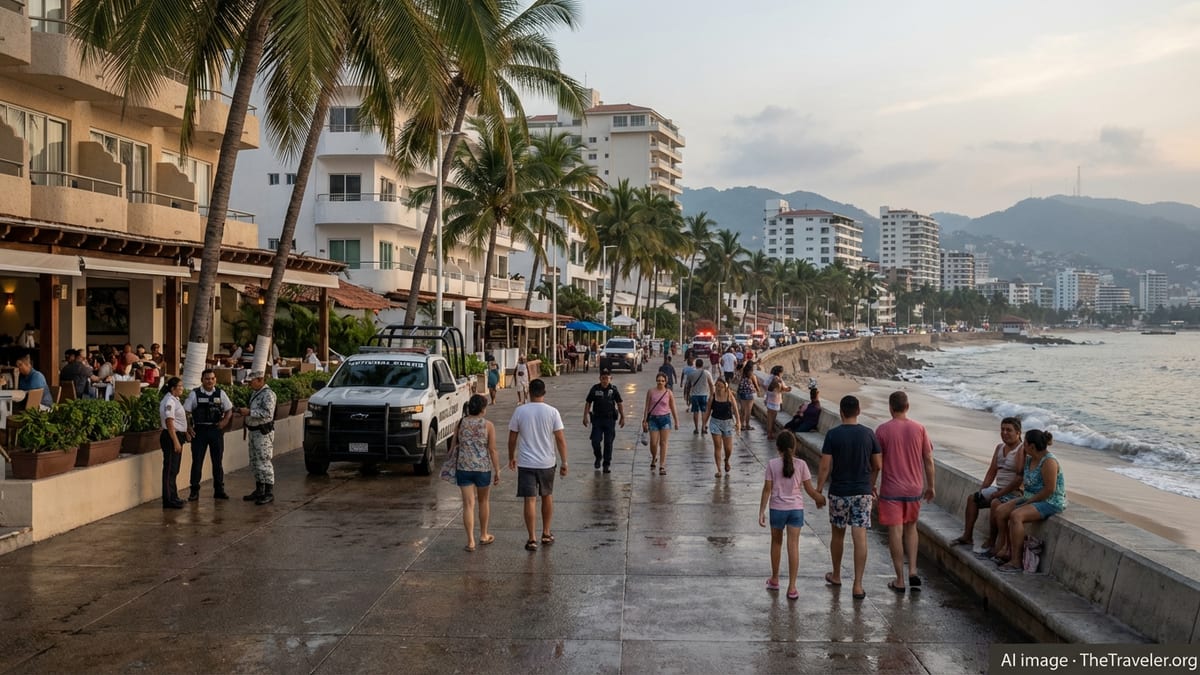
Violence Flares After Cartel Operation Triggers Global Concern
The latest safety push follows a wave of retaliatory attacks tied to the reported killing of powerful cartel leader Nemesio “El Mencho” Oseguera Cervantes during a recent military operation in the state of Jalisco. Gunmen set vehicles ablaze, blocked key highways and clashed with security forces in and around Guadalajara, Puerto Vallarta and neighboring regions, leaving dozens dead and briefly cutting off some of the country’s most visited coastal areas.
Images and videos shared by travelers showed tourists sheltering in hotels and airports as plumes of smoke rose from burning buses and trucks on major routes linking resort areas with inland cities. While authorities say conditions have begun to stabilize, they acknowledge that security operations remain active in several western and northern states, keeping the risk of sudden flare-ups high.
The unrest has come at a politically sensitive moment for Mexico, which is preparing to co-host matches for an upcoming FIFA World Cup and to receive large numbers of international visitors. Federal officials insist that tourist zones will be protected, but they are urging visitors to heed new, more explicit guidance when moving in and out of high-risk areas.
Government Identifies High-Risk States and No-Go Zones
Mexico’s security authorities, in coordination with foreign partners, now classify several states as especially high risk because of entrenched cartel activity, road ambushes and kidnapping patterns. These include Colima, Guerrero, Michoacán, Sinaloa and Tamaulipas, where many foreign governments already advise their citizens not to travel at all due to the risk of targeted killings, roadblocks and abductions along rural and border routes.
Other states such as Jalisco, Chihuahua, Guanajuato, Sonora, Morelos and parts of Nuevo León are designated as areas where travelers should reconsider nonessential trips. In these regions, deadly clashes between rival groups have at times spilled into shopping centers, restaurants and highways that tourists and business travelers rely on, raising the danger of being caught in the crossfire.
Crucially for visitors, some tourist hubs sit inside or adjacent to these high-risk states but remain carved out as partial exceptions. Puerto Vallarta in Jalisco and Mazatlán in Sinaloa, for example, are generally permitted for travel when reached by air or sea and when visitors remain within specific hotel and coastal zones. Yet authorities emphasize that even in these enclaves, security conditions can change quickly, particularly when high-profile operations against organized crime are underway.
Travelers are being told to study state-by-state advisories before departure and again shortly before any overland trips, since restrictions on highways and secondary roads are frequently updated in response to new incidents or intelligence.
Core Safety Guidelines for Visitors Heading to Risk Zones
To reduce the likelihood of becoming a target or an unintended victim in high-risk areas, Mexican and foreign officials are issuing a set of firm behavioral guidelines for all visitors. Foremost among them is a clear recommendation to avoid driving between cities after dark, especially on rural or secondary roads where official patrols are sporadic and criminal checkpoints are more common.
Authorities further advise travelers to use only regulated taxi stands at airports and bus terminals or trusted app-based ride services in major cities, rather than hailing cabs on the street. Visitors are also urged to avoid traveling alone in remote zones, to keep vehicle doors locked and windows up at all times, and to remain alert at highway toll plazas, fuel stations and isolated rest stops.
Officials stress that anyone who encounters a checkpoint, whether manned by uniformed forces or unknown individuals, should slow down, keep hands visible and comply with instructions, since fleeing or attempting to bypass a roadblock can provoke a violent response. Travelers are being reminded to carry a charged mobile phone that works on Mexican networks, as emergency assistance can be delayed in rural regions where coverage is patchy and road incidents are frequent.
In urban areas, visitors are encouraged to stay in well-lit, busy neighborhoods at night, avoid withdrawing large sums of cash from ATMs after dark and refrain from displaying high-value items such as expensive watches, jewelry or electronics in public places where opportunistic theft and armed robbery remain concerns.
Tourist Hotspots Weigh Security Against Economic Stakes
The impact of the latest violence has been felt acutely in major resort corridors that rely on foreign tourism. Puerto Vallarta and nearby Riviera Nayarit saw flights suspended or rerouted over the weekend as airlines responded to burning vehicles and clashes along access roads. Some visitors reported sheltering inside beachfront hotels while local authorities temporarily halted excursions and nightlife activities.
On the opposite coast, destinations in Quintana Roo, including Cancún, Playa del Carmen, Tulum and Cozumel, have not experienced the same level of disruption in recent days but remain under heightened surveillance following past shootings in bar districts and on public beaches. Travel advisories still categorize the wider state as an area where visitors should exercise increased caution because gang disputes have occasionally erupted near tourist zones.
Mexican officials argue that the vast majority of international visitors complete their trips without incident and that tourist infrastructure in major destinations is being reinforced with additional patrols, security cameras and coordination with hotel associations. Nevertheless, they concede that sustained unrest in nearby states or along key road corridors can undermine confidence quickly, particularly when viral images of burning vehicles circulate globally.
Industry leaders in resort areas are now lobbying for clearer, real-time communication protocols between security agencies, airports and hotel operators so that tourists receive timely guidance during fast-moving incidents and can adjust itineraries without panic.
What Travelers Should Do Before and During Their Trip
Before departure, travelers are being urged to register with their home country’s alert and enrollment systems where available, ensuring that consular officials can reach them with security updates or contact them during emergencies. Officials also recommend purchasing comprehensive travel insurance that includes coverage for medical evacuation, trip interruption and last-minute changes prompted by security developments.
Visitors should review official travel advisories for Mexico, paying close attention to state-level maps that distinguish between relatively safer tourism corridors and areas marked as “reconsider travel” or “do not travel.” These documents typically outline specific highway routes that remain permitted and identify cities where travel is restricted to airport, port and central hotel districts.
Once on the ground, travelers are advised to maintain regular communication with family or friends back home, share their daily movements when transiting between cities and keep digital copies of passports and key documents stored securely online. In the event of a sudden outbreak of violence or a shelter-in-place directive, they should stay indoors, monitor local news broadcasts and official social media channels, and follow instructions from hotel management and local authorities rather than attempting to move independently.
Security analysts note that while the prospect of cartel violence is alarming, adherence to these updated safety guidelines, combined with careful route planning and situational awareness, can considerably reduce exposure to the most serious risks, allowing many travelers to continue visiting Mexico’s major tourism centers while authorities work to contain threats in surrounding high-risk areas.