

More news on this day
International air travel to and from the United States showed marginal growth in February 2026, with Mexico joining Canada, the Dominican Republic, the United Kingdom, Japan and other key markets in posting small but notable gains that hint at a fragile recovery in cross-border demand.
Get the latest news straight to your inbox!
Marginal Gains Mark a Cautious Recovery
Publicly available data and industry analyses indicate that overall international air passenger volumes linked to the United States in February 2026 edged up only slightly compared with the same month a year earlier, extending a pattern of slow growth that emerged through late 2025. The latest figures suggest that while global mobility is improving, demand for US-related international travel remains uneven and sensitive to economic and political headwinds.
Travel and aviation reports show that country markets including Mexico, Canada, the Dominican Republic, the United Kingdom and Japan were again among the busiest corridors for US international traffic, echoing the lineup observed in government data for February 2025. In several of these markets, year-on-year changes for February 2026 were measured in low single digits, underscoring the incremental nature of the current rebound.
Analysts point out that the modest growth comes against a backdrop of softer overall interest in visiting the United States relative to other global destinations, even as worldwide tourism continues to expand. This disconnect is contributing to a pattern where certain leisure-driven routes, such as sun destinations in Mexico and the Caribbean, are helping to support traffic volumes even as some long-haul and business segments lag.
Mexico’s Tourism Hubs Help Sustain Cross-Border Traffic
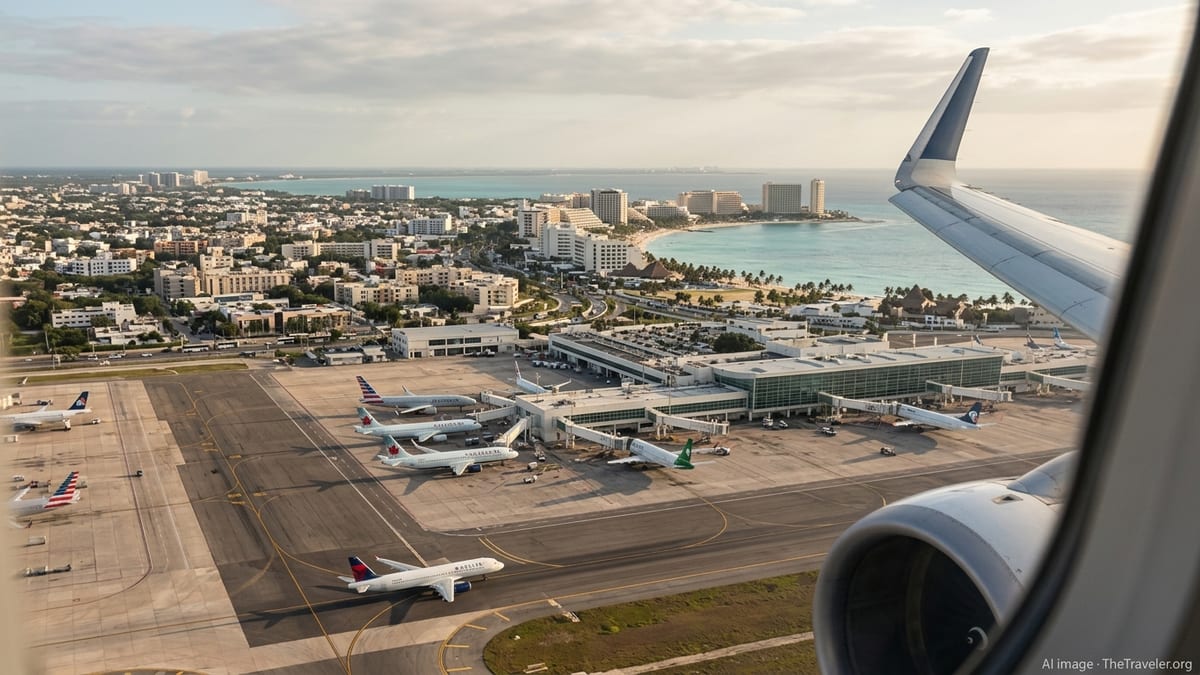
Mexico remains a central pillar of US international air travel, and recent airport and aviation disclosures for February 2026 highlight continued, if modest, expansion on key routes. Traffic reports from major Mexican airport groups show that international passenger movements at leading gateways such as Cancún increased in low single-digit percentages compared with February 2025, reflecting steady demand from US, Canadian and European markets.
According to sector summaries, total passenger traffic at a number of Mexican airports rose around 1 to 2 percent year-on-year in February, with international flows typically outpacing domestic activity. While the overall growth rate is modest, the figures point to Mexico’s ongoing role as one of the largest air travel partners for the United States, particularly on high-frequency leisure routes serving beach destinations and resort regions.
Industry coverage also notes that airlines in both countries have been adjusting capacity to reflect shifting patterns of demand. Additional seasonal flights from Canadian and US carriers into Mexican coastal cities, for example, have helped offset temporary disruptions linked to security concerns in parts of western Mexico and weather-related cancellations on certain days in February.
Canada, Dominican Republic, United Kingdom and Japan Show Subtle Shifts
Canada continues to rank alongside Mexico as one of the largest international air markets for the United States, with February 2026 traffic showing a slight uptick in both directions. Published statistics and tourism analyses suggest that cross-border travel between the two countries is still rebuilding from earlier declines, with winter holiday and ski traffic providing some support during the late-winter period.
In the Caribbean, the Dominican Republic remains a standout destination for US-origin travelers. Aviation and tourism monitoring services report that airlines have largely maintained or slightly increased capacity on major US–Dominican Republic routes for the early 2026 winter season, sustaining passenger levels even as some neighboring markets experience volatility linked to weather or operational challenges.
Across the Atlantic, the United Kingdom and Japan both feature among the top overseas country markets feeding international air traffic to and from the United States. Industry updates indicate that transatlantic and transpacific demand in February 2026 was broadly stable, with minor year-on-year increases on several routes. However, carriers continue to highlight soft spots in premium cabins and corporate travel, which tempers overall growth even as leisure-focused itineraries remain relatively resilient.
Operational Headwinds Temper February Performance
The marginal growth recorded in February 2026 comes despite a series of disruptions that affected parts of the North American aviation system during the month. Widespread winter storms across the northeastern United States led to thousands of delays and cancellations, temporarily reducing international connectivity at major hubs and complicating travel plans for passengers flying to and from Canada, Europe and beyond.
At the same time, reports of security incidents and heightened travel advisories in selected regions of Mexico weighed on operations at several airports serving US-bound traffic. On certain days in late February, some gateways in western Mexico experienced elevated levels of flight cancellations and schedule revisions, interrupting what has otherwise been a steady cross-border market.
Regulatory and administrative developments have also played a role. Public information on traveler programs and entry procedures indicates that periodic pauses or adjustments in expedited screening and trusted traveler schemes can contribute to longer processing times at peak periods, adding friction to the international journey even when flight schedules remain largely intact.
Outlook for Spring and the Remainder of 2026
Looking ahead, airline and tourism forecasts point to a potentially stronger period for international travel to and from the United States as the spring and summer seasons approach. Trade group projections released in late February anticipate record overall passenger numbers for US carriers in the upcoming months, with international leisure routes expected to form a significant share of that activity.
For Mexico, Canada, the Dominican Republic, the United Kingdom, Japan and other major partners, this outlook suggests that the marginal gains observed in February 2026 could widen into more substantial increases later in the year. Airlines have already announced capacity additions on a number of cross-border and long-haul routes, particularly to sun destinations and major European and Asian gateways.
Nonetheless, analysts caution that growth is likely to remain uneven, influenced by currency movements, geopolitical developments and traveler perceptions of the United States as a destination. For now, February’s modest improvement in international air travel underscores both the resilience of core markets such as Mexico and the continuing challenges facing US-bound tourism in an increasingly competitive global landscape.